National Staycation: The Secret Reason We Needed to Stay Home
15-day pause forces us to focus on home, family and our life’s purpose — without the normal distractions of community
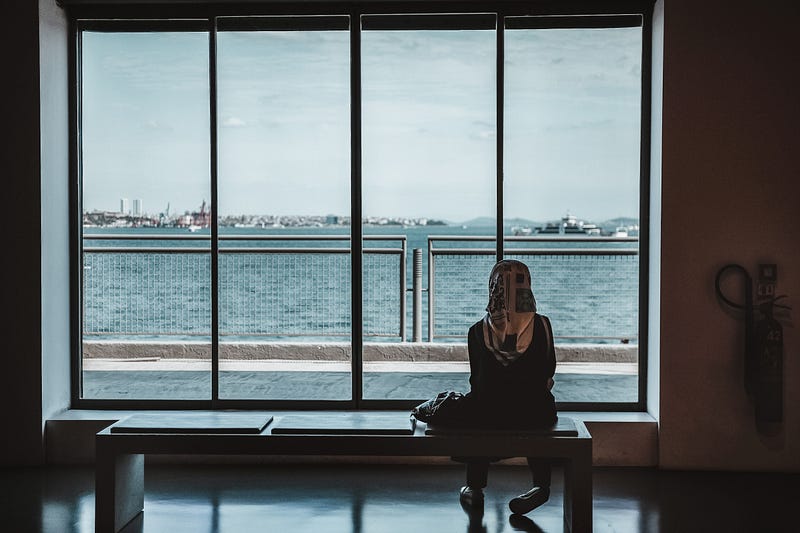
I slept in (past 9:30 a.m.) for the first time in years (maybe a decade). For once, my schedule, distractions — or my body — weren’t saying:
“Get up… Go… Now!’’
Our National Staycation — the 15-Day Pause — changes everything
Suddenly, we don’t need alarm clocks. The world demands we stay home. The President just added: “Stay away from each other.’’ So we do something else.
Until now, our routines pulled us away from bigger callings
Our routines, the gym, work, gatherings, messages all pull us away from that “big thing’’ we need to do. This is the time of Lent, when we are told to put normal life aside for some special purpose bigger than your own life. So here we go:
Maybe it’s spending more time with your spouse, your children. Maybe it’s reading or cleaning out your attic. Literally or figuratively.
Saying or doing that vital something left unsaid
My bride is called to be “the glue,’’ to hold people and things together. She’s the missing piece of the puzzle. She’s baking, taking food to needy people, keeping the yapping dog entertained. She always has something to do.
My thing I need to do is write. I need her to read what I write — for her to write me back. She needs to concoct things in the kitchen she wants me to try (like this banana cake I am eating right now).
Love is a circle. The circle of life. Or a conversation. Back and forth. It’s why we come together. It’s why we exist.
History: It happened before — Being stuck inside changed life itself
Way back in 1665, the Bubonic Plague — the Black Death — forced Europeans to stay home. Isaac Newton was one of those people forced to “work from home.’’ The University of Cambridge closed. Newton, forced to turn inward, turned his time alone into the most productive days of his life.
During his “staycation,’’ Newton developed the theories of calculus, optics and gravity. My pal the doctor is saving people’s lives, texting, “I just finished one of the most grueling Saturdays I’ve ever worked in 33 years.’’
Our son the car guy gets people essential transportation. Our daughter the mother is busy being everything in the world to our granddaughter. Our daughter the lawyer is defending people and resolving differences.
Everyone has a role to play and their own unique way to contribute, to make a difference, their own unique perspective. We’re suddently living our lives differently.
Dr. Anthony Fauci, MD, is 79 (though he certainly looks younger). He was making news about the AIDS crisis (considered a terrifying plague at the time) when I was a kid. He’s front and center again, on TV everyday. Instead of going to church or work, we see him at the daily briefing. Fauci just explained:
“The president is talking about hope for people… My job as a scientist is to prove that it ultimately works… We went through the same thing with a little different twist through the HIV AIDS epidemic.’’
My friend and fellow writer Patrick Novecosky is home with his family. His sons are literally “playing priest.’’ This is how vocations start. One small change and bang, lives change. We were all created for a purpose, a reason. For me, writing is what I know I am called to do — so I am writing.
Interruption: The greatest enemy of writing
Writing is like breathing for writers: We accumulate thoughts and ideas and need to do something with them. We need to get this stuff out of us or we die.
Distractions keep getting in the way
Our phones are like hot potatoes heating up, flashing, binging and beeping. They demand we touch — and do — something with them. Right now. And that distracts us from people and more important things.
Writers know we are called to write
Back in 2017, author and professor Paul Kengor released a new book (I wound up meeting and helping him in 2019). As soon as I heard about Paul’s book, I knew I needed to get going on my own book: one gathering like a storm in my little brain. We all inspire one another in some way.
Writing is also like bleeding: you pour your life out onto a page
It can hurt to write so you make excuses to avoid writing. But you need to share your stories and as the old blood pours onto my keyboard, new blood is created, pumping out, sometimes dramatically and intensely.
Then it stops and we’re starved — but writers are also like cooks
We have all this weird stuff piled up in the back of our refrigerators and we need to pull it out before it goes bad. We live to combine all the ingredients and stir them up into something someone will love and never forget.
The two main parts of writing: gathering and sharing
Writers are (actually) always writing even when we are sleeping. Because as long as our brains are turned on, we are ALWAYS doing one of the two parts of writing:
- Gathering (reporting/researching).
- Sharing (actually writing or getting information together and out there).
We were traveling when America came to a stop
First we took a train to Chicago and later we flew to our beloved Myrtle Beach, South Carolina. As our community and daily distractions went offline, we knew we were gathering stories we’d save for writing at home.
The national staycation: Home would be where we’d hunker down for the remainder of March, the remainder of America’s 15-day-pause mandated by the Centers for Disease Control. Like a puzzle: we’ve gathered the pieces then we put them together. Books can now be written.
What is totally unique about you? And your personal calling?
I just turned 55, meaning I MISSED the Baby Boom by 19 days so I am one of the oldest members of Generation X, the “bridge’’ between the massive Boomer and Millennial generations.
We are literally the people who learned to type on manual typewriters but quickly pivoted to PCs, iPhones, etc. I was there when the web and podcasts (originally called Internet Radio before iPods came along after 9/11) were started. I watched them evolve, and how they connect with classic storytelling.
My dad won’t touch any technology newer than a FAX machine while my brilliant daughter the attorney never even walked into a Post Office to actually mail something until she was almost finished with college. The “bridge’’ can talk to all of these people and bring them together.
Being cut off from other things forces us to do that ONE THING
We’ve been putting something off. Now everything aligns so we know now is the time. We must live in the moment, the right now. So writers write now. As Bishop Robert Barron, ordered to stay home in California, says:
“Some opportunity is opening up. Something will come up of it so the challenge for us is, let’s find that. What is it? A time to wrestle with some of those questions we put aside… Some kind of window is opening up. Search that out. Think about it. See if you can find the reason…’’