
‘Nashville Star’ Buddy Jewell defiantly promises traditional country music in a city near you
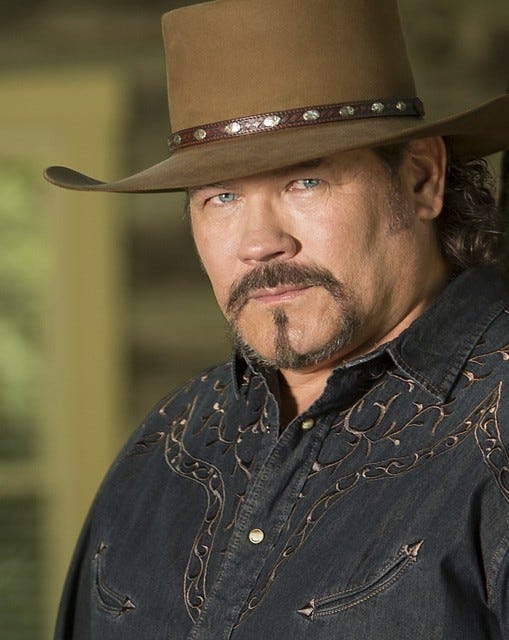
“I ain’t wearin’ a ball cap and a dog chain and singing about makin’ love on the tailgate of my truck while I’m drunk. So they ain’t gonna play my stuff on mainstream radio. But I’ve still got fans out there that watch RFDtv and listen to WSM because they can’t get any traditional country music on the local 50,000-watt stations. It’s no offense intended towards Luke Bryan or whoever else, but there’s an enormous cross-section of listeners that are being ignored.”
In an exclusive interview conducted via telephone from his Nashville, Tennessee residence of the past three decades, Nashville Star champion Buddy Jewell defiantly aims to bring a genuine dose of real country to his next live and in person show.
Raised in Osceola, Arkansas, the 59-year-old troubadour’s seventh studio album — My Father’s Country — is a 10-song collection inspired by precious memories of his dad’s propensity to sing snatches of ubiquitous standards like Charlie Rich’s “Behind Closed Doors,” Glen Campbell’s “Galveston,” or Waylon Jennings’ “I’ve Always Been Crazy” while tinkering with the family car. An appreciation of classic country runs mighty deep in Jewell’s lineage. His Uncle Hubert Jewell actually befriended a teenage Johnny Cash who grew up in the nearby Northeast Arkansas small town of Dyess.
When he began attending Osceola High School Jewell admits he “fell in love for about three months with a gal about a year younger than me whose name was Dee Lybrand.” The short-lived romance might have initially wounded his pride but wasn’t totally without merit as the future artist composed his first song about her — “Dee, I Still Love You.” Jewell chuckles as he candidly recalls, “God knows I’m glad I’ve forgotten it. It was horrible. I probably rhymed mud with blood and dippy stuff like that.”
The black Stetson-sporting entertainer spent much of his twenties singing lead for a regional country band named White Oak and serving as a tall, laconic, fast-draw gunslinger in Six Flags Over Texas’s Wild West tribute show.
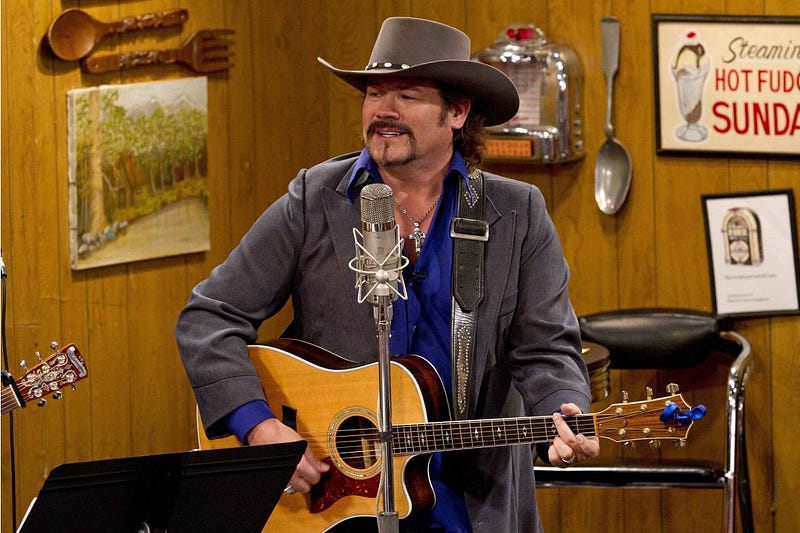
A spur-of-the-moment decision to enter a singing competition spearheaded by the mega-selling Alabama led to a first-place prize and opening slot on one of the “Love in the First Degree” group’s tour dates. Jewell was 30 years old and the sweet smell of success was nearly overpowering.
Another well-regarded talent competition, Tonight Show sidekick Ed McMahon’s nationally syndicated Star Search, beckoned the following year. Jewell won his vocal category and made the fateful decision to permanently relocate to Music City USA.
Unable to secure a major recording contract, Jewell’s primary bread and butter manifested itself as an in-demand demo singer for superstars like George Strait [e.g. “Write This Down”]. Singing on a demo basically means that when an established artist is in the studio selecting material to tackle, they listen to a “demo” aka rehearsal tape submitted by a songwriter or producer — in this case sung by Jewell and backed by a skeleton band of drums, keyboards, guitar and bass — in order to learn the song.
Nine years after toiling anonymously in Nashville, God was still working in the details when Jewell decided to join the first season of the USA basic cable network’s Nashville Star, the country alter ego of reality juggernaut American Idol.
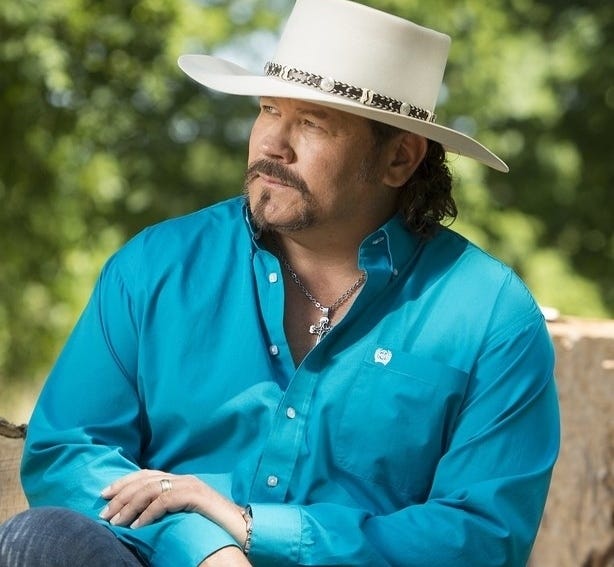
Winning top honors — a then unknown Miranda Lambert placed third — Jewell was signed to the prestigious Columbia Records — ironically his musical idol Cash’s longtime label — in short order. His self-written inspirational ballad, “Help Pour Out the Rain [Lacey’s Song],” was produced by Clint Black and rocketed all the way to №3 on Billboard. The “Like the Rain” ’90s hit-maker also produced Jewell’s accompanying self-titled album in an astonishing eight days.
Columbia asked Jewell to track a duet with Lambert as they were interested in signing and keeping her in the public eye. “I agreed and chose — I knew she liked Merle Haggard and I did too — ‘Today I Started Loving You Again,’” admits Jewell. “I thought it would be a great duet for us. Looking back years later, she hasn’t called me to say, ‘Hey, I wanna pay you back for putting me on your first album and letting all these people hear my voice.’ She hasn’t reciprocated. I’m just old-fashioned. I think if someone had done that for me, I’d have been grateful. Call it what you want.”
The “Sweet Southern Comfort” follow-up single was just as successful, notching a further million and counting in total sales. Subsequent singles “One Step at a Time” and “If She Were Any Other Woman” went Top 40 but Jewell’s tenure at the summit ended two years later when Columbia unceremoniously eliminated him from their roster.
Don’t get the balladeer started on the contentious subject of Columbia executives’ bone-headed decision to release “One Step at a Time” as the third single from the Buddy Jewell album. Jewell begged them to release the superior “Abilene on Her Mind” to no avail.
“When people in high positions are wrong, you lose your job and they keep theirs,” reflects Jewell. “That’s kind of rough for me. I made some bad choices myself as far as my career went, but there were people that I couldn’t control that controlled my career that made bad decisions that hurt my career. Now I have to pray for willingness to be able to forgive ’em for not giving me a little more credit for knowing what my audience wants to hear on the radio.”
Interviewed for the high profile documentary Glen Campbell: I’ll Be Me, prominently displaying CMA Male Vocalist of the Year Chris Stapleton’s lighthearted “Jesus, Elvis and Me” onstage, plugging 10th LP Bluebonnet Highway [autographed and personalized upon request] and bluegrass A-side “Teardrop in the Gulf of Mexico,” songwriting, branching out into record production for other artists, and owning the Peace, Love & Little Donuts shop in downtown Nashville keeps Jewell pretty active.
The “Country Enough” songwriter can’t wait to perform in front of another wildly appreciative crowd, although he remains his own worst critic. “Most nights I walk off and complain about how I sound or whatever I did,” confirms Jewell.
“The bad thing is when you’re an artist and especially if you’ve had any amount of success — most of the time the people that are patting you on the back going, ‘Hey man, you sounded great’ — you don’t know if they’re being honest or if they’re just kissing your butt. It’s like your mama telling you that you’re good. But then Mama’s got that unconditional love. You can be the worst singer in town and she’s gonna say, ‘Oh honey, you sound so good’ [laughs]. So I’m pretty critical of myself. But I’ve gotten better about it.”
The significant expenses incurred from touring plus being away from devoted wife Tené and three kids — Buddy Jewell III, Lacey and Joshua — has the dedicated Christian contemplating his future existence as a road entity with a wise degree of self-analysis rarely witnessed among musicians: “You kinda run your course and then you gotta go, ‘Did I prepare myself for the next part of my life?’ It’s just a season, and right now this is what God’s got me doing…it begins and ends with my fans.”
© Jeremy Roberts, 2015, 2018. All rights reserved. To touch base, email [email protected] and mention which story led you my way. I appreciate it.