
Napoleon swept across Europe, but was twice defeated in front of him, the greatest commander-in-chief in the history of the British navy
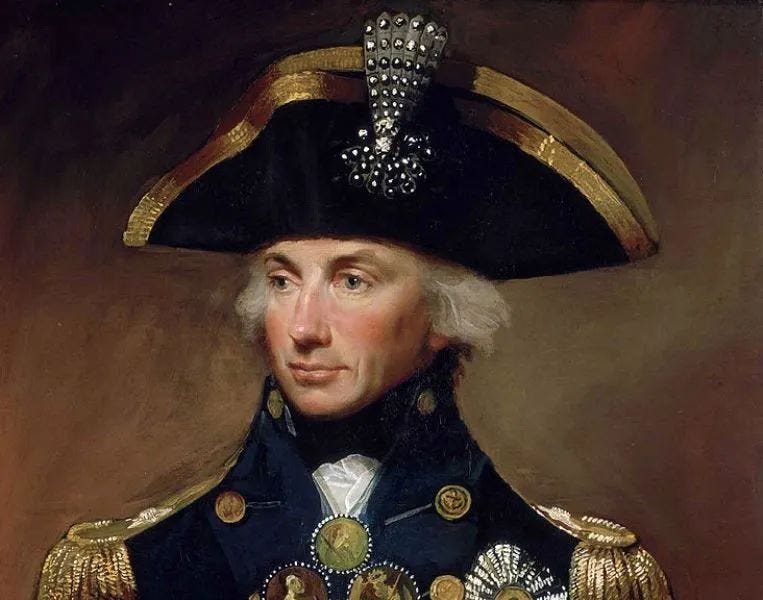
At the beginning of the 19th century, Napoleon and his French army swept across the European continent. Almost all the major countries in Europe suffered from Napoleon’s invasion and even surrendered to Napoleon’s empire, with the only exception being Britain, which was across the sea from Europe. Britain was able to survive the war with Napoleon partly because of the English Channel, and partly because the powerful British navy prevented France from invading the island of Great Britain. In 1805, the British Navy secured the island of Great Britain by defeating the Franco-Spanish fleet at the Battle of Trafalgar, and the British fleet commander Nelson was the main contributor to this glorious victory.
1. Early years
Nelson was born in 1758 into a pastoral family in the village of Boham, Norfolk, England, the son of a parish priest and the daughter of an honorary pastor of Westminster. However, his mother died very young, so his father was responsible for all the affairs of the family. Nelson was sent to Edward VI Grammar School as an early Xi and then transferred to Sir John Paston’s School, where he may have had no talent for Xi and dropped out at the age of 12.

In 1770, the Falkland Crisis broke out, and tensions between Britain and Spain worsened. Nelson also took the opportunity to join the British Navy, serving as an ordinary seaman under his uncle, British Navy Colonel Sockling, and receiving formal naval training. After the crisis was resolved, Sockling arranged for Nelson to serve as captain on a merchant ship bound for the West Indies, but the trip was not pleasant, and in fact he was skeptical of his choice to devote himself to the navy.
However, in the following years, Nelson carried out a number of expeditions to the sea, such as exploring ice-free shipping lanes from the North Pole to the East, and patrolling India. During this time, he gained a lot of experience. In 1777, with the help of his uncle, Nelson passed the exam for promotion to captain in the Navy and was assigned to serve under William Lockell. Nelson admired Lockell’s military prowess, and many years later he referred to the latter as his mentor.
2. up-and-coming
Nelson initially traveled to Jamaica aboard the Rostoft under Lockell, but as the American Revolutionary War progressed, France declared war on Britain in 1778, and the new Jamaican commander-in-chief, Sir Parker, recruited Nelson to serve on the flagship. In October 1778, Nelson was saddened by the death of his uncle, who had been so supportive of him, but he was relieved that he had already gained appreciation for his abilities. However, Nelson did not play much during the American Revolutionary War, but during this time Nelson became friends with Prince William Henry, the son of King George III, who would become William IV. In 1783, the American War of Independence ended, and Nelson returned to England with him.
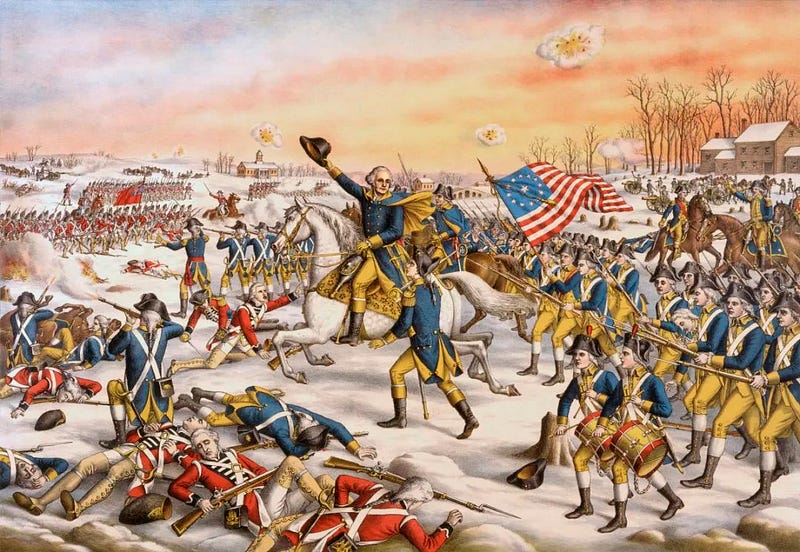
After the war, Nelson had some free time and decided to try Xi French, for which he also traveled to Saint-Omer in France. But as in his youth, Nelson did not persevere, and he returned to England a few months later. After that, Nelson was tasked by the military to manage the Leeward Islands in the Caribbean. Here, Nelson got into a lawsuit with the local governor over the seizure of a number of American ships that were navigating the area.
Despite the lawsuits, Nelson visited Nevis and became acquainted with a widow, Frances Nisbe. A few months later, Nelson, who was acquitted, married Francis, in the presence of his friend Prince William Henry. Soon after, Nelson returned to England, but due to his troubles in the Leeward Islands and the relative peace it was in, Nelson was not offered the opportunity to serve, and he and his wife continued to live on half a salary.

3. Fight bravely
After the outbreak of the French Revolution and the political chaos in Europe, Nelson was reactivated and given the opportunity to serve his country. In 1793, Nelson commanded the Agamemnon to join the Mediterranean Fleet under the command of Sir Hood, and Nelson participated in a large number of military activities in the Mediterranean, such as the Battle of Toulon and the blockade of Corsica. He excelled in his activities, notably at the Battle of St. Vincent against the Spanish fleet, where Nelson boarded two enemy ships and fought on two enemy ships, for which he was awarded the Knight of the Order of the Bath.

After the Battle of St. Vincent, the Spanish fleet retreated to Cádiz, and the British fleet decided to take the initiative and blockade Cadiz, thus forcing the Spanish fleet to go to sea. However, the blockade did not go well, and the British commanders decided to go to the Canary Islands to plunder Spanish merchant ships, hoping to plunder the wealth and demoralize the Spaniards. Nelson was in charge of this activity, but he underestimated the strength of the enemy, and the British were defeated in this battle, and Nelson’s right arm was also severely wounded in the battle and was forced to amputate. Despite the defeat, Nelson, who lost his right arm, was warmly welcomed as a hero by the general public and soldiers. After a period of recuperation in England, Nelson returned to serving on the front lines.
4. Heroes of Britain
The two most important battles of Nelson’s military career were the Battle of the Nile and the Battle of Trafalgar. The first was the Battle of the Nile, in which Napoleon led a French expedition to Egypt in 1798 in an attempt to sever ties between Britain and the Eastern colonies. The British Mediterranean Fleet hoped to detect the movements of the French army and intercept the French fleet. Nelson led the fleet to cruise the Mediterranean, and finally obtained information about the French fleet through a merchant ship, and Nelson ordered an all-out pursuit of the French fleet. However, due to incorrect intelligence, Nelson was unable to intercept the main French army. Later, however, Nelson received definite information about the position of the French army in Egypt, so he immediately went to Alexandria, where the main British and French fleets fought a decisive battle. Nelson was wounded in the head during the battle, but in the end the British were victorious. The British victory caused a sensation in Britain and encouraged other European countries to form a second anti-French alliance.
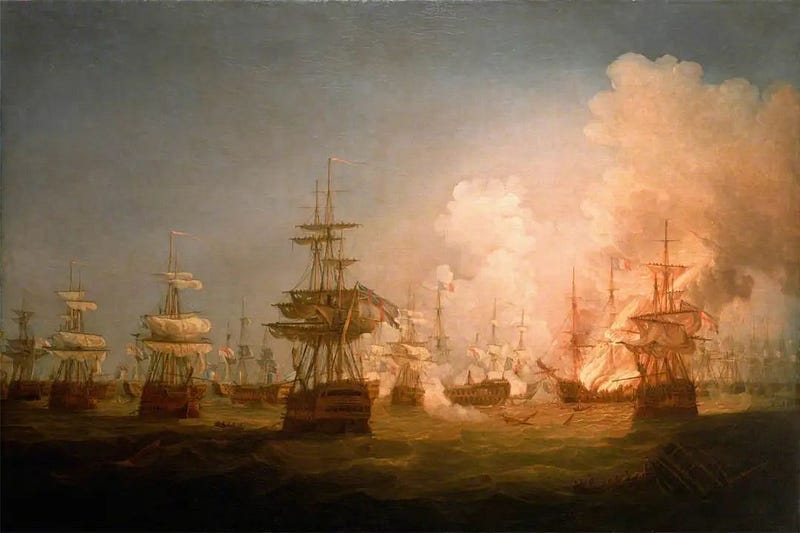
The Battle of the Nile played an important role in isolating the French on the expedition to Egypt, but Nelson’s greatest victory was the Battle of Trafalgar. In 1804, Napoleon was crowned emperor, and the situation in Europe deteriorated again. Napoleon, the emperor and Spain, formed a large combined fleet, hoping to break Britain’s maritime superiority and eventually create favorable conditions for the invasion of the British Isles. On October 21, 1805, the British fleet and the combined Franco-Spanish fleet fought a decisive battle, which lasted from 11 a.m. to nearly evening. The battle ended in a landslide victory for the British, with a total of 17 ships captured and one sunk by the combined Franco-Spanish fleet, while no ships on the British side suffered losses.
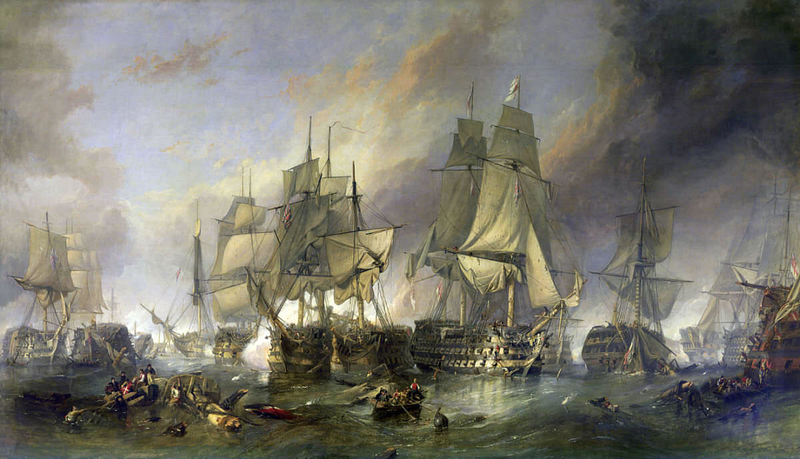
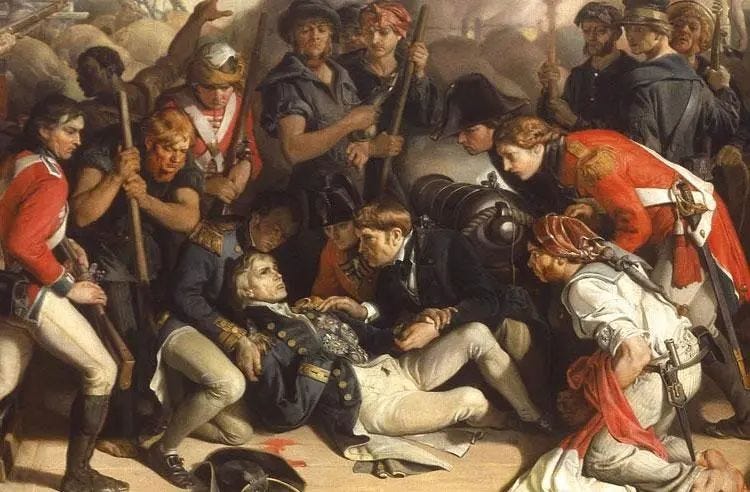
The glorious victory at the Battle of Trafalgar completely eliminated the possibility of Napoleon’s direct threat to Britain proper, and was therefore the greatest victory in the history of the British navy. Unfortunately, Nelson, the hero of the battle, was mortally wounded in the battle. Nelson’s body was returned to England and buried in St. Paul’s Cathedral, where many soldiers and civilians came to pay their respects to the hero who defended his country with his life.
Summarize
Nelson’s combat experience shows that he fought valiantly, often putting life and death aside for the sake of victory. It is for this reason that Nelson became the most outstanding commander in the history of the British Navy, and is deeply missed by the British military and civilians. After Nelson’s death, Britain erected various monuments and named streets after him, which is the best recognition of the commander who gave his life to defend his country.


