
NUTRITIONAL SCIENCE
Is Milk Really Bad for You?
Myths versus science — how to identify misuse of scientific studies
Do you feel tangled up in so-called facts that circulate in newspapers, magazines, or social media? Do you feel overwhelmed by opinions and judgments and don’t know what to believe anymore? Let me help you through that jungle of information! I’ll have a close look for you on articles, check out cited studies, websites, and authors to explain it in an easy-to-understand way! And hopefully you’ll see how manipulatively scientific studies can be used for scandalous articles — written not for you, but money.
Explaining science is a bitch. It is boring, you have to dig deep and still nobody will read until the end. Also, I am not good with people — I am a writer and a scientist, what a terrific combo! But here is the deal: I will give you the answer right away, so you won’t waste any time and then you decide how to spent the next 10 minutes — read more or continue scrolling through FB! Okay? So here we go.
Drink milk or don’t — you’ll die at the end of your life anyway.
But what’s important are your decisions. Why do you choose to drink milk? Why do you prefer not to? Do you think it is harmful to drink milk? What is your decision based upon? You don’t know? Then continue reading.
Let me walk you through the myth “milk harms the bones”
Recently I discovered a disturbing article that stated that milk harms the bones (it’s in German but you shouldn’t read it anyway). Furthermore, I found an article of the well-known Doctor Michael Greger (nutritionfacts.org) also discussing this myth. Both cite a study from 2009 from the journal Osteoporosis International which compares the bone density of “normal” omnivore women (so basically you and me if you’re female) with vegan-living Buddhist nuns. Alrighty, so let’s compare apples and oranges.
Apparently in that study there was no difference found between those two groups regarding bone density — so the conclusion of those articles (not of the study!) is that milk consumption is unnecessary for bones and is even harmful. But that is just manipulating and jumping the facts — they did not consider all factors that contribute to the final result (which is called confounding by the way).
So here is how the article misuses what the scientist showed in their study:
Step 1: Choice of language and look
Appearance and language shape the first impression. If an article looks scientific, we tend to believe it’s content. Headline and subheadline (“Is milk actually causing illness?” “Milk harms the bones”) are judgemental and provocative. The introduction reads as follows:
Milk contains calcium and calcium is good for bones — but that doesn’t mean that milk […] is healthy — although half the world believes it […].
Makes you feel kind of stupid to be part of the believers, right? The author implies an answer before stating the facts, which is a manipulative writing-technique. That should be the first hint for you to be suspicious and critical about the content that follows.
If you are unsure about the quality of an article, go to their references and see what the information is based upon. Most of the writers know by now that we want to see studies, not Wikipedia entries. But let me tell you that there is a huge difference between scientific studies and simply because it is one, doesn’t mean it’s a good one.
Step 2: Quality of study and publisher
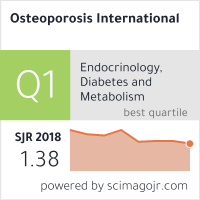
To be honest it is difficult to determine the quality of a study without being familiar in the field. But what is easy for you to do is to check out the publisher and the journal ranking. The nun-study was published in the journal Osteoporosis international which is a peer-reviewed (high quality) medical journal published by Springer. It has an impact factor of 3.8 (good quality) and ranks as a Q1 journal (high quality) in the SJR (scientific journal ranking — you can get the data here).
Of course there can be flawed studies published by perfectly ranked journals and vice versa, but you get the idea. No ranking is absolute. Here is an example why:
Usually studies are reviewed by other experts in the field before publishing (peer-review), which is a quality criterion. Mistakes can be corrected and logic consistency is ensured. Still, in the nun-study I’ve found a mistake which was kind of obvious and was still published without correction.
As you may know the recommended calcium intake per day is about 1000 mg (1 g). Imagine the tip of a teaspoon. However, in the study it says:
The average dietary calcium intake among vegans was 375 g/day, which was significantly lower than the intake reported by omnivores (683 g/day, P<0.0001).
Either they ate calcium by the spoonful or none of the authors or reviewers noticed the unit mistake throughout the entire manuscript. This makes me wonder if the manuscript was as properly reviewed as promised by the publisher.
Nevertheless — mistakes can happen — we have a high-quality study with well-conducted experiments and valid results. The study itself is not the problem here, but the conclusions the authors of the article draw, the interpretations, are twisted and manipulated. They don’t specifically tell lies, but they shape the truth.
Step 3: Interpretation or How to shape the truth
Truth depends on interpretation. But especially in science interpretation can be dangerous.
Let’s take a look at a few critical points and see how differently the scientists and the authors of the article interpret the results:
- According to the study the objective is bone density and veganism. Veganism of course means eliminating all food of animal origin — including milk — from your diet. Still, the article implies that the study was primarily focused on milk, which it wasn’t.
- When evaluating the influence of a parameter between groups (e.g. milk on bone density) the groups mustn’t differ significantly in another influential parameter (e.g. weight, exercise, age). The study is focussing on Buddhist nuns compared to a control group of average Vietnamese women. The author never mentions this fundamental difference in the article. But that fact is not neglectable, since those nuns have a unique lifestyle with a potentially high positive impact on their health.
- The article says milk intake is unnecessary for bone density. Milk intake means animal protein intake and indeed the vegan nuns have a lower intake. That’s basically the argument of the article: even the vegans who do not consume milk have the same bone density as omnivores, ergo milk is unnecessary. However, the study mentions that “some nuns reported to have used commercial milk in their daily meal”. Surprisingly (or not), the article does not mention that fact which makes the whole argumentation pointless.
- One of the most important factors regarding bone density — next to nutrition — is exercise and movement. According to the study, both groups have the same percentage of “active” women (80% of each group). Unfortunately, they do not specify what kind of exercise they perform, but regarding the lifestyle you can assume that nuns are more physically active in daily routine.
It is not possible to eliminate all factors that go along with a specific lifestyle when comparing two groups. Sometimes you have to go with what you get as a scientist. But you can not hide those differences and the huge impact they might have — what the article unfortunately does.
So what now?
The study itself is not necessarily low-quality. The scientists designed and conducted the study properly and published in a peer-reviewed journal (well, debatable). The dilemma is the misinterpretation. The article implies a completely different message than the cited reference (although they at least make the effort to cite something).
The science way — objective, clear, flat, uninspiring
- setup: vegan Buddhist nuns compared to omnivore (menopausal) women
- results: vegan group had less intake of animal protein and calcium, no difference regarding bone density between groups
- conclusion: long-time veganism does not induce adverse changes to bone density, the vegan group follows a strict religious lifestyle which can have a not-neglectable impact
- interpretation: findings can not be generalized, neither narrowed down to one parameter (animal protein, milk) and the all-time-classic: more studies need to be conducted
The media way — vivid, provocative, polarizing, shocking
You still believe what your parents told you? Do you still hear them praising “milk is good for you, it makes you strong and healthy”? Wrong! Milk harms the bones! Vegan-living people have the same bone strength as all the meat lovers, so why do you still support the damn dairy industry? Go vegan!
Also, did you know that milk makes you bald?

Are you looking for a source for simple but science-based information about nutrition? Check out my publication, follow or simply buy me a coffee to support my work. Thank you!
