
Mysteries of the Wild: How Do Modern Hunters Seek Legendary Beasts of Myth?
The Obsessive Quest to Find Legendary Creatures
Modern cryptid hunters rely on eyewitness accounts, field research, and technology to find mythical beasts like Bigfoot, Nessie, and Chupacabra. What motivates these adventurers to seek creatures many think don’t exist?
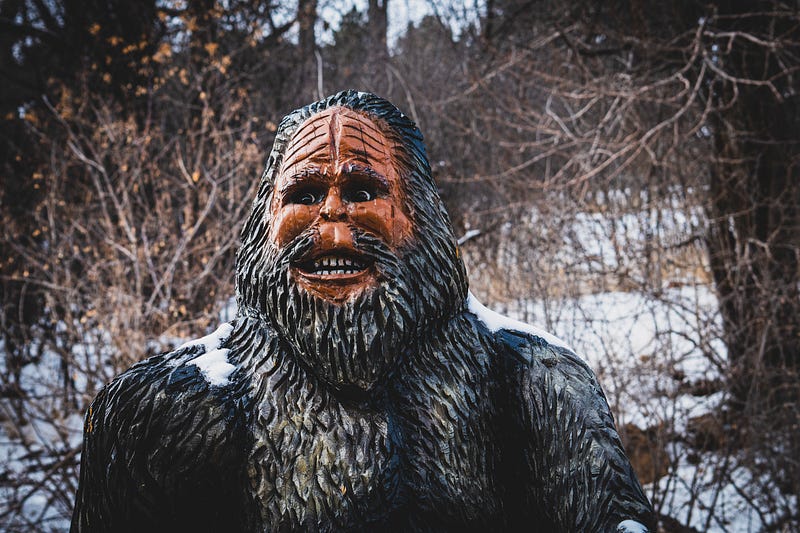
Legends of mysterious creatures like Bigfoot, the Loch Ness Monster, and the Chupacabra have fascinated humanity for centuries.
While most dismiss these beings as fantasy, a devoted subculture exists of cryptozoologists who believe extraordinary animals remain undiscovered.
These intrepid hunters tirelessly pursue cryptids using various methods. What drives people to seek beasts Many consider imaginary?
How do cryptid devotees attempt to gather proof and what difficulties do they face? This article delves into the captivating world of modern cryptid hunters.
Notable Cryptids That Intrigue Hunters
Bigfoot
The most famous cryptid is Bigfoot, also called Sasquatch.
Described as an ape-like beast towering up to ten feet tall, Bigfoot purportedly roams the forests of the Pacific Northwest.
Thousands claim sightings, with common traits being an intimidating size, reddish fur, and a strong, unpleasant smell.
Bigfoot enthusiasts analyze questionable photos and videos, investigate massive footprints, and try eliciting vocal responses in remote woodlands.
This hulking, elusive cryptid consumes hunters’ imaginations.
Loch Ness Monster
Believed to inhabit Scotland’s Loch Ness, occasional sightings spawn theories of a surviving dinosaur-like animal, nicknamed Nessie.
Long-necked with flippers, most depictions resemble a plesiosaur.
Underwater cameras, sonar surveys, and submarine searches have all tried to capture definitive proof, but only tantalizing images exist.
People still flock to Loch Ness hoping to glimpse this sea monster surfacing, driving extensive tourism.
The mystery helps maintain the legend.
Chupacabra
The Chupacabra generates fascination, especially in Latin America and the southwestern United States.
Purported to attack livestock and drink their blood, descriptions vary from a strange breed of coyote to a vampiric alien.
Aggressive and elusive, alleged sightings fuel rampant speculation.
Chupacabra enthusiasts set up camera traps and organize night hunts attempting to catch this vampire beast in the act.
These bizarre tales captivate those seeking explanation.
Methods Used by Cryptozoologists
Eyewitness Accounts
Cryptozoologists heavily rely on eyewitness testimonies to identify locations and patterns.
Interview techniques aim to extract accurate details about sightings. Investigators then systematically catalog accounts looking for commonalities and discrepancies.
Prominent incidents like the 1967 Patterson-Gimlin film showcase how witness descriptions can steer efforts.
Reliable observers provide foundations to build upon.
Field Research and Expeditions
Venturing into remote habitats seeking tangible cryptid evidence is essential methodology.
Teams install camera traps, collect hair and scat samples, make plaster casts of prints, and attempt to recreate sightings.
Wilderness treks tracking Bigfoot epitomize these immersive experiences.
Despite challenges, on-site investigations allow first-hand data gathering versus speculating from afar.
Dedication and luck both factor in.
Technology and Equipment
Specialized technology assists the search for elusive quarry.
Night vision, thermal cameras, parabolic microphones, sonar, and drones help collect and analyze clues.
Bigfoot hunters use alleged vocalizations to design response calls. Teams monitor wildlife cameras scattered through remote hot spots.
While useful, these tools still lack the definitive proof skeptics demand. Advances seek to close this evidence gap.
The Allure of the Hunt
Adventure and Discovery
Seeking legendary beasts provides an outlet for discovery — a chance to solve enduring riddles.
The remote areas cryptids supposedly inhabit give opportunity to explore off the beaten path.
There’s universal appeal in the idea that barely explored wilderness might hide lost species.
People are naturally curious and love unraveling secrets. Cryptid devotees enjoy this spirit of adventure.
Financial Rewards
Sizable bounties offered for irrefutable cryptid evidence entice some hunters.
An example is the Bigfoot Field Researchers Organization offering $1 million for a body.
Other groups crowdfund excursions by promising supporters access to findings.
Massive fortunes spent on Nessie expeditions demonstrate this profit motive. While controversial, monetary gain does drive certain individuals.
Fame and Notoriety
Validating a creature like Bigfoot or Nessie would earn historic recognition. Your name could be cemented in textbooks forever.
The prospect of fame keeps interest alive, especially for commercial groups.
Television shows dramatize hunts making participants into stars.
For some egotistical types, proving skeptics wrong is a tempting incentive. Cryptid celebrity persists as a key motivator.
Skepticism and Controversy
Lack of Conclusive Evidence
Without definitive biological proof like DNA, carcasses, or living specimens, the scientific community remains doubtful.
Photos and eyewitness accounts are considered insufficient and inconclusive.
Poor evidence quality undermines the credibility of cryptozoology.
Until hunters can furnished irrefutable proof, most experts continue rejecting assertions fantastic beasts exist. This high standard of evidence is difficult to meet.
Hoaxes and Misidentifications
Fraudulent cases like the 2008 Georgia Bigfoot hoax further damage legitimacy.
Simple mistakes also occur, as when broken tree branches were presented as a Bigfoot nest rather than typical storm damage.
Confirmation bias leads people to inaccurately perceive something unusual as paranormal.
Controlled, skeptic investigations exposing fakes and misinterpretations highlight the discipline’s shortcomings.
Unfortunately, tricksters and mistakes persist.
Scientific Community Concerns
Many academics criticize cryptozoology as pseudoscience lacking rigor and objectivity.
They argue proper scientific method is not followed in pursuit of legendary beings.
Without testable hypotheses, quantifiable data, peer review, and reproducibility, experts deny there’s proof justifying claims of unknown creatures.
This perceived disregard of the scientific process diminishes credibility among scholars.
The Future of Cryptid Hunting
Improved Technology and Collaboration
Better technology and enhanced collaboration raise hopes in the cryptid hunting community.
Thermal drones, rapid DNA testing, and artificial intelligence analysis of footage may uncover new leads.
Increased information sharing and pooling of resources via online forums allows individual efforts to align.
Partnerships with academics lend mainstream expertise.
These developments can systematically strengthen investigation techniques.
Shifting Attitudes and Interest
Due to television shows and online visibility, public intrigue in cryptozoology seems resurgent.
Grassroots hobbyists are energized by increased mainstream exposure.
Responding to this popularity, more universities, scientists and wildlife agencies demonstrate openness to analyzing evidence.
Rising enthusiasm may yield increased funding and opportunities. This momentum signals potential breakthroughs ahead.
Cryptids in Pop Culture
References in movies, video games, and fictional works embed legendary beings as cultural icons. Sightings like at Lake Champlain boost local lore.
Amateur investigation groups multiply thanks to prominent media depictions.
When concepts permeate entertainment and become ingrained parts of regional character, public engagement expands.
Passionate amateurs keep the field active searching for the truth behind myths.
The Search Continues: Believers Remain Unswayed
The enduring appeal of pursuing creatures like Bigfoot and Nessie speaks to humanity’s boundless curiosity about the natural world.
Despite limited definitive proof, a devoted subculture exists that believes extraordinary beasts await discovery.
Driven by adventure, profit, and fame, these die-hard cryptid enthusiasts venture into remote wildernesses seeking tangible evidence using eyewitness accounts, field research, and technology.
While hampered by hoaxes, lack of specimens, and scientific skepticism, hunters remain energized by new advances that offer promise.
As technology progresses and public intrigue grows, the future looks bright for solving ancient riddles.
The wilds still hold secrets, and adventures await those bold enough to seek shadows in the forest. The truth remains elusive, but legendary.
Frequently Asked Questions
Q: What are some of the most famous cryptids?
A: The most famous and widely-hunted cryptids include Bigfoot/Sasquatch, the Loch Ness Monster, Chupacabra, Yeti, Ogopogo, Kraken, Jersey Devil, Mothman, and Mokele-mbembe.
Q: What evidence do cryptozoologists rely on?
A: Common evidence includes eyewitness accounts, footprints/trackways, photographic/video recordings, hair/fur/feather samples, sonar contacts, thermo-imaging, vocalizations, and physical specimen remains like bone or carcasses.
Q: Where are hotspots to search for certain cryptids?
A: Notable hotspots include the Pacific Northwest for Bigfoot, Loch Ness in Scotland for its Monster, Puerto Rico for Chupacabra, the Himalayas for Yeti, Lake Okanagan in Canada for Ogopogo, and the Congo River basin for Mokele-mbembe.
Q: What are some challenges faced by cryptid hunters?
A: Challenges include hoaxes, lack of funding, limited technology, no scientific training, inaccessible terrain, and inability to provide definitive physical proof that the scientific community demands. There is also personal risk in remote areas.
Q: Do scientists believe cryptids like Bigfoot could exist undetected?
A: While some scientists are open-minded, most remain skeptical due to lack of quality evidence and doubt that large unknown primates could avoid detection indefinitely. Extraordinary claims require extraordinary proof, which cryptozoology has yet to provide.
🌟👏 Boost Your Productivity with Cutting-Edge Computing! Buy New Or Used Laptops & Netbooks On EBAY ✨😊
Affiliate links was used in article. claude help with this article.
Purchases via my affiliate link support further informative content.