
Programmer opinion
My Wife Asked Me Why I Code At Night
She was surprised by what I said.
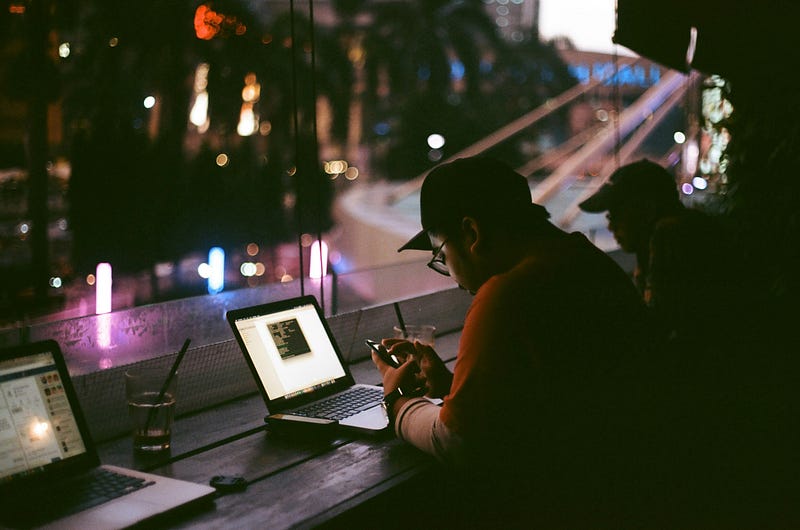
Programming is a creative activity that can become complicated in the sense that we must have several simultaneous objectives in our heads. The successful articulation of all these ideas allows us to write the next line of code.
Restarting the Flow
To be able to write the FIRST LINE of code for the work session, you have to get back into the swing of things, which can take a very long time. It’s a bit like when you read a novel: to get back into the mood of the novel, you have to read a chapter or two, and then you forget that you’re reading the book, and you find yourself in the story.
To write good code, you have to be in your history. You have to remember what you did, why you did it, what remains to be done, what dangers exist in the ways of doing it, and dig up technical information on how to do it. Once you get back into the process, you can start coding very quickly. We call this, in the jargon, “being in the flow.”
Every time you get interrupted by a phone ringing, a Facebook ringing, an email arriving, a friend talking to you, a task to be done before a certain time, you interrupt your flow, and you have to start all the steps again—a mental process to restart.
So a program you could write in 3 hours if you do it in peace could take 48 hours if you are constantly disturbed. I’m not even exaggerating. Don’t bother the programmers!
Only when the chatter of the day dies down can the designer make his entrance?
The Artist’s Spirit of the Nightbird
Other, more challenging to explain, factors make some programmers like to work night shifts. This compares vaguely to some writers’ preference to produce at night.
At night, darkness seems to open the space of the noosphere, blurring the boundary between reality and the unreal. The freedom to create is unbridled. Programming is not always a technical exercise; it is also sometimes a creative exercise at different levels.
- If the programmer is his own architect, he will have freedom of internal architecture of the code, which is very stimulating
- If the programmer is his own graphic designer he will also have the task and the freedom to express and encode a visual, which is very creative and a constant challenge
All-night workers sometimes meet in virtual places (chat rooms) or real places (urban cafes), and an invisible solidarity develops between them.
The Resources
As mentioned by another programmer, the Internet is more fluid at night since the various activities of the video operators of this world harness it. This is also true in America, at least in the regions of Quebec. The Internet is necessary to consult:
- Official technical documents,
- Knowledge bases of problems and solutions
- Other programmers who also program at night and who are possibly online
The internet is also necessary to work as such if:
- If you commit to a remote versioning server such as those on GitHub
- If we deploy online on an online test server
But it’s not just the Internet that is available at night; it’s all resources. Initially, when I was younger and staying with my parents or roommate, I may have developed this habit of working at night to monopolize the only workstation or the only dial-up in the apartment.
Time because many hours of testing, communication and downloading are necessary to achieve our goals, the coffee machine, the kettle, everything is yours at night.
If you go to an Internet café in a city, the café is less crowded, the service is faster, you can get your drinks more quickly.
A Private Space
At night, you are more often alone, so you can indulge in oddities without the risk of being observed. For example, you can go around in circles! or spread your feet on the desk or eat popcorn with pickles if that gives you inspiration. Let’s say that as you optimize your mind, you no longer have time for decorum and need some social freedom.
Access to Flexibility
I believe programmers were among the first professionals to have access to flexible working hours as employees or consultants. This made it easier to work at night if your job didn’t require you to show up at 8 a.m. in the morning in an office, and it undoubtedly helped to further develop their preference for night work.
Biological Reasons
I read in some articles that there are different biological clocks, some people are more productive in the morning, others in the afternoon, and finally others in the evening. I’m going to hypothesize here that people who do programming, who excel at it, and who love it are more often evening people. This is just a hypothesis based on my observation of my peers!
In general, we prefer to code at night instead of during the day because in my opinion, this gives us the impression that we are all alone in another world apart from others without having any disturbance from the others who surround us, because it allows us to be more focused in our work, in a world that we find fun and creative.
Stackademic 🎓
Thank you for reading until the end. Before you go:
- Please consider clapping and following the writer! 👏
- Follow us X | LinkedIn | YouTube | Discord
- Visit our other platforms: In Plain English | CoFeed | Venture | Cubed
- More content at Stackademic.com


