
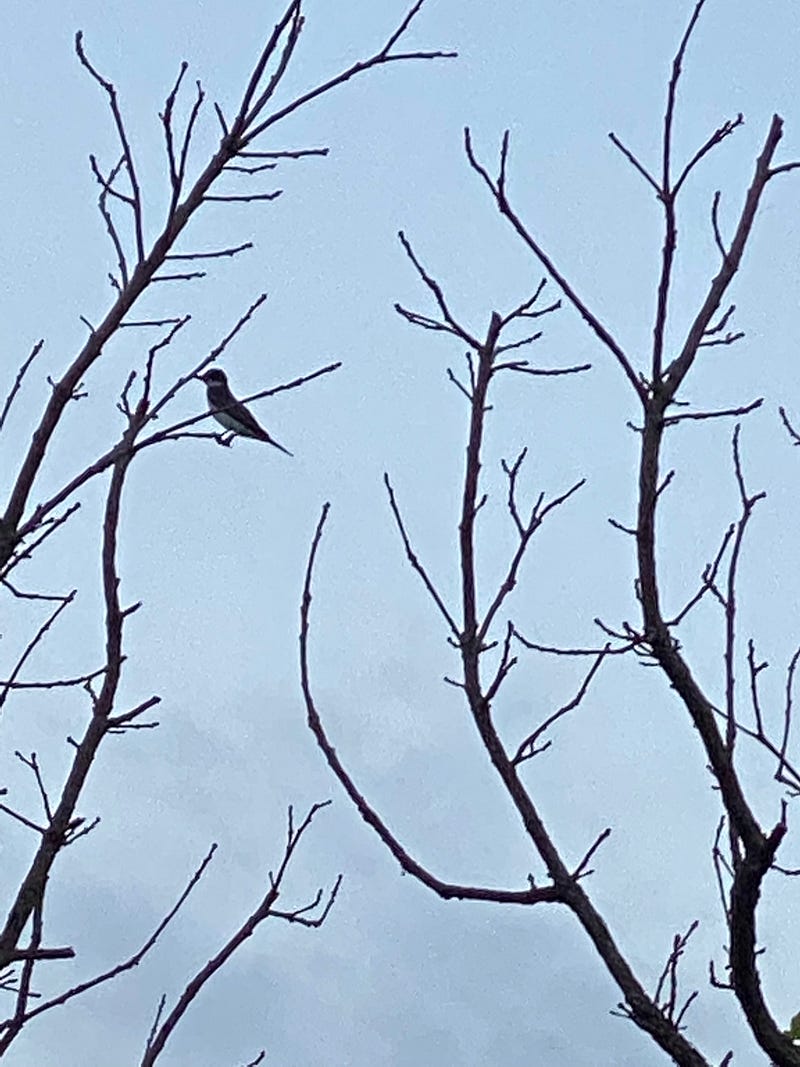
My Week in Photos — Nature Ramble
December 26, 2021, to January 1, 2022.
My “walk” around my neighborhood lake is more of a nature ramble.
My green friends on the porch — my potted plants — greet me as soon as I step out the front door.
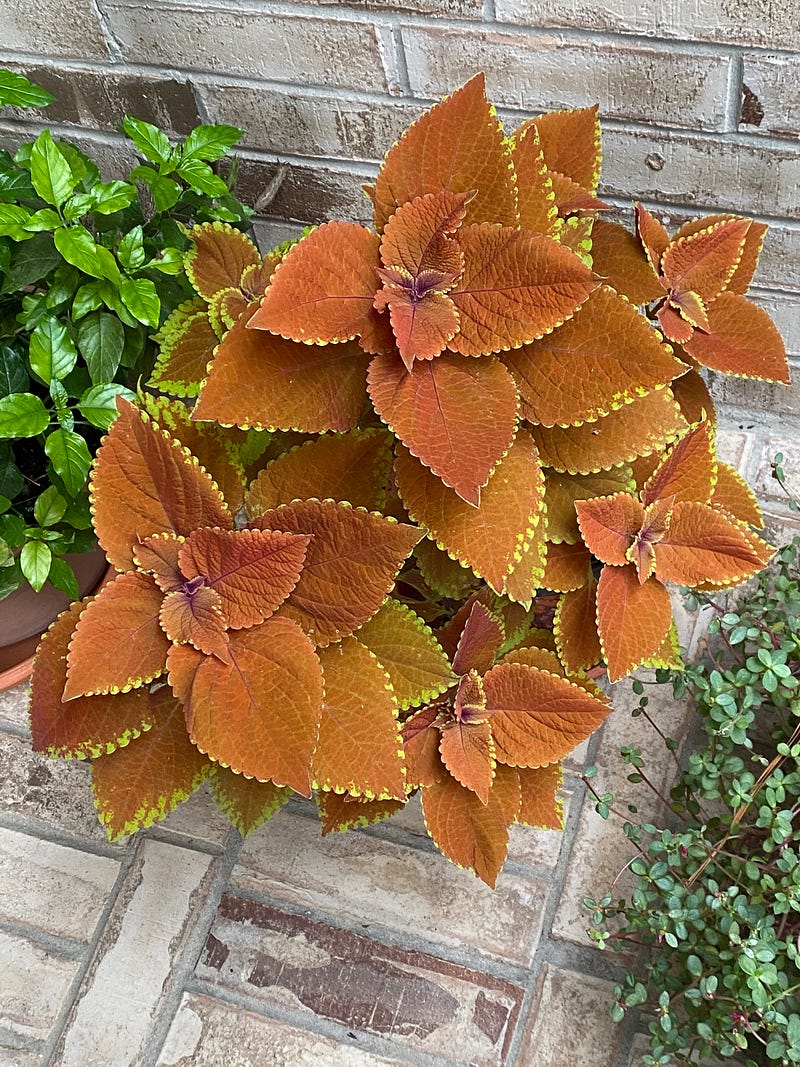
The Coleus — with its rust-orange scalloped leaves — is one of my favorites. Low maintenance, luxuriant, and fast-growing.
This one was propagated with a cutting from its parent plant in my backyard. The backyard Coleus won’t survive the winter. But in April, I will put its potted offspring back into the ground.
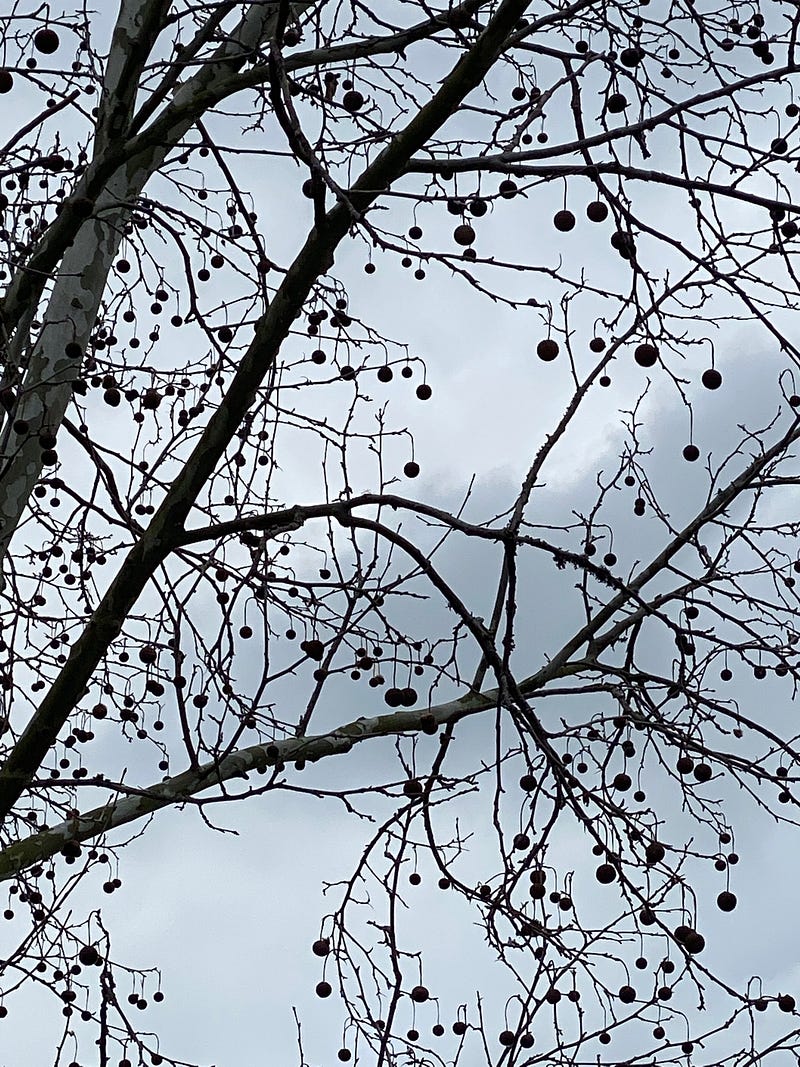
I always walk past this American Sycamore that grows by the lake. But I had never before noticed the Fruit. I guess autumn is the season of revelations. It’s when you see birds’ nests that stayed hidden in the foliage during the spring and summer.
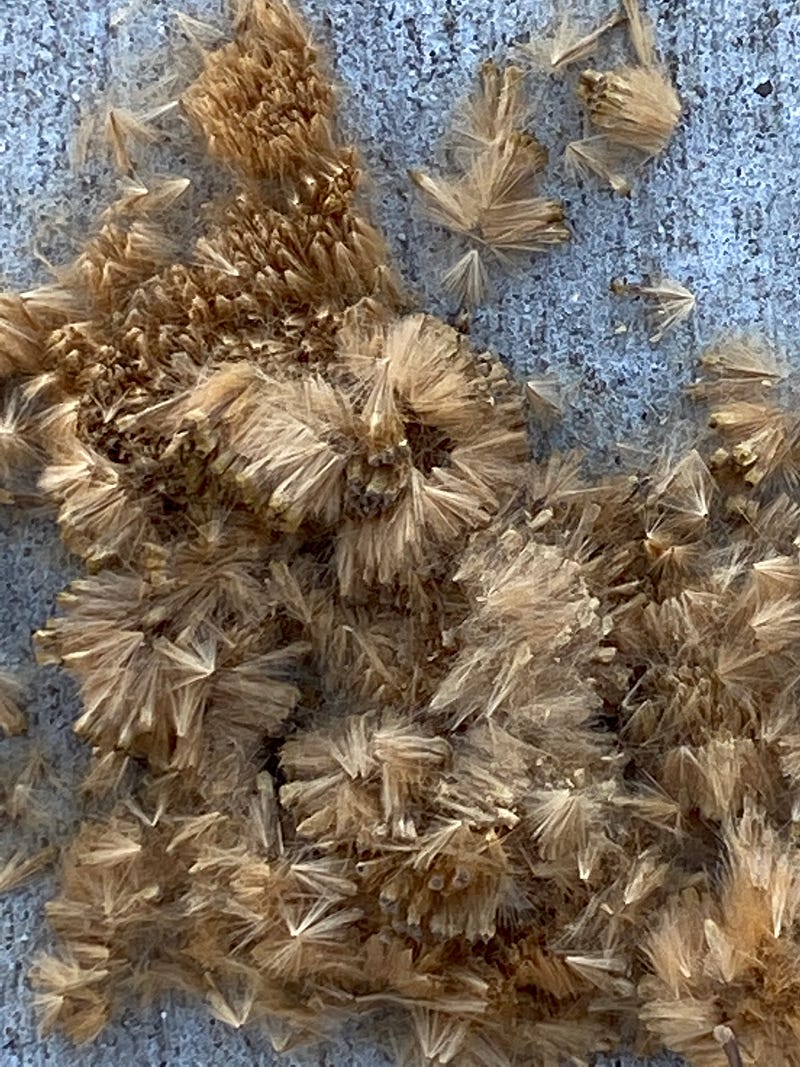
I cracked open a dry, burr-like sycamore fruit. It was packed with Seeds, each with its own tufted parachute. Ready to take wing anytime the breeze picked up. An efficient seed dispersal system.
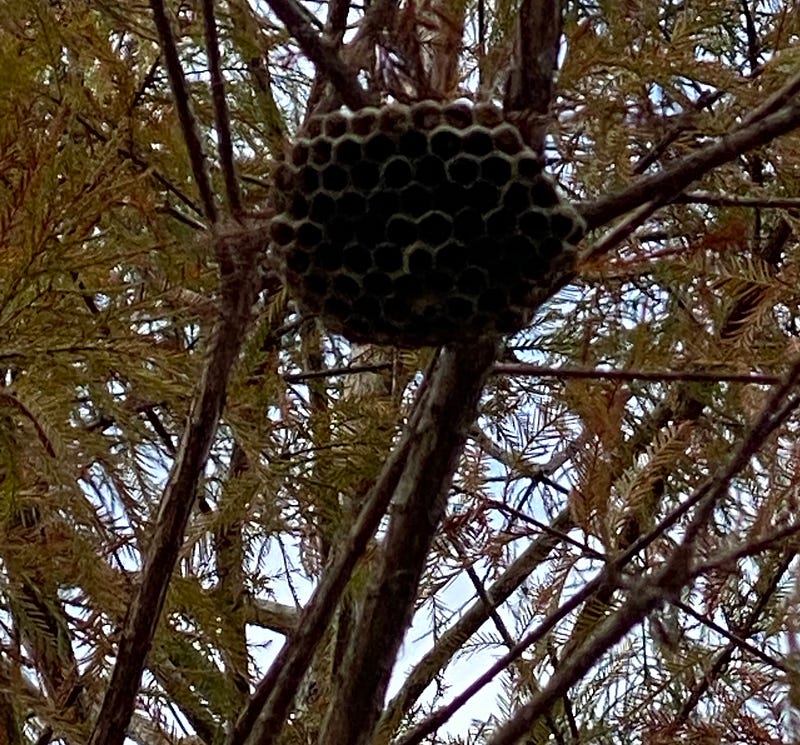
I looked up into a cypress and spotted this Beehive. The flash was turned on, but I couldn’t get more light into this shot. I was thinking: How do bees make such perfect hexagons?
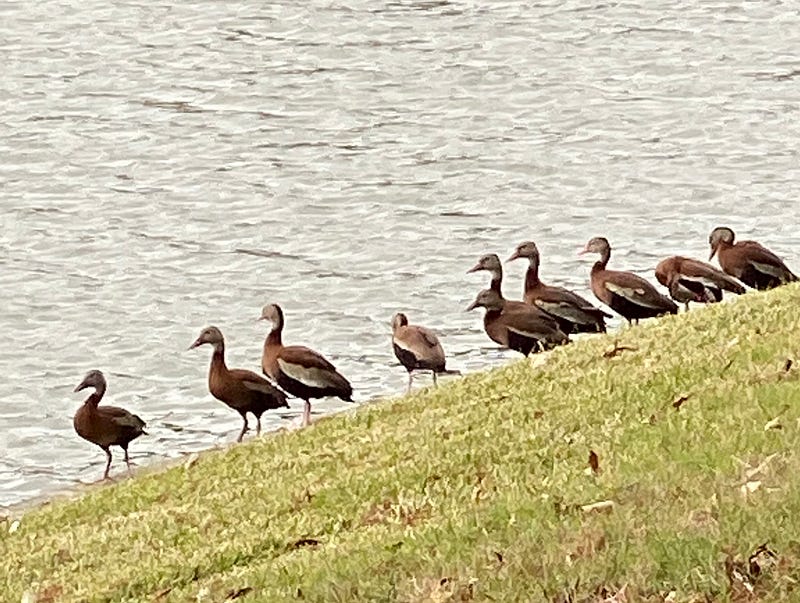
Our Black-bellied Whistling Ducks are smaller and more delicate-boned than the majestic Muscovy or snowy Pekin ducks. But they are the most vocal by far. They bicker constantly — at least they sound that way.
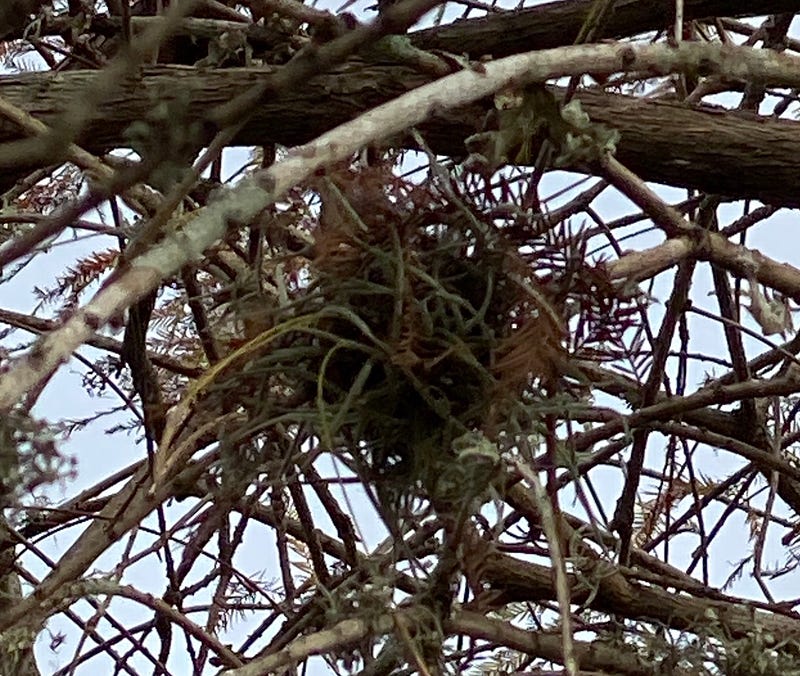
Ball Moss on a cypress. Like many species of orchid and bromeliad, ball moss is an epiphyte. Its roots anchor it to the host tree but the plant does not steal nutrients from the host. It absorbs water and nutrients from the air.
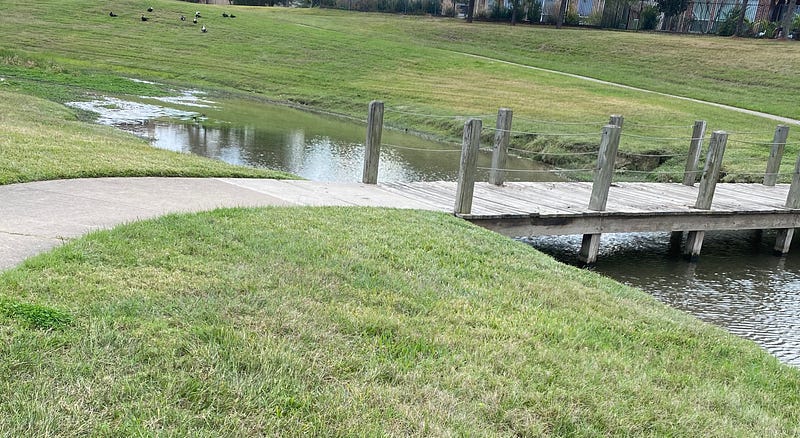
This Wooden Bridge is a favorite with the grandkids. It makes a great station from which to feed the turtles, ducks, and fish.
At the start of the pandemic, this area was frequented by roseate spoonbills, nutria, catfish, and alligator-gar fish. There were very few people walking about then.
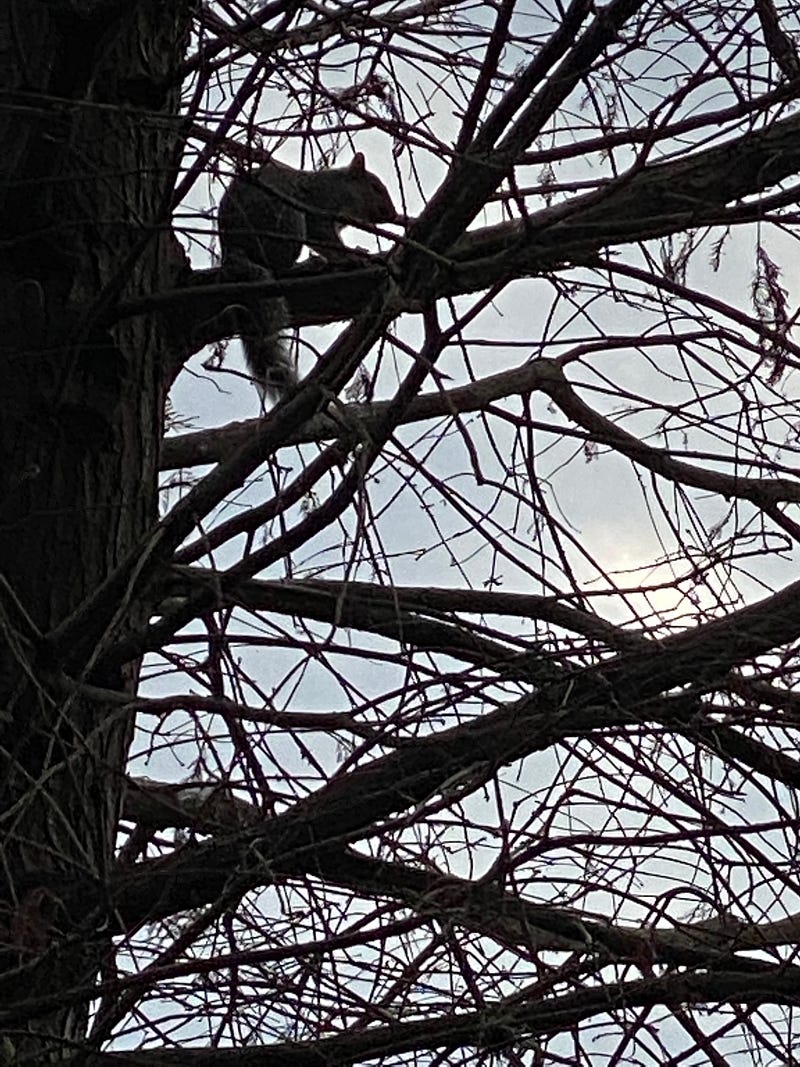
Hubby and I had just finished watching “Don’t Look Up.” So, of course, I had to look up. Glad I did. I waited nearly ten minutes for this Grey Squirrel to sit still. But I guess ten minutes is a millisecond when you are trying to photograph wildlife.
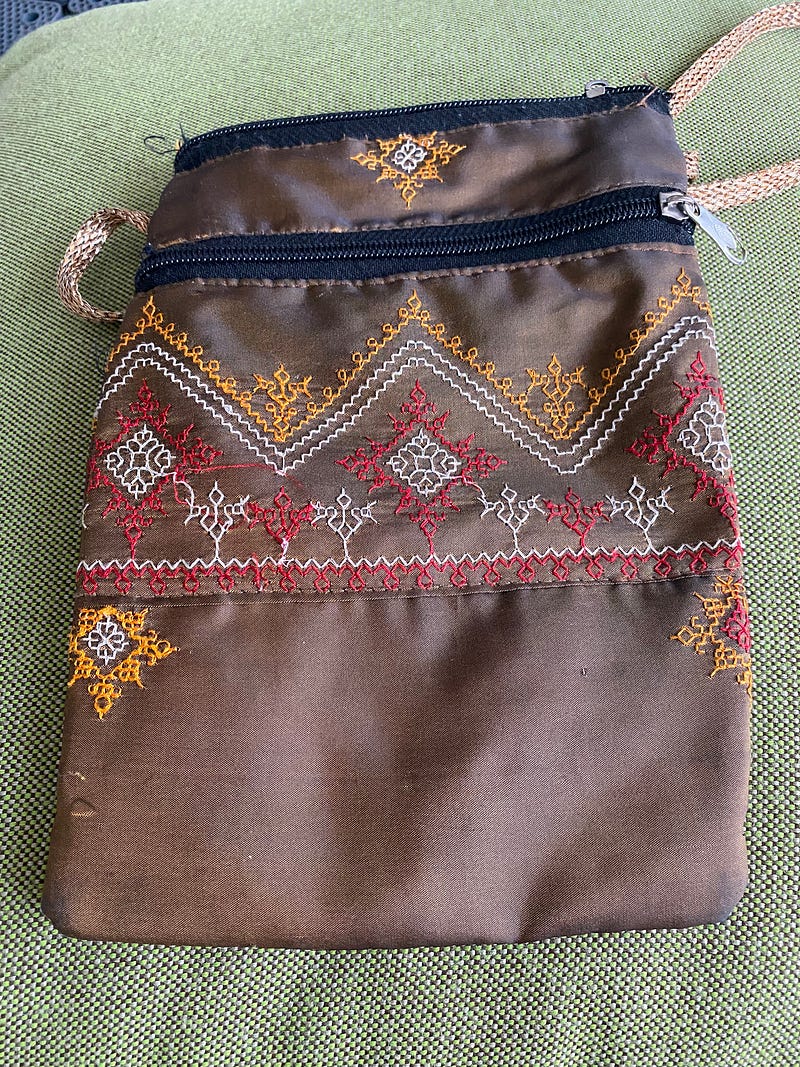
Digressing a bit from talk of sycamores and squirrels, this small Pouch holds my phone when I go for a walk. It was a present from my aunt in India.
The embroidery is known as Kasuti. It is an art form that dates back to 17th century India. The unique feature of kasuti is that the back and front of the work look identical. There are no knots to start or end a motif.
The embroidery on my pouch is machine-made. Kasuti done by hand looks more finished and exquisite.
Machine embroidery is less expensive and therefore more popular.
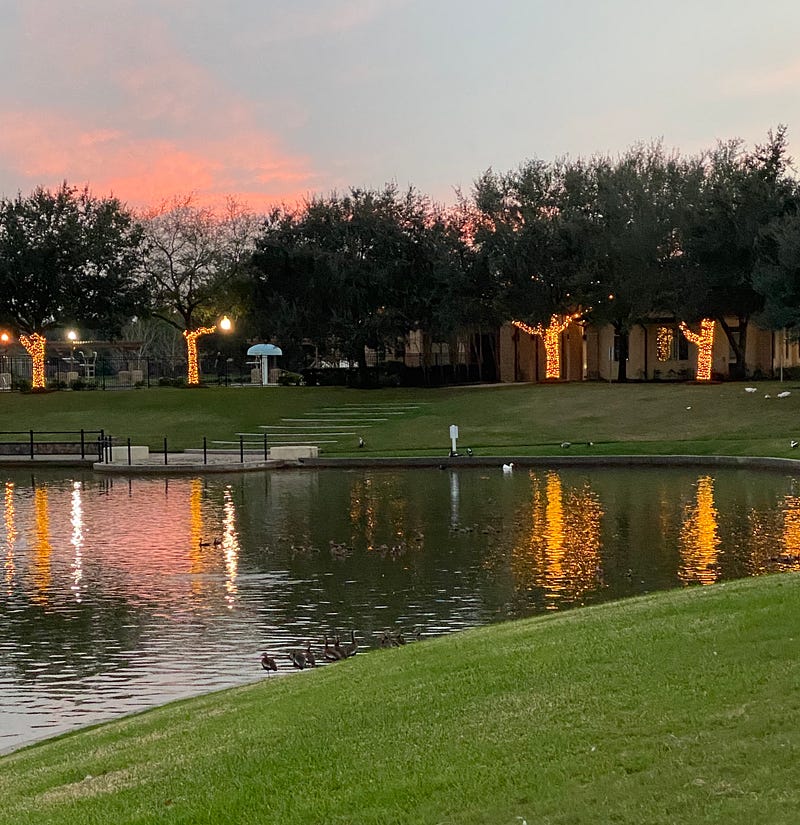
This photo was taken on Jan 1, 2022. The neighborhood was still lit up for Christmas and the holidays. And on that note,
Happy New Year, Y’all!
Our teachers in India used to scold us for saying “Y’all.” We had to say “Everyone” or “To you all.”
But now that I’m too cool (and too old) for school, I can say what I want. Plus, I live in Texas, and I’m fixin’ to talk Texan.
So, once again, Happy New Year, Y’all! May you have a Healthful and Prosperous Year Ahead!
Thank you for reading!
Some of my other stories:
Thank you, Dennett for publishing my story. Much appreciated!


