
My Uncle’s Tragic Life
And the lessons he taught me
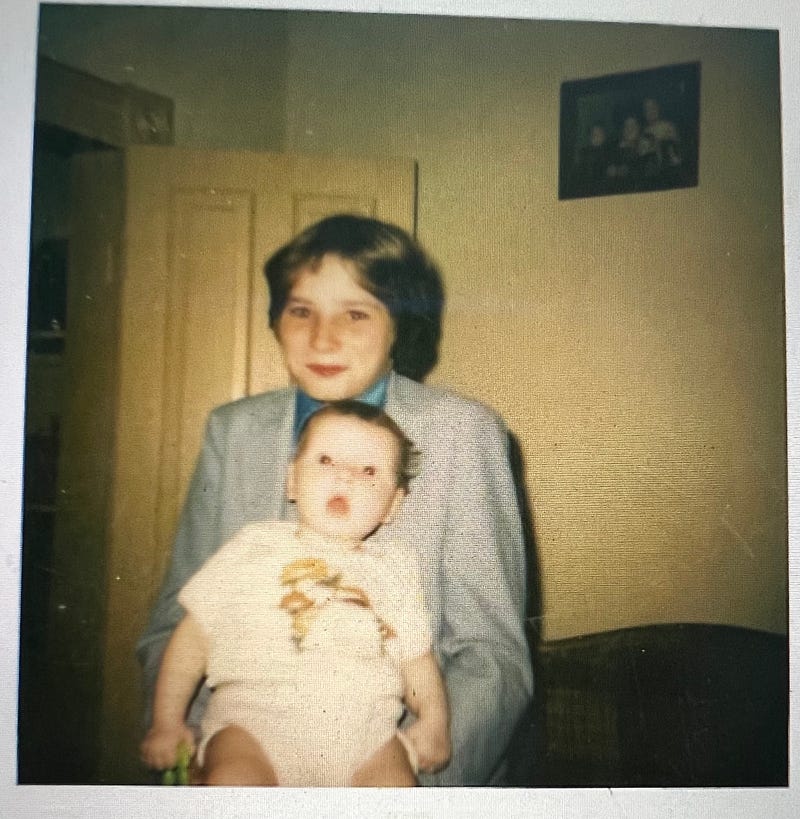
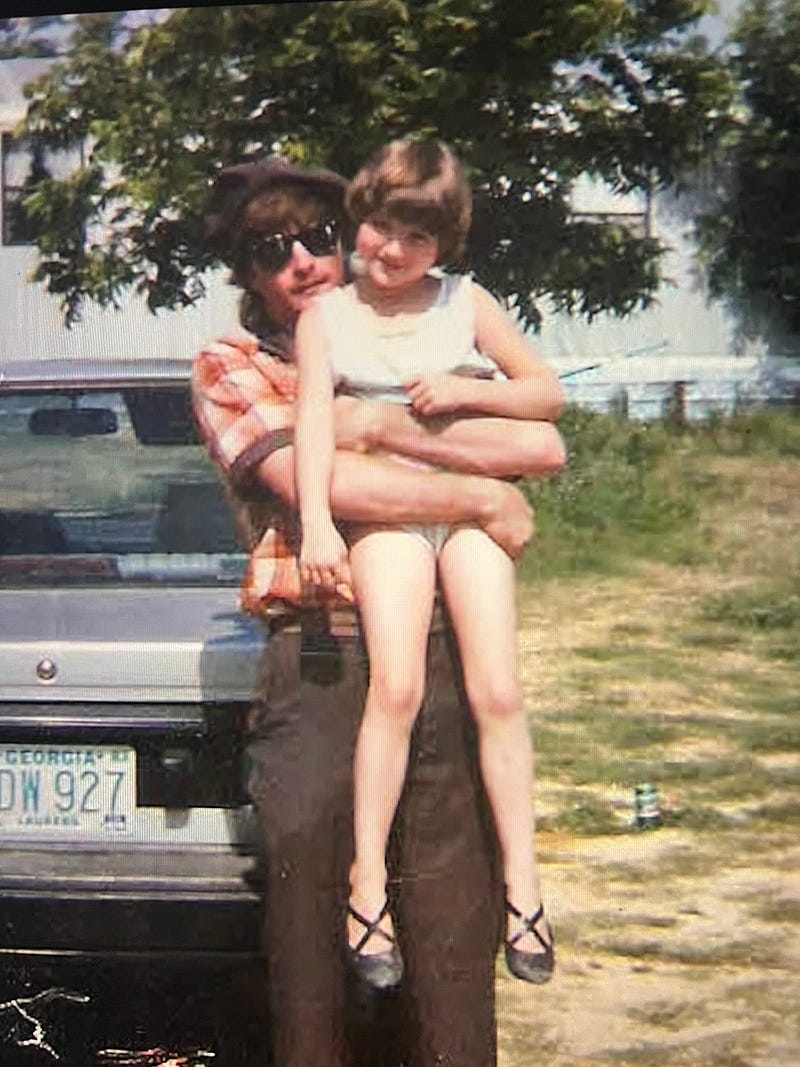
Chris was my favorite uncle. I remember spending summer days at Malone’s Lake, bobbing on his knee as he explained again how I had to reach out with my arms and kick my feet to stay above the surface. I remember reaching for him when I would venture too far into the water, his hands grasping me underneath my arms just before I went under.
I remember him clinging to my hand and pushing me forward as I wabbled between him and Uncle Jamie on my first set of roller skates at the local skating rink. I remember him encouraging me to jump from the moving swing at Stubb’s Park, assuring me he’d catch me as twilight faded into darkness and running to our grandmother’s house before the streetlights came on.
Chris was always on the edge, existing on the threshold between the light and darkness…so went the story of his life.
Christopher Forbes was born on December 8, 1968. He was nearly fourteen years old when I was born, and he took to me like an older brother, as I was a fixture at my grandmother’s house on weekends and during the summers of my childhood. My aunt was only five years older than me. Chris and Jamie were our protectors.
But somewhere along the way, my uncle Chris’s life took a turn. Don’t get me wrong, he wasn’t someone who struggled with drug addiction, nor was he a man who spent long stints in prison. But his life was so much less than it should have been. And in comparison to the rest of his family, Chris had a tragic life.
His first act of violence
The first time I saw Chris do anything that resembled violent behavior was the summer he turned eighteen. Though I was young, the images of that night stuck in my mind the same way some catastrophic event might stick in the minds of any collective group. The details are fuzzy, but I remember the shouting, the sliding of a wooden table across a linoleum floor, and the crash of glass dishes on the floor.
I would learn later this event was brought about by one of Chris’s friends telling him that the man he called “dad” wasn’t his biological father. My grandmother had kept this secret from all of us kids. That night, after all the commotion had settled, my aunt and I snuck into the darkened hallway of their tiny single-wide trailer and listened to my grandmother lament the story of how my uncle was an unwanted child.
He was the product of a one-night stand.
She confessed that she’d tried to kill him in utero several times, first by drinking a cocktail of chemicals one of her school-aged friends had suggested to her. Next, she attempted what was then called a Lysol douche. When that didn’t work, she resorted to throwing herself down flights of stairs, jumping on trampolines, and an array of other hazardous acts that might “take care” of her problem.
Finally, when she was about six months along, she ventured to Macon where she stayed in what she described as a “girl’s home”, a place where apparent late-term abortions were carried out. The women who came to this facility were housed and fed until the “doctor” could get to their case. He would then perform the abortion, and the girls were free to go back to their lives as if nothing had happened.
My great-grandfather got wind of where his daughter had gone.
And he showed up at the “girl’s home” one morning as my grandmother was headed out the door to breakfast. Grandma said he told her there was no need to do something so drastic. Apparently, out of concern for her safety, he told her he would help her raise the baby and took her home. She told the prospective father of her pregnancy, and he decided not to have anything to do with her or the baby. Chris would not meet his biological father until he was in his early thirties.
The tragedies in Chris’s life continued.
He found out he’d gotten his girlfriend of seven months pregnant with a set of twins. She was only sixteen. She came from a prominent family in our small town, and they disapproved of both Chris and her pregnancy. Her father told her she could have an abortion or she could leave their house. She’d be disowned if she left the home, but she told Chris she wanted to be with him and begged him to make a way.
Chris went to his mother, begging her to let his girlfriend move in. He already had a job, and he promised he’d marry the girl, and they’d only be there long enough for her to deliver before he found them a home. My grandmother refused, stating that she was concerned about “what people would think” of her and her family should they find out the children were conceived out of wedlock.
Try as he may, Chris was unable to secure a place for his little family, and his girlfriend was forced into an abortion just three months shy of her delivery date. The stress of the situation was too much, and his girlfriend broke off their relationship and moved to another state to be with relatives.
I saw a shift in my uncle’s demeanor. We all did. Grandma assured everyone that he was just angry and would return to himself before too long, but that’s not what happened.
Chris began to stay out late and drink heavily. His life floated between work, parties, and angry outbursts at home.
When my grandmother allowed my uncle Jamie’s seventeen-year-old girlfriend to move into the house, Chris lost all control. Whatever strands he had binding him to normalcy seemed to snap, flinging him into the abyss of chaos.
He fought.
He got into fights at work, parties, and even at home. I recall once that he and my uncle Jamie got into an altercation over something Jamie’s girlfriend had said to Chris, and the two exchanged blows in the tiny kitchen of the mobile home.
My grandmother attempted to break them up, getting between the two boys and pushing them apart. But Jamie was mid-swing, and he hit my thin-framed grandmother in the jaw, knocking her out. Her small body fell limp onto the kitchen table. The two boys scrambled to help their mother, blaming each other for her injury.
Chris dabbled in marijuana consumption and distribution. When he was caught, he served a short-term prison sentence. When he got out, he drifted from place to place like a nomad with no home of any permanence. The local police knew him and picked him up at every turn. Usually beating him to a pulp (because he resisted arrest every time), holding him overnight, and releasing him the next morning.
He told me once that they’d tried to tazze him, and he didn’t feel anything, so he laughed at them and told them they were all “a bunch of weak bastards.” It took four police officers to put him into the car, and when he continued to fight them at the station, they stripped him down nude, put him into a straight jacket, and chained him to the floor of a cell.
“I spent all night curled into a ball with my ass out!” he laughed about the situation later.
He could have come home at any point, but my grandmother said shame kept him away. I, however, think there was more to his reasoning than that.
Chris never could find permanency. After I’d gotten grown, I realized how lonely Chris was. Sure, he had girlfriends, but most were low-caliber and didn’t stick around very long. He hung out with thugs, criminals, and addicts, though he didn’t participate in those activities himself.
I asked him once why he surrounded himself with people like that. He told me, “You don’t really have to love them. But they act grateful for any little thing you do for them…they might steal your shit later or blame you for something you didn’t do…but they are still more honest than about ninety percent of people in the world.”
Chris became sick in the winter of 2015.
Chris moved into a small trailer on my parent’s property. He had become a carpenter by trade, and he was very good at what he did. He had more work than he could possibly do, and I began to help him on and off throughout the next few years.
It became apparent that something was seriously wrong with his health around November of 2016. He began feeling very tired, vomiting, and struggling to see clearly. Tests revealed that he was suffering from both diabetes and kidney failure. The next few years would be marked by a steady decline in his health.
My late husband and I bought forty acres with a pond, and since Chris loved to fish so much, and my husband traveled for business, we invited him to live in one of the two mobile homes on the property.
We spent a lot of time together in those years, and I wouldn’t trade them for all the money in the world. We talked about his past, our family, and the many ways life can be difficult. He told me that, even over thirty years later, the loss of his children and the family he could have had haunted him. He told me that he would never forgive his mother for her “betrayal” of him, and the favoritism he felt she’d shown to his brother, Jamie.
I would like to say that my uncle found peace, that he passed with all his demons relenting, but that’s not what happened. He spent long stents in the hospital with no one there to sit with him, other than me or occasionally my aunt Jennifer. He struggled to perform dialysis at home alone, and he had to call and beg for a ride if he needed to go to the doctor or anywhere else. He had no one to care for him full-time in the end.
He never became bitter.
He was always upbeat. But he struggled to find meaning in life and understand why we suffer. He died on December 25th, 2023. In the end, I feel as if my family treated him in death the way they treated him in life. They had him cremated at the cheapest crematorium they could find. His ashes were placed in a simple cardboard box, and now he sits quietly in the corner of an unused room at my grandmother’s house.
Chris wanted to be buried beside the grandfather who saved his life. However, it doesn’t appear that will happen, as no one is willing to pay for this. Jamie has suggested scattering Chris’s ashes in the yard. I’ve protested against this. I think he deserves a headstone. I think he deserves a place to rest. I think he disserves in death what he couldn’t find in life, peace.
What did I learn from my uncle?
I learned that you cannot judge a person on where they are in life unless you know where they began. I learned that the love of a mother, or the denial of that love can be crippling to both children and young men and women. I learned that a single decision can dictate the entirety of a life course. I learned that we all need and want love, and we all need to be wanted.
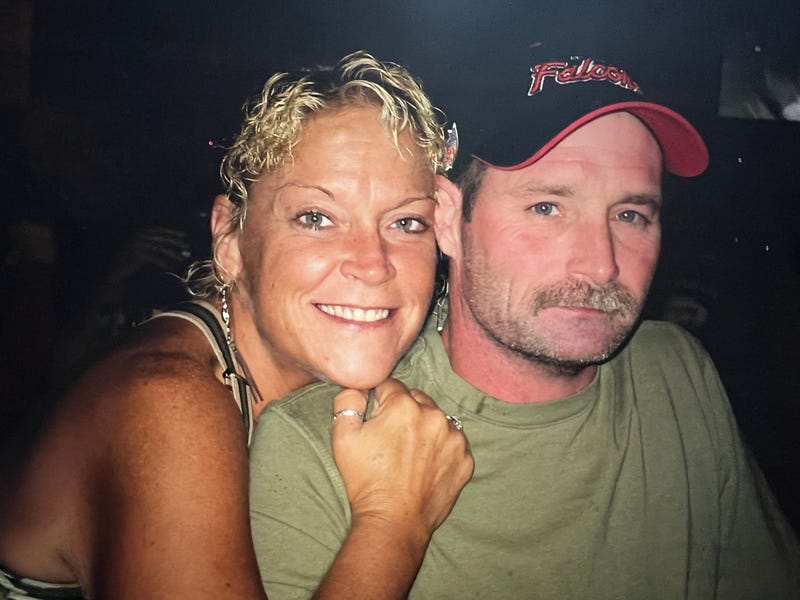
I miss my uncle.
I know he lived a little left of being right. I know he had his flaws, deep, dark flaws that affected him in ways that I do not understand. But he cared for me as a child. He looked out for me in my teens and gave me the wisdom he had in my adult years.
He taught me to fish, to build walls and roofs, and he taught me to find humor in even the most dismal of conditions.
I remember him saying to me when he was short on cash once, “I wish I’d been born rich instead of so damn pretty!” And then he laughed the most ridiculous laugh!
I hope when he left that cold hospital room and went into that great unknown, he knew I loved him very much. I hope he has found all that was denied him in this life.
So here’s to Chris and so many like him, may we try to find understanding in our hearts for them, may we give them what kindness we can, and may we love them as they are.


