
My Top 5 Quit Lit Resources
There are plenty to choose from in the alcohol-free movement
I had been to hundreds of AA meetings — possibly thousands — and it wasn’t working for me.
Not only was I growing tired of the metaphors, the cliches, and the old men pontificating — while carpet bombing their stories with more cliches and metaphors — AA just wasn’t keeping me sober.
I know that AA works well for some people, but at some point, I had to be honest with myself and realize that it would never work for me.
I know my critique of the fellowship will not be received well by AA members who got (and stay) sober in AA — and that’s understandable. If you feel like something has changed your life, it’s human nature to defend it.
Some people love snakes, and some people are petrified of them. Some people love sushi, some find it repulsive. Some people have had great experiences with Catholicism, and some — well, not so much.
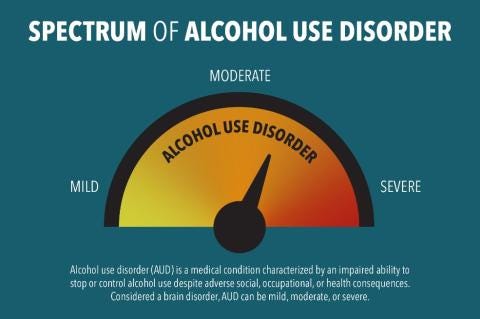
Regarding the treatment of Alcohol Use Disorder (AUD), one size does not fit all.
If you’re a loyal AA member, I have a story/metaphor for you:
Let’s say you and I are both diagnosed with the same chronic disease — then given the same medication to treat it. For me, it works wonders! It arrests the disease, changes my life, and makes me feel like a new person.
You are not so lucky. It does nothing to help your symptoms, and if anything, the side effects make you sicker. Could I be upset with you for saying the medicine didn’t work and it made you sick? Of course not.
That would be your experience — not mine.
With that said, I had to go looking for alternatives to AA, and I wanted to share the books and ideologies that had a significant impact on me. I will start with the book that inspired some of the other books on the list.
I’m not the only one who found it completely changed my perspective on alcohol.
1. The Easy Way To Stop Drinking — by Allen Carr
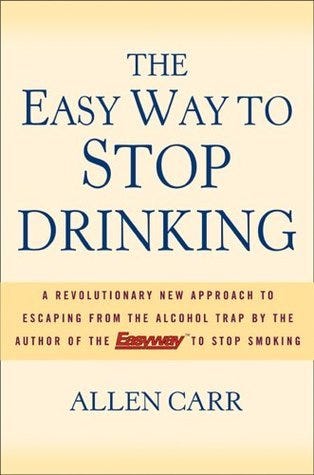
*This book also goes by the titles “The Easy Way To Control Alcohol” and “Quit Drinking Without Willpower.”
I picked up this book because of the title. Not because I thought it would help but because I wanted to see what kind of nonsense Allen Carr was going to spew at me while implying there was an “easy way” to stop drinking.
This went against everything I was taught in AA — where there “is no easier, softer way.” As it turns out, there is.
Allen Carr’s book didn’t just change how I looked at alcohol abuse; he changed the way I looked at alcohol in general. He explains that there is no such thing as a “normal drinker” when drinking an addictive, carcinogenic poison that ages your skin and damages internal organs. Even when you’re not abusing it.
I wrote an entire article on this book, and I highly recommend it. If you’re looking for a fresh perspective on alcohol use and abuse — make this the first book you read.
2. Hip Sobriety — Holly Whitaker
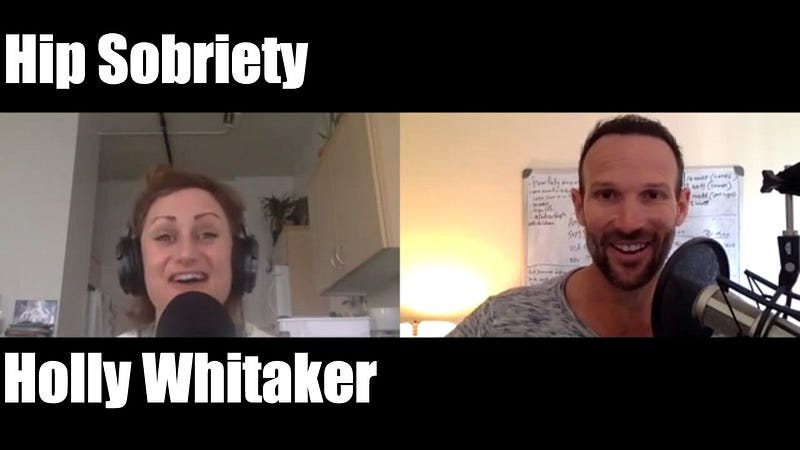
Enter Holly Whitaker.
When I stumbled on “Hip Sobriety,” it was just a blog, but one that was becoming increasingly popular. Holly Whitaker’s fresh take on alcohol abuse was influenced by Allen Carr and his Easy Way book.
While her blogs and messages are primarily geared toward women, I found most of the information to apply to anyone.
She has gone on to write the best-selling book “Quit Like A Woman,” and although it takes a further step toward appealing to women (obviously), there is a lot of good stuff in the book for men.
If women had to read the AA Big Book, which is aimed at men, I figured it was my duty to check out a book written for women.
For me, the Hip Sobriety blog was something I could relate to, and if you’re a woman, particularly one who has struggled in AA, “Quit Like A Woman” should be on your reading list.
3. SMART Recovery Handbook
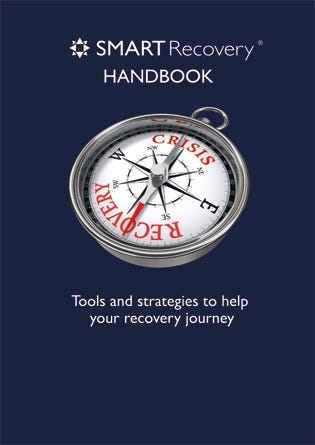
Behind Alcoholics Anonymous, SMART Recovery is the 2nd largest support group for alcohol abuse. The acronym SMART stands for “Self Management And Recovery Training,” — with an emphasis on self-management.
That’s something that completely resonated with me.
Established in 1994, the program is based on CBT — cognitive behavioral therapy — and it provides mental tools that address addiction, cravings, mindset, and personal power.
I was never a fan of referring to myself as a “diseased, defective, alcoholic” in AA, and with SMART, you can ditch the labels. The handbook is interactive, so you can put pen to paper and see where your strengths and weaknesses lie. I found this to be very enlightening.
SMART Recovery has many online meetings and has been doing Zoom meetings for years before the pandemic. Something AA has since adopted.
CBT is very effective in treating alcohol abuse and other addictions, so even if you’re doing another program or no program at all, the handbook can be very useful.
4. Sober For Good — by Anne M. Fletcher
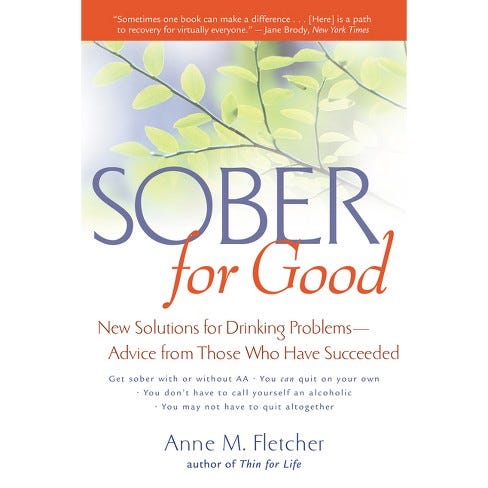
This book may be fourth on the list, but it could have been first. It was the first one I read on this list and led to all of the others.
Anne M. Fletcher interviewed hundreds of people who had gotten sober and asked them one simple question, “how did you do it?” Some did it with AA, and many did not. The spectrum of stories was eye-opening, and it destroyed some myths that I was conditioned to hold onto, like…
Myth: AA is the only way to get sober. Reality: More than half the people Fletcher surveyed recovered without AA.
Myth: You can’t get sober on your own. Reality: Many people got sober by themselves.
Myth: One drink inevitably leads right back to the bottle. Reality: A small number of people find they can have an occasional drink.
Myth: There’s nothing you can do for someone with a drinking problem until he or she is ready. Reality: Family and friends can make a big difference if they know how to help.
The book is great for providing a wealth of different stories and shows you just how unique each person is. Further hammering home that “one size does not fit all.”
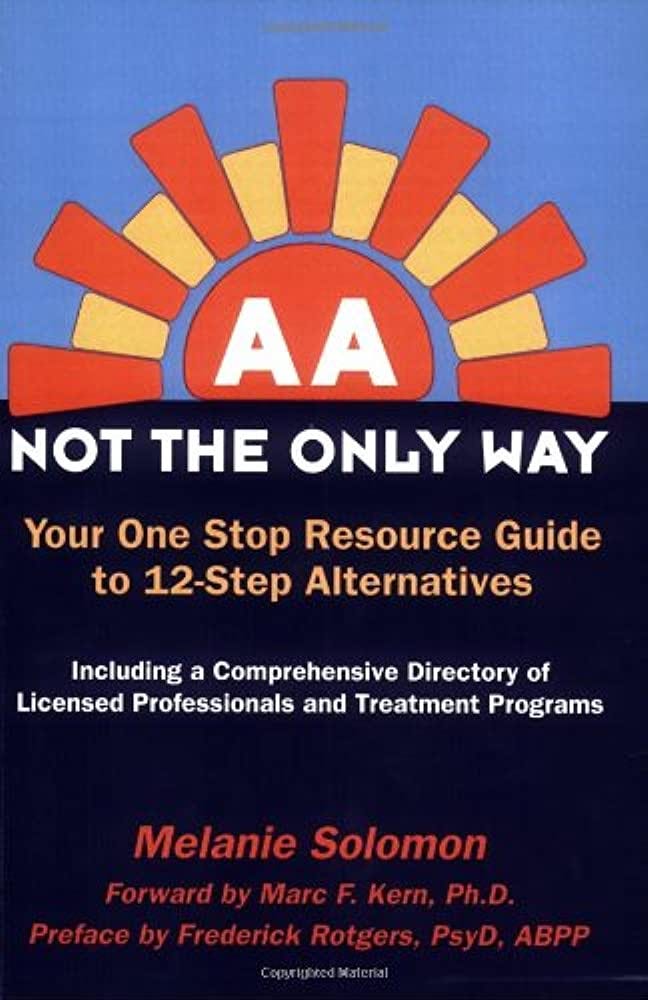
5. AA — Not The Only Way — by Melanie Solomon
The title and subtitles of this book say it all. It’s a comprehensive guide to AA alternatives with a directory of licensed professionals and treatment programs. If it does nothing more than expose you to the many options besides AA, it’s well worth the Amazon order.
Those are my TOP 5 for now, but please feel free to comment or respond with your own. If you’re on this site, chances are you find power in a good book, and there can never be too many of them.
Thank you for reading, and feel free to join me and a growing alcohol-free community on Instagram. I’d love to connect with you. ~Dave