
My Top 5 Most Useful Online Tools for Historical Research
…with a historical treasure hunt through the sands of time.
First, What is the point of this article?
Answer: To inform writers, historians, and researchers and to challenge everyone to dig into the past to find answers in the present.
This list was created using my own experiences with them over the past few years and talking to other writers who use some form of these programs. These are just a handful of things we could add into one big bucket called “Writing Tools.” There’s so much out there!
To make this list more compelling and applicable to the topic “historical research,” I ask that you imagine you are an author looking to research a subject for your book. Let’s pretend that you are exploring historical records for a novel you are writing that tells the story of a character named ‘Chester Junebury’. Chester lived in London in 1901, and your goal is to find as much as possible about what it was like back then. How can you do this? Well, I have found several websites that help me do just that.
1. DocsTeach
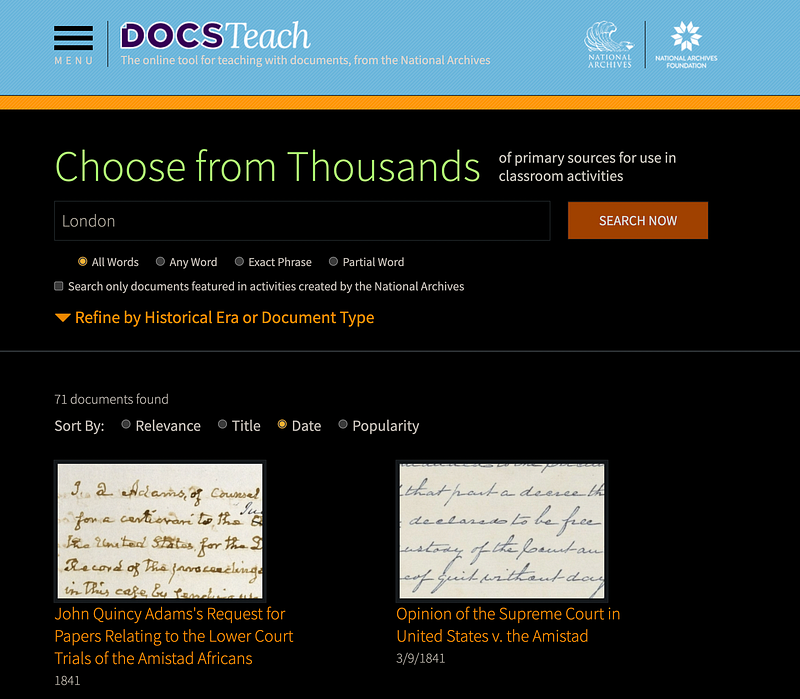
Figure 1. Docsteach website with an example query. A basic search for London.
Docsteach is a website designed for educators that pulls from the National Archives and can retrieve primary source materials for crafting lessons on various topics. What is powerful about this website is that it can even pull images. For example, as you can see in the figure, a search for ‘London’ can pull documents from many years. Adding the year (i.e., ‘London 1901’) makes this search more detailed and applicable.
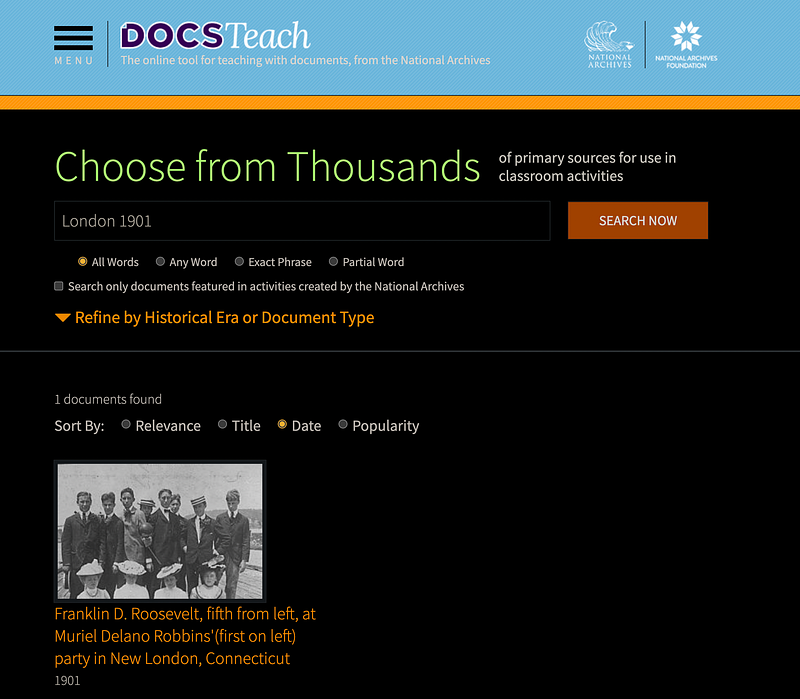
Figure 2. Search with date 1901.
The results show an image. Oh! It looks like FDR was photographed at a party in New London, Connecticut, in 1901 (Franklin D. Roosevelt, Fifth from Left, at Muriel Delano Robbins’ (First on Left) Party in New London, Connecticut | DocsTeach, n.d.).
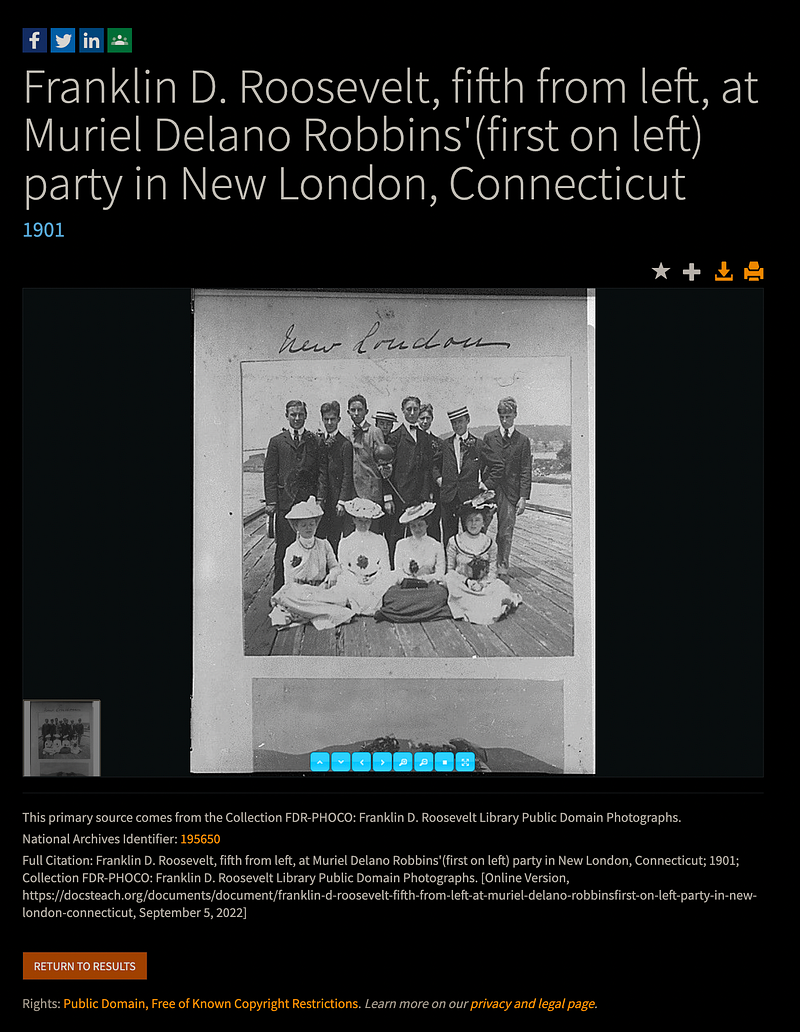
Figure 3. FDR at Muriel Delano Robbins’ Party. This primary source comes from the Collection FDR-PHOCO: Franklin D. Roosevelt Library Public Domain Photographs.
The algorithm thought we wanted to see this because we typed ‘London’. That’s okay; it’s still interesting and we could add some context if we wanted to include him later on as a supporting character.
(Digital Vaults | DocsTeach, n.d.)
Let’s take our search to another site.
2. Sweetsearch
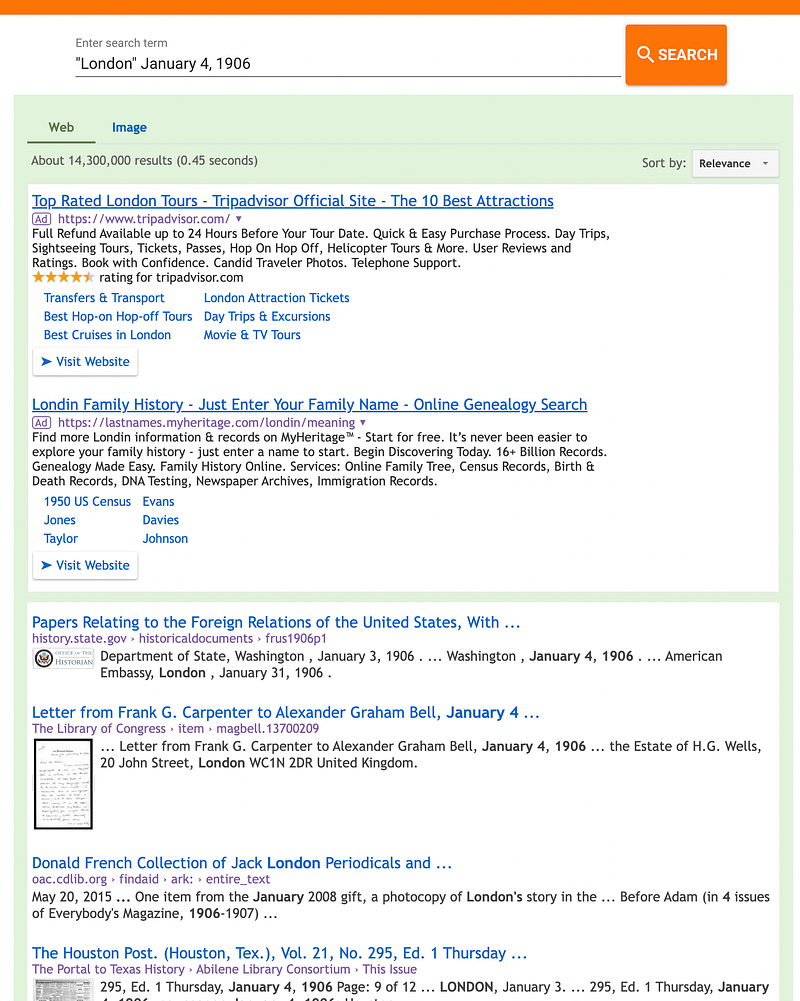
Figure 5. London Jan 4, 1906
note: also, see this resource for great “today” information from history: http://2day.sweetsearch.com/
Fast forward to the year 1906, and let’s just see what comes on our search: ‘“London” Jan 4, 1906’
It found a letter from Frank G. Carpenter to Alexander Graham Bell. Cool… might be useful to know.
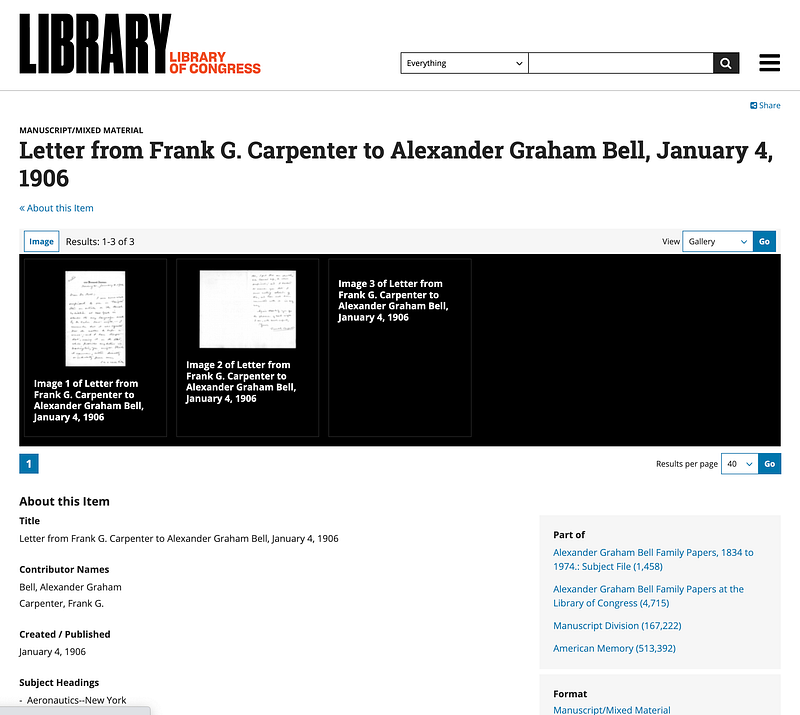
Figure 6. Letter to Dr. Bell.
Let’s forget our character (for the moment) and just look at what else this can do.
Query: “London” Jan 4, 1945
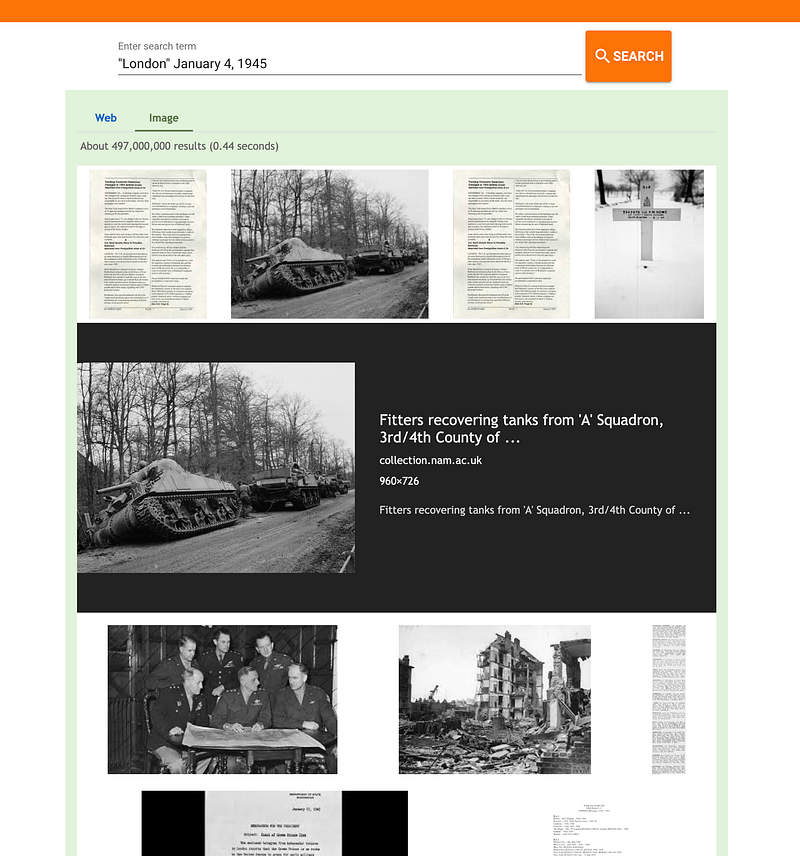
Figure 7. “London” Jan 4, 1945
Click Images. Be amazed.
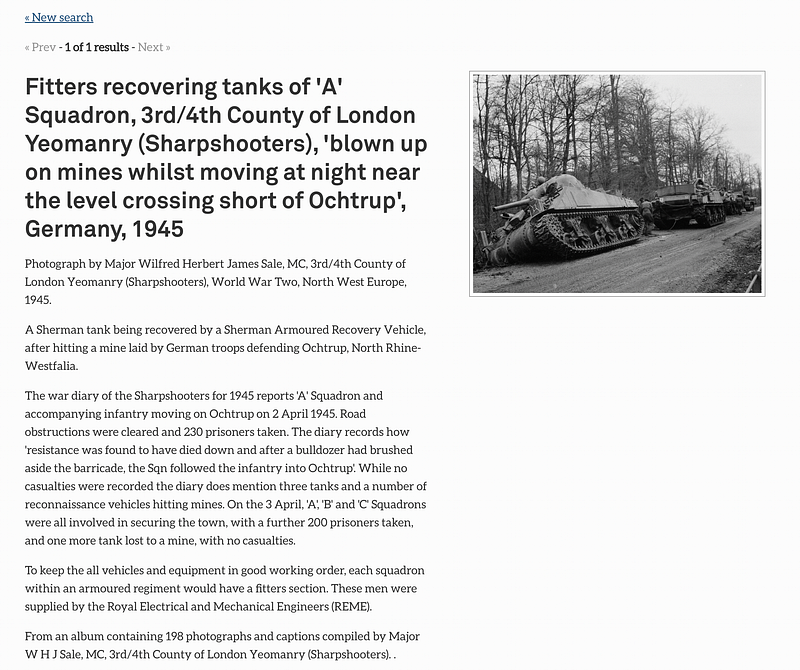
Figure 8. The article this found from 1945.
(SweetSearch — A Search Engine for Students, n.d.)
3. HistoryPin
Do you have a scene that requires graphic details of a city, but you have no idea what it looked like back then? There is a ‘waybackmachine’ (of sorts) for our street maps as well!
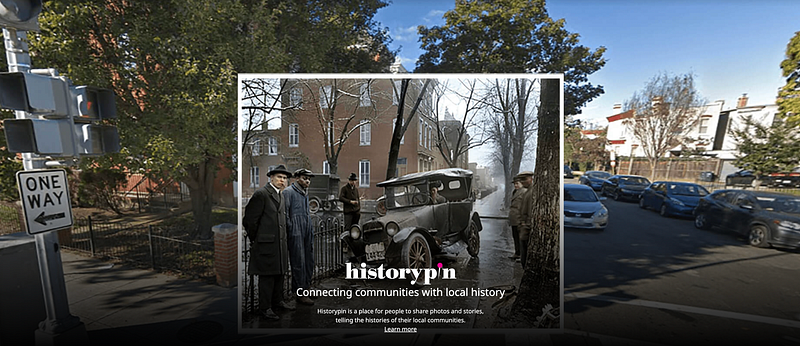
Figure 9. HistoryPin’s main page.
Examining London is easy! Just search for London and use the date sliders to determine start and end dates.
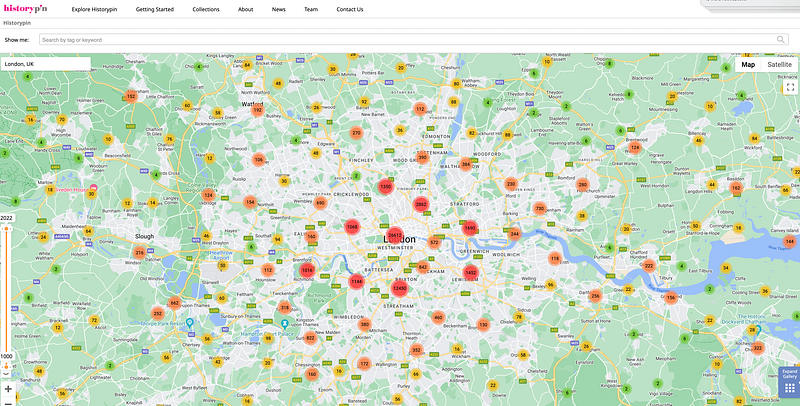
Figure 10. The Historypin map.
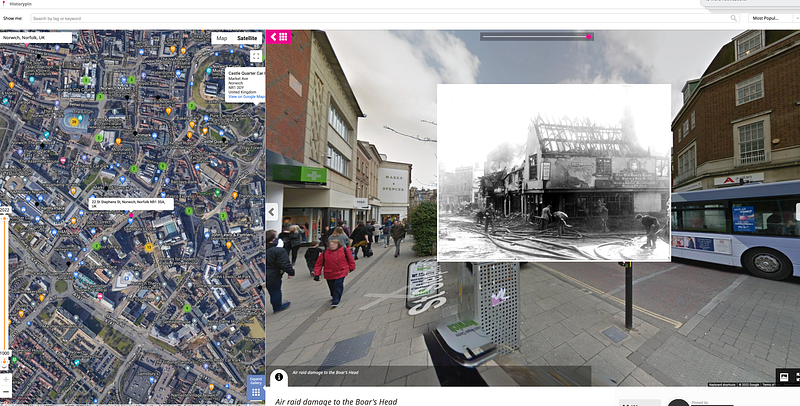
Figure 11. Another example of street view overlay.
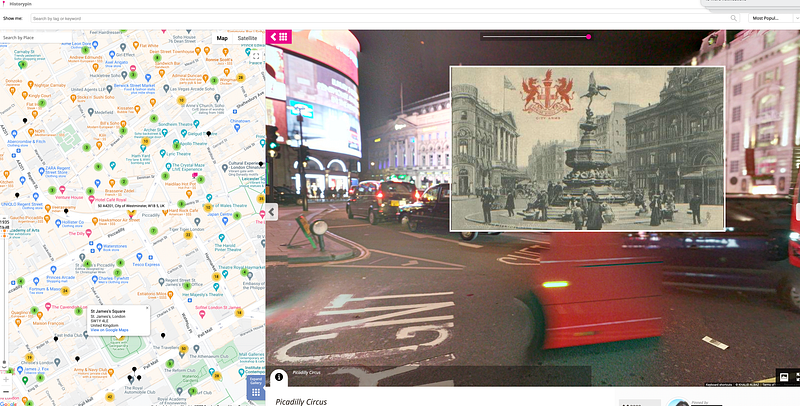
Figure 12. An overlay of Picadilly Circus.
The example in Figure 12 shows an overlay of Picadilly Circus as it was depicted on a postcard during the first world war.
3. The National Archives — Milestone Documents
These are a collection of important documents related to American politics and development. If you use this website for studying London, it might not have as much value; however, other historical scenes in the United States should consider these as potential background information to throw in when you have little to say.
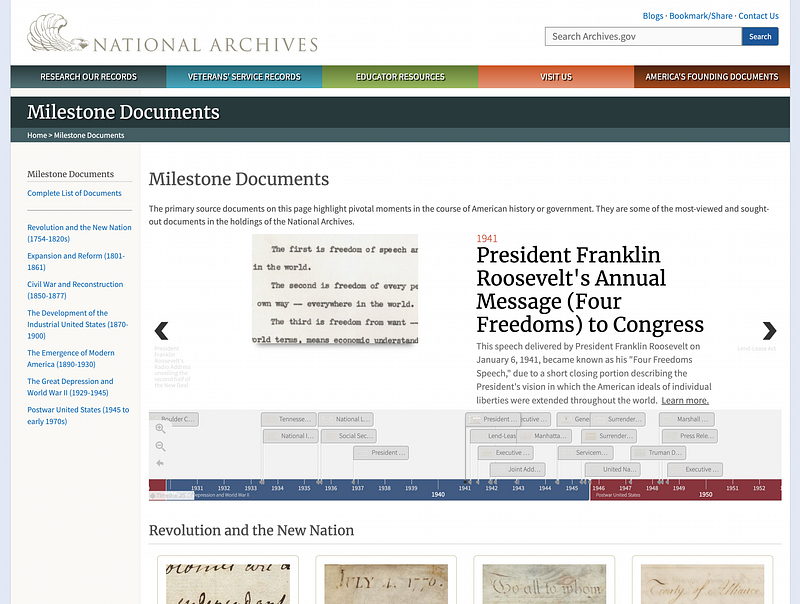
Figure 13. The National Archives — Milestone Docs Main page.
5. Internet History Sourcebooks Project
This site is put out by Paul Halsall at Fordham University. It has a huge number of great text resources on various historical eras.
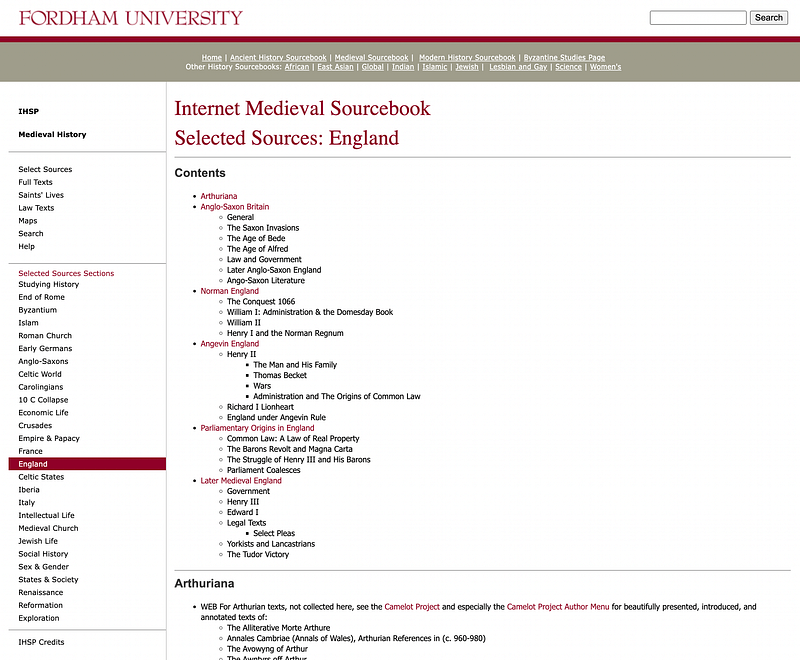
Figure 14. The Internet History Sourcebooks Project
Let’s Try it out! -> The challenge of The Street Group no. 9
To get used to these tools and use them in parallel, I would love to see how well you do at a little challenge I created with Google. If you are a passionate Historical Detective, go to the websites we have discussed and try to see if you find anything you could use as an author writing about our character in London, say in the year 1914. (One Sentence). But more than this. Try to solve the case of The Street Group no. 9. Best of luck.
Works Cited
Digital Vaults | DocsTeach. (n.d.). Retrieved September 5, 2022, from https://docsteach.org/digital-vaults
Franklin D. Roosevelt, fifth from left, at Muriel Delano Robbins’(first on left) party in New London, Connecticut | DocsTeach. (n.d.). Retrieved September 5, 2022, from https://docsteach.org/documents/document/franklin-d-roosevelt-fifth-from-left-at-muriel-delano-robbinsfirst-on-left-party-in-new-london-connecticut
Internet History Sourcebooks Project. (n.d.). Retrieved September 5, 2022, from https://sourcebooks.fordham.edu/
Milestone Documents. (2021, April 9). National Archives. https://www.archives.gov/milestone-documents/list
SweetSearch — A Search Engine for Students. (n.d.). Retrieved September 5, 2022, from https://history.sweetsearch.com/


