My Thoughts on Rules for Writing Opening Chapters
How I approach the beginning of a novel.
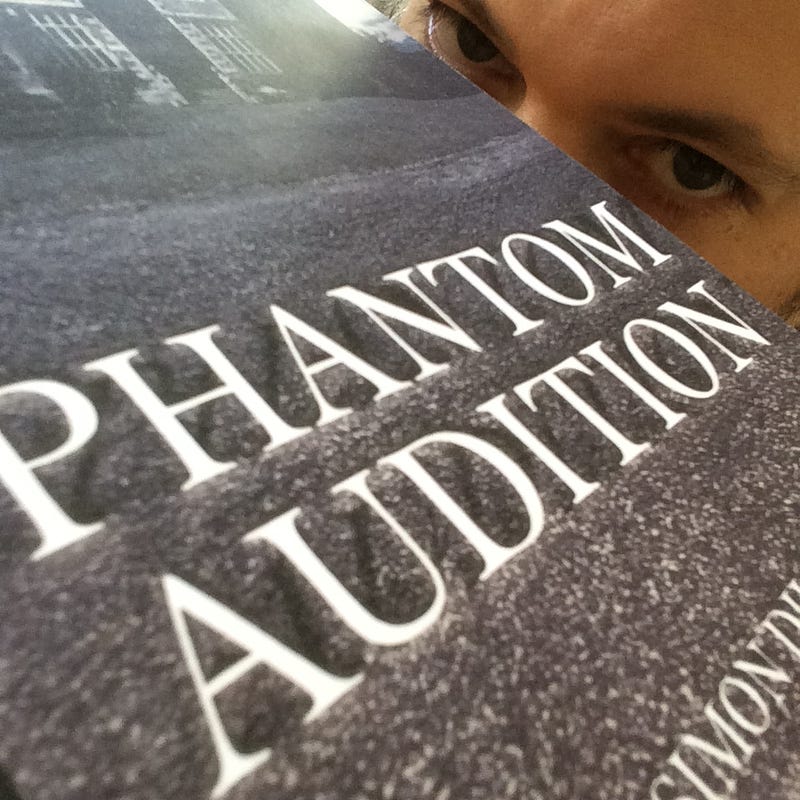
There’s a lot of advice out there for fiction writers, urging novelists to anxiously adhere to various sets of absolute rules when composing open chapters. Never open a book with weather. Always introduce your protagonist on the first page. Beware adverbs, adjectives, and descriptions in general, because that’s just boring, apparently. People today supposedly have the attention span of a goldfish — sorry, TikTok user (I don’t wish to insult the intelligence of goldfish) — so throw the reader into something exciting straight away. Don’t use prologues. Don’t use first-person unless you’ve got an official “experienced author” badge. Don’t use present tense or you’ll upset Philip Pullman. You get my point: Lots of well-meaning advice, some of it useful as a guiding principle, but none of it warrants trumping an author’s instinct.
I’ve written over twenty novels, some of which have been self-published, three of which were traditionally published by a small indie US publisher, and I’m continuing to try for a mainstream publishing deal (extremely difficult, but I’m persevering nonetheless). Those are my credentials, such as they are, and I mention them purely to suggest that what I’m about to say should also be taken with a pinch or sack of salt, as you see fit. I don’t want to pass myself off as an expert, but I want to explain a little about my process for writing opening chapters in a manner that is hopefully freeing for fiction writers, who find the kinds of advice doled out above something of a straitjacket.
The only absolute rule
Adhering to strict rules about opening chapters is no guarantee of success. My guiding principle is an artist must be true to themselves and the demands of the story they wish to tell. The only absolute is that it must compel the reader to continue reading. As such, whilst sentiments like “Never open a book with weather” have their place as guidelines, they should never be treated as gospel. Otherwise, we wouldn’t have Charlotte Bronte’s Jane Eyre, for instance. Or George Orwell’s Nineteen Eighty-Four. Or Ernest Hemingway’s A Very Short Story or In Another Country. Yes, the latter two are short stories not novels, but I approach short fiction in the same manner.
A trifling matter of tenses
I don’t share Philip Pullman’s views on the use of present tense. It can work well as a dramatic device, depending on the story one is telling. I’ve written stories in third-person past tense, first-person past tense, first-person present tense, and (in an as-yet unpublished fantasy novel entitled Ravenseed), a combination of all three, depending on which character’s perspective is being expounded on at any given point. Ravenseed features a present-day protagonist, whose tale is told in third-person past tense. She reads an ancient manuscript that forms the bulk of the novel, told in first-person past tense. There is also a framing device from the perspective of a third, villainous character, told in first person present tense. Said character appears in the opening chapter rather than the protagonist (another broken rule).
Ambitious? Not really. I just told my story the way I thought it ought to be told. Multiple points of view in fantasy stories are nothing new. When done well (as I hope mine is), they add depth, complexity, irony, and emotional resonance, rather than confusion. Jonathan Stroud’s Bartimaeus trilogy, which brilliantly switches from third person magician protagonist to first person demon that he’s summoned to assist him, is a fine example.
With Ravenseed, I don’t jump perspective in the middle of a chapter, as that, I suspect, would cause confusion. Nonetheless, despite being a no-no from the absolutists, leaping from perspective to perspective within a chapter has been done well in the likes of JRR Tolkien’s The Lord of the Rings and Frank Herbert’s Dune. So even then, it isn’t an absolute rule.
Opening with scene-setting musings
To grab the reader with my openings, I mostly opt for one of two approaches. Firstly, to dive into the protagonist’s musings to give a compelling clue as to the nature of the world and story the reader is about to experience. The opening of my dystopian satirical romance Peaceful Quiet Lives opens thus (with apologies to Philip Pullman for the use of present tense):
“The morality inspectors are late.
I glance at my watch. 7.37am. They were supposed to be here seven minutes ago. Typically, a morality inspection of a premises the size of my apartment takes a good twenty minutes, not allowing for nervous small talk, or, if you know the inspectors well, salacious tales of impounded illegal political materials, banned books, films, drugs, alcohol, pornography, and so forth.” — Peaceful Quiet Lives, Simon Dillon.
This scene-setter opening doesn’t start with the illicit romance that dominates the novel. In this case, I felt it was important to first give a sense of the protagonist’s mindset and the world in which he lives. He is numb to being oppressed, hinting at his nation’s corruption and sanctimonious hypocrisy. Hopefully, this is enough to intrigue the reader to find out more.
Opening with action
My second approach is to throw the reader into the thick of the action. Generally, I do that more with my children’s adventure stories. Here’s an example, from Echo and the White Howl.
“The pack stalked the bull elk in the forest. Having successfully separated the beast from his herd, the wolves finally closed in for the kill.
Echo crouched in the snow behind a rock, a short distance above the elk, on a steep slope. He anticipated the imminent pounding thrill that would course through his veins when the attack signal came. He could practically smell the blood on the icy air. Every sense in his body tingled, and he longed to sink his teeth into the succulent flesh. But still, he waited. Aatag, the Alpha and his father, would make his move soon.” — Echo and the White Howl, Simon Dillon.
Here, the reader is thrown into the intensity of a wolf pack hunt, with Echo and his father immediately introduced stalking and killing an elk. The introduction also aimed to establish atmosphere, emphasising the Alaskan setting. Animal fiction isn’t a genre I’m likely to dabble in again (it’s a tough nut to crack), but I wrote this novel for my youngest son, who wanted an adventure story about wolves.
Opening gothic mysteries
Throwing the reader into the middle of an action scene works well for a story like Echo and the White Howl, but it doesn’t work for every story. For my gothic mystery horror-thriller novels (a particular mainstay in my fiction), I tend to shy away from throwing the reader into something horrifying straight away. I prefer the slow burn approach, intriguing but also gradually unsettling the reader. In such stories, the mystery is the hook, but the mystery is as much about the protagonist as external events. I’ve written more about my approach to writing gothic mysteries here, but with the opening chapter, I prefer a tone of creeping unease.
For example, Spectre of Springwell Forest opens years after the main events of the story, in a framing device wherein the protagonist is older, apparently happy and settled. Amid preparations for Christmas, she looks back on her life, and it becomes clear horrors from the past still haunt her. I took this structural cue from Susan Hill’s brilliant The Woman in Black, which undoubtedly informed Spectre of Springwell Forest (though my novel is a very different beast, to be clear).
In The Irresistible Summons, I broke another rule by opening with a prologue; another no-no, according to many. Yet prologues are simply another literary device and can be used well or ill. The Irresistible Summons still works if the prologue is omitted, but why would I? It sets up significant sympathy for the protagonist due to a tragedy in her teenage years, as well as hinting at the mystery that informs said tragedy, as well as the rest of the novel.
Where I’ve made mistakes
Since all writers constantly learn, improve, and evolve, I look back on some of my opening chapters and cringe a little. For example, much as I love The Birds Began to Sing overall, if I were writing this novel today, I’d approach the opening a little differently. It involves the protagonist, an aspiring novelist, being cynical about rejection letters from literary agents. On balance, this feels a little petulant and self-serving. It isn’t terrible, and hopefully, it gets a satirical giggle, but it’s a bit of a cheap trick. Thankfully, I think the rest of the book makes up for this.
Over the next few weeks, Fictions are publishing some of my opening chapters. I’ve tried to select those that have a good stand-alone feel, though obviously, they are just tasters. I may include The Birds Began to Sing, since I’ve discussed it here, and you can judge for yourselves whether the opening is amusing or self-indulgent.
If you enjoyed this article, please consider supporting my writing by offering a tip via Paypal (see tip button below). Better still, if you want unlimited access to my writing on Medium (and that of many other talented writers), click here to upgrade to full Medium membership. This is an affiliate link. I receive financial incentives for new referrals.
For more about me and my writing on Medium, please click here. For information on my writing outside Medium, please click here. For a list of my published novels and other works, please click here.