
My Son Went Jogging at Dawn
His fitness routine has me running scared!
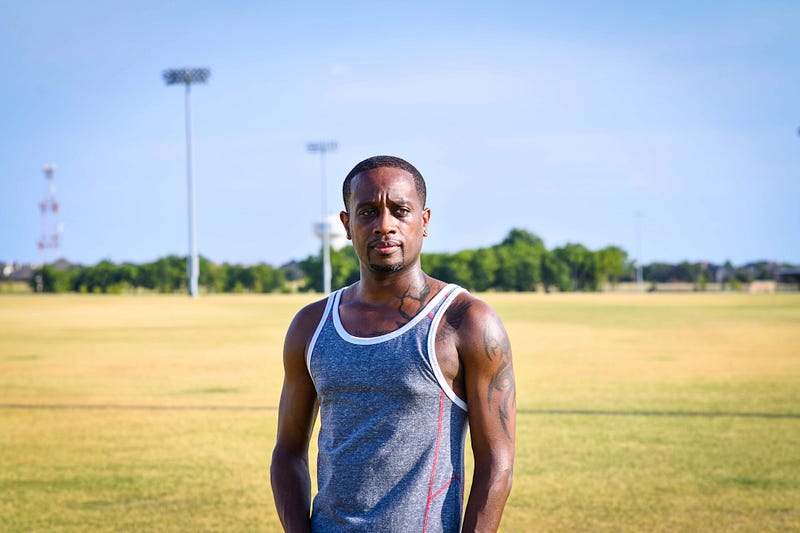
My 21-year-old son looks like Freddie Gray, sort of.
He’s a medium-toned Indian-American university student, at home since mid-March because of the pandemic. He went for a jog this morning at 4:30. He was alone and ran throughout our small Boston-area town that voted for our president.
I didn’t make a fuss; he’d just get angry and feel more imprisoned by our family’s disease precautions. Exercise helps him to cope with all that’s on hold for him, as the world slowly re-opens.
It all weighs heavily on him. And, this moment on matters of race makes everything worse, for him and me.
The recent murders of Ahmaud Aubrey, Breonna Taylor, George Floyd, and Raychard Brooks, who was laid to rest today, reveal a deep-seated hatred permeating our culture.
It shows up in daily interactions people of color have lived with for hundreds of years. Micro-aggressions and systemic disparities feed fear, resentment, and acts of violence against people of color going about their lives. People who look like me and my family see and feel it every day.
Being a person of color carries risks for all of us who are not White.
A man of color jogging through his neighborhood could die, like Ahmaud Aubrey, or be threatened with a call to the police, like a man birdwatching in Central Park. This isn’t a paranoid mother’s fear. It’s real and happens all the time.
My oldest of three sons is 27 years old, around the same age as Breonna Taylor, Ahmaud Aubrey, and Raychard Brooks. Since 25-year-old Freddie Gray’s murder in Baltimore five years ago, I’ve noticed a slow evaporation of my assumptions on race in America.
There is no difference within categories of difference.
My parents came to this country from India shortly after the Johnson administration loosened a previous ban on immigration from non-European countries. The 1965 legislation allowed academics and skilled professionals to settle in the United States.
They were seen as competitive, well-educated scientists, doctors, and engineers whose talents could propel this country’s economic growth and standing in the world. Supporters of the new policy touted it as a sound investment in American progress.
Immigrant success stories built on hard work and wealth acquisition gave rise to new categories of people from other places who spoke in languages other than English, ate strange food, and looked ‘different.’ They were also ‘smart.’
Growing numbers of them moved to nice suburbs. Their property taxes helped to fund highly competitive school districts and the gifted-and-talented programs attended by many of their children.
I began school at the start of this trend, experiencing it as I went through school and college. I grew up sensing a palpable resentment and anger at my family’s progress.
I often encountered adults in my neighborhood or teachers at school who struggled to hide their surprise and frustration that my dad, who was born and raised in a ‘Third-World’ country could excel in his career and help his extended family to join us here. They had no qualms in telling me we took good-paying jobs away from ‘real Americans.’
Years later in college, my boyfriend from India, now husband of nearly thirty years, received the same angry comment when he got the highest scores on exams, setting professors’ grade curves often much higher than class averages.
Versions of this dynamic have continued since we had children and moved to the suburbs. It’s as if some of our neighbors would be happier if we weren’t here to contribute to our community.
This kind of fear, resentment, and hatred differs from the historical hatred of Native American/Indigenous, Black, and Latino people in our country face. That distinction allows recent immigrants from Non-European countries, like my family, to feel somewhat secure in their standing in American society.
We newcomers don’t share a history of enduring forced removal from their lands, slavery, or border wars with Mexico. Our ancestors in other places experienced Western colonialism where Europeans, or their American descendants, appropriated darker-skinned people elsewhere in the world.
Colonial histories are a common feature among those of us seen by many today as ‘not real’ American citizens, whether Native/Indigenous People, African-American, Latino, or Asian.
This is where layers of difference affect one’s experience of being ‘different.’
Unequal systems of rewards and access to privilege are the strategic investments in a narrative of feigned fairness. Powerful groups control the system, pass the laws, and write histories of their communities. It’s why we’re learning about Juneteenth Day, one hundred fifty-five years after the fact.
We don’t appreciate immigrant/non-White contributions, sacrifices, and losses in building this country. They don’t add up to the story of the American Dream as defined by those in power.
Rich Asians in wealthy suburbs provide convenient proof that people of color don’t suffer racism. They ‘enjoy’ their progress, having left their ‘poor’ countries of origin to become ‘American.’ Or, so it’s widely accepted.
The blurring of history is part of an insidious American caste system which pits minority groups against each another, through unequal access to opportunities. Access itself doesn’t protect from suspicion and hatred. It’s why many African-American physicians are stalked by police local police.
Most people of color understand that they will never share in all that being White offers.
The unstated fact is people of color will never enjoy the assumed ‘innocence’ our White neighbors and colleagues enjoy.
There is no ‘blind meritocracy’ to reward individual progress. Ugly words previously unsaid, though always understood as code for ‘not for you’, are directed to people like me. Sometimes bullets, not words, do the talking.
One knows when one isn’t welcome.
The harder many White people argue to the contrary when confronted on this point, the more they reveal their chosen blindness to the facts of lived lives, like mine.
Referring to my family’s immigrant success story, and others like it, as ‘proof’ of this not being a racist country, means nothing to the families of Ahmaud, Breonna, George, Raychard, and Freddie, whom my youngest boy eerily resembles.
Most people of color understand their ‘place’ within our social and cultural hierarchy. It’s why we raise our kids as we do, telling them to do this or that, to succeed, or even make it through the day.
I know why I feel better when my sons look ‘professional, polite, and neat.’ These are code words for ‘non-threatening’ to White people in our eclectic, working-class town. I want my sons to fit into acceptable categories so I won’t live the nightmare too many other mothers of color in our country live every day.
To be a person of color is to be NOT White. We are Suspect. Feared. Resented. Black. All of us.
Black lives matter. Period.
Otherwise, my life and my sons’ lives don’t matter at all in a society struggling with its difficult history and a blind belief in fairness for all, never truly realized.
This is the plain truth in living color. It showed itself this morning when my son told me about the fiery sky at dawn and his fantastic morning run. I feel a burning fear in my stomach when my sons leave home. Will they be safe?
I plead with people in my town and beyond to see their own kids in my kids, rather than their fear and hatred. I pray that I’m not asking too much.
What will you do differently, now that you know how I experience difference?


