
My Small Nocturnal Visitor
From the tropics of Costa Rica
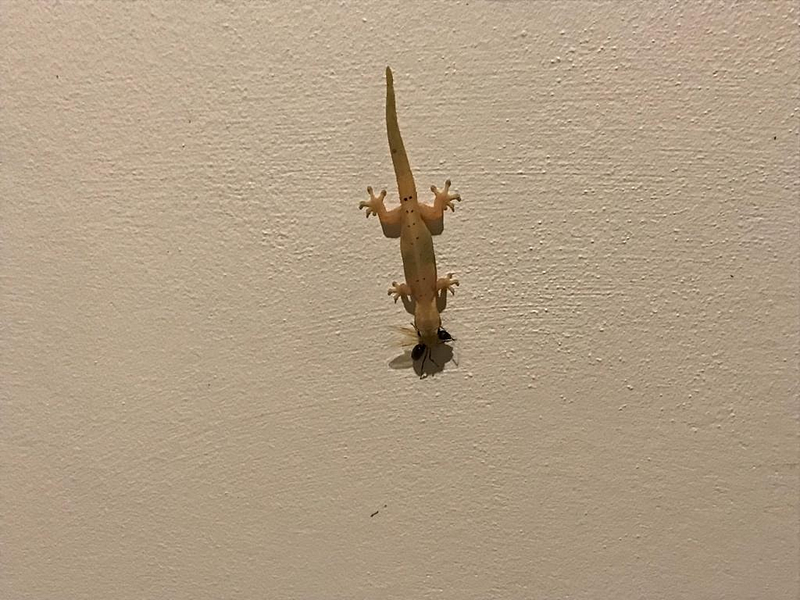
Visiting the Caribbean coast of Costa Rica, I marveled at the animals of the region. One was a frequent visitor in houses there, I discovered. One day a small reptile skittered down the wall. More patient than most lizards, it paused for me to snap a quick picture. I marveled at its translucent body and slightly splayed toes.
During the warm nights, lying under a mosquito net in the darkness, it took time to get used to sounds that were not a part of my normal life. The distant rhythm of the pounding surf was never-ending. Occasionally, the hoots of howler monkeys interrupted the lullaby. Once, I heard a skittering noise on the metal roof and a strange squeaking, probably bats. Then, from time to time, an unusual chirp came from near the ceiling. Almost a kissing sound! A sort of cricket, perhaps? Whatever it was, certainly there was no reason to fear.
The next day I asked my fellow housemates if they knew the origin of that sound. “It undoubtedly was a gecko, like the one you saw the other day!” Much as it tended to distract me as I sought sleep, it was certainly not to be feared, I learned. In fact, it is a nocturnal ally that specializes in consuming insects and even scorpions.
Common in the tropical areas of Latin America, these mysterious little creatures are thought to have arrived in the Americas on ancient ships from China or the Philippines. The type I saw was probably the one known as an Asian house gecko. Although reptiles, geckos have vocal cords and use them, among other purposes, to communicate with potential mates. Others have said they vocalize to indicate contentment. In Mexico, where I live, they are often known as cuijas, but because of the peculiar sound they make, in some areas are known as chuchus (onomatopoeic, imitating the sound) or besuconas, “kissers.”
Knowing more about my strange nightly visitor was comforting. It was saying, “I’m here, you are protected, don’t fear.” A tiny but powerful message, communicated invisibly, at a distance, with kisses.