
TRAVEL MEMOIRS
My Sixteen-Hour Journey with Armenian Migrants
What it taught me about Armenia and myself
Back in 2001 when I was backpacking through the Caucasus, I had a unique opportunity to spend sixteen hours on a bus ride from Yerevan to Hopa, Turkey. The Turkish and Armenian border was closed back then, as it still is now, because of the conflict between Armenia and Azerbaijan over Nagorno-Karabagh. This necessitated taking a winding route from Yerevan through Georgia to Turkey, crossing two borders, and buying extra visas.
Before the Bus Left
I didn’t have many options since I couldn’t fly directly there, and I was also trying to travel on thirty dollars a day, and flying would have broken my budget. Instead, I begrudgingly bought my bus ticket and plunged into an overnight bus ride. I had enjoyed my three weeks in all three countries of the Caucasus and was unsure how hard Turkey would be for me to navigate. The Caucasus had been easier for me than I thought using a combination of my Lonely Planet Guide and basic Russian to get around. I was even able to find new ways to travel even more cheaply than the guide by asking locals.
So with some bittersweetness, I got on the bus in Yerevan. The first thing I noticed was who else was boarding the bus. It was clear from early on that I would be sharing the bus with all Armenian locals. I was curious from the onset about why a bus full of Armenians would be traveling to Turkey. The conflict between Armenia, Azerbaijan, Turkey, and the Nagorno-Karabagh separatists had been frozen for a few years but the simmering hostility between the nations remained.
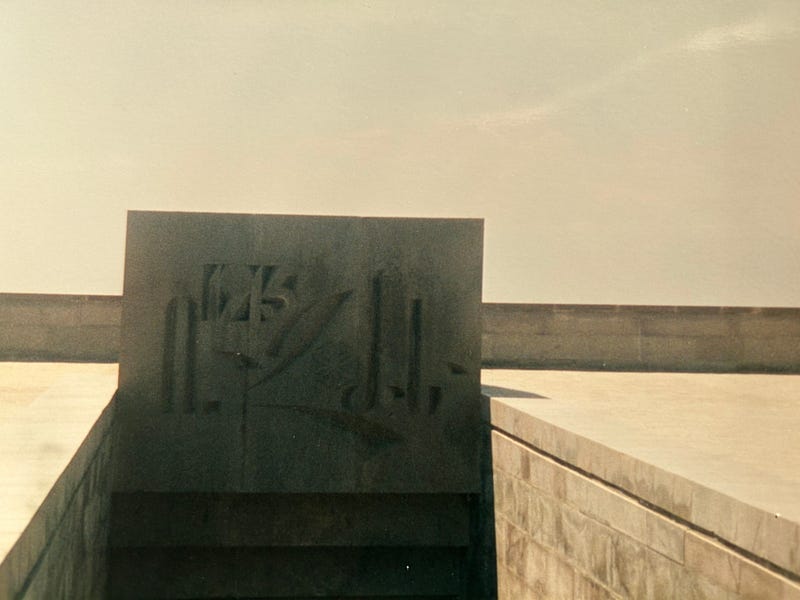
Why would someone want to go into enemy territory especially when it takes sixteen hours to get there? Having visited the Genocide Memorial in Yerevan, I also knew there was unresolved pain and trauma between the Turks and Armenians.
I received my first clue in the five minutes before the bus left. I arrived and boarded very early so I could get a window seat to view the local landscapes and rest my head against it to sleep. The bus was leaving in the early evening, and it would be an overnight trip. Sitting on the left side of the bus, I was instantly distracted by an emotional exchange taking place right outside my window. A woman was saying goodbye to her three-year-old daughter and the exchange was heartbreaking. At first, the woman was smiling, talking to and hugging her daughter as she carried her. While I couldn’t fathom what she was saying from the other side of the glass, I could tell she was reassuring her.
The goodbye exchange seemed to work until the mother gave the toddler over to her husband, and the daughter began to wail and force her way back into her mother’s arms. Then the mother began tearing up herself. She kept consoling her daughter, but nothing could calm her daughter down or keep her tears from flowing. Finally, the father had to rip his daughter from his wife’s arms as the bus conductor came out to tell everyone the bus was leaving.
The woman came onto the bus. The bus was almost full, so she grabbed one of the last available seats which was next to me. Until the bus started to leave this woman’s daughter continued to hit the glass and cry for her mother while her mother sobbed in her seat with her head down. It was one of the most gut-wrenching things for me to have witnessed and probably why after so many years, it’s still like it happened yesterday. Today as a mother of a three-year-old, while taking a business trip for a week and a half to India, I felt for myself how a child can easily break a mother’s heart. Back then I only imagined the pain.
The Bus Ride through Armenia
After she had dried away her tears, a friend came over to her and directed her to the back of the bus. When she returned to her seat there was a smell of vodka on her breath. We introduced ourselves to each other. We spoke Russian since we didn’t speak each other’s language. I can’t remember the woman’s name, but I will never forget the impact she had on me during this bus ride. She told me that she had to have that shot of vodka just to stay composed and asked if I wanted one. I nodded in understanding but said no politely to the vodka. I asked her where she was headed, and she told me Istanbul. What was in Istanbul, I asked her. A job she said. She was hoping to find a job as a housemaid when she arrived in Istanbul.
I asked her if everyone else on this bus was Armenian and going for the same purpose. She said yes. There were no jobs in Armenia and many people would cross the border to Turkey at the time looking to make money to help feed their families back in Armenia. I considered the irony of this considering how many Turks had fled to Germany for the same purpose in the 1960s and 1970s, and now in 2001, Turkey was the host of migrants. She told me that most of the people on the bus already had jobs in Turkey and were home visiting family, but this would be her first trip.
None of this was surprising to me. When I lived in Ukraine a few years before, my cousin traveled back and forth to Poland for the same reason. There were few jobs in Ukraine at the time, and so I was sympathetic to their plight.
Workers would stay in Turkey for almost six months, come home for a few weeks visit, and then go back to work for another six months. The workers were not legal but the Turkish border guards would turn a blind eye if an Armenian could show them that they had $400 on them to spend in Turkey as tourists. I also asked if a bribe was involved, but she would admit nothing to me. Why was she going to Turkey and not her husband, I asked. He had gone previously but had injured himself and could no longer work at hard labor.
The Bus Ride through Georgia
Soon it was late, and we all settled down for some much-needed rest. As the bus reached the Georgian border, the lights inside the bus came on, and we all filed out and walked through the border crossing without incident. I had purchased a multi-entry Georgian visa planning to have to cross multiple times. I believe the Georgians and Armenians didn’t require visas to travel so their process was even easier than mine.
We all returned to our former slumber as the bus continued to hum along those bumpy Georgian roads, not unlike the Armenian bumpy roads we had left. We were awakened again. This time we were in the city of Batumi in Adzharia. The bus driver had already warned us that everyone would have to pay the $20 visa/bribe to pass through this semi-autonomous region in Georgia propped up by Russia. We didn’t have to exit the bus this time. The border guard/gangster came onto the bus to collect our money, for our “convenience”.
The drive from Batumi to the Turkish border was not very long, and many of us stayed awake knowing we would have to be reawakened soon for the border crossing. Even if I wanted to sleep, I wouldn’t have been able to because suddenly there was a commotion amongst the Armenians. I soon found out from one of them in Russian that they were all pooling their money so everyone would have the requisite $400 to cross, but they were short for one person — my new neighbor.

The Turkish Border.
Everyone on the bus by then knew I was American, and I had chatted earlier with a few of them finding them to be good people who were just looking to earn a living. They asked if they could borrow $400 from me.
As a U.S. passport holder, I knew I would be welcome into Turkey with few questions asked and no one would ask to see my money. This gave me a dilemma and I had a choice to make. Would I choose to trust these people I had only just met with my $400 that I needed to continue to travel on thirty dollars a day or would I say no? Keeping a healthy level of distrust and conservatism had served me well living in Ukraine and on this trip thus far. Would I choose to take a risk this time?
Yes. I chose to give them my four crisp American $100 bills. We had separate lines for citizens from the Caucasus nations and other nationals. So I crossed on my own without ceremony. I could just flash my U.S. passport in those pre-9/11 days, and I was well protected and welcome. It took the Armenian group over an hour to cross. Was I nervous that I would somehow lose my money at the border crossing? Absolutely! I was conspiring with illegal migrants. But I was also helping people who needed my help. So I waited with bated breath until each of them returned to the bus on the other side of the border.
They gave me back my money promptly and with gratitude. I was the hero of the bus ride even though I didn’t feel that way. I said farewell to all my new friends in Hopa on the Black Sea while they continued the rest of the way to Istanbul. I never exchanged addresses with any of them, but I will never forget what they taught me.
Every person who wants a job should be respected. And sometimes I need to take a risk to help someone in need if that’s what my instincts tell me is the right thing to do.
All these years later, I continue to live my life with those two principles in mind.
Thank you for reading.