
Saturday Morning Cinema — A Fatherhood Tradition Continues in Birmingham
Strategies, Traditions, and Favorite Films at Birmingham’s Sidewalk Film Festival
Post #14 of #20: I am reflecting on twenty years of personal and professional experiences in Birmingham and beyond. Visit www.medium.com/HonestlyEd to read the full #20For20 series.
Dad: “Let’s go to the movies!” Us: “Yaaaayyyyy!!”
Cinema has always been a major part of my life. Weekends with my parents and sister were centered around going to a movie theatre, watching VHS tapes at home, or when Dad really wanted to splurge we would order a movie on Pay Per View. We watched popular studio movies as well as Horror B-movies, Blaxploitation flicks, and science-fiction/fantasy films like Krull, Dune, and Tron.
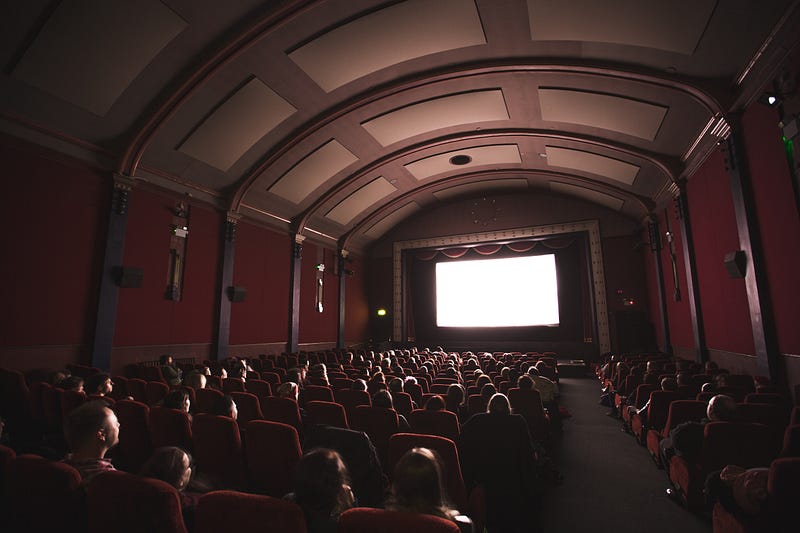
On Saturday mornings my Dad took me to The Grand Theatre in Downtown Milwaukee to watch classic Kung Fu movies. The theatre was a living relic of the 1930s Vaudeville era. By the mid-80s “The Grand” had lost its appeal and was reduced to those Saturday showings and some community events.
The entire Saturday morning experience was a juxtaposition; the quality of film to the quality of the venue, the size of the audience to the size of the venue. Dark red velvet textures and stately solid gold decor enveloped everything — the staircase, the walls, and even the seats in the theatre. Large, soccer-sized golden orbs seemed to punctuate every space like the bottom of an exclamation point, to remind us that this place mattered. Even the bathrooms were ornate. My grandmother’s white sofa, perpetually wrapped in plastic, would have been perfectly appropriate furniture for the lounge in the women’s restroom.
The theatre was entirely too big for the tiny Saturday morning crowd which seemed to be reserved exclusively for men and their sons who enjoyed the tradition as we did. A smaller part of the crowd was just individual men there solo, looking lonely and free all at once for a few hours on the weekend. I noticed everything.
This theatre experience and others like it stuck with me over the years. That’s when I realized I didn’t just like movies, I loved cinema.
Exploring Sidewalk
In 1998, I experienced my first independent film in a theatre while attending Alabama State University. An independent theatre in Downtown Montgomery called The Capri featured Slam, the film by acclaimed spoken word artist, Saul Williams. I attended with a close friend and members of our Vibes & Versus Poetry Society. We enjoyed the experience immensely.
By the time I arrived in Birmingham in 2000, I was spending a lot of time in the local arts community. I first attended the Sidewalk Film Festival (“Sidewalk”) around 2003 just as the organization was beginning to experience significant audience growth. Sidewalk was emerging as a force among festivals and on its way to the acclaim it currently enjoys as a top ten film festival in the United States.
Sidewalk’s success is grounded in sound leadership from longtime CEO, Chloe Cook, and her professional staff, board of directors, and a not-so-small army of impassioned volunteers. Success can also be attributed to the fidelity of support from City leaders, venue operators as well as corporate and small business sponsors. All of these factors are critical to the success of the festival. But, many festivals — film and otherwise — enjoy these factors in other cities. I’d argue we have three assets that separate us from other film festivals:
- Food. Sidewalk does a great job engaging its patrons, especially visiting filmmakers. The organizers leverage our foodie scene, reminding everyone that Birmingham is loaded with culinary talent.
- Culture. Birmingham is sacred ground. Walking our streets should mean something different than any other city in America, and it does. Sidewalk understands that venue selection tells its own story about who we were and who we are as a City. We should do more of this, especially given the new generation of leadership in our cultural institutions.
- Audience. The Sidewalk-adjacent SHOUT LGBTQ Film Festival grew in tandem with Sidewalk over the years. In 2006, the partnership was so strong that Sidewalk and SHOUT merged and you can still feel the inclusion of the LGBTQIA community at every level throughout the festival today. This is a strategy Sidewalk could expand with support from others, see my post-script below.
My Favorite Films
I love to experience Sidewalk on foot, walking through streets in patterns dictated by the schedule of films. I wear my Guayabera, load my backpack with Twizzlers and water, and walk the streets of Downtown Birmingham for the entire day. Thousands of patrons walk hot, steamy streets one minute and in a cool theatre the next. Doing this reminds me of my youth when I explored my hometown on bike, bus, or on foot with my backpack and oversized headphones.
Picking a favorite film from nearly two decades of Sidewalk film experience is impossible.
However, there are a handful of films that resonate with me today — all these years later. But, that’s what a good film will do for you. Here are a few below.
Music My Life, Politics my Mistress: The Oscar Brown, Jr. Story (2005) Have you ever seen a documentary and found yourself upset that you never heard of the subject before? As if someone had been keeping the truth from you. That is how I felt when I learned about this incredible, enigmatic artist to whom all black creatives owe a debt of gratitude. I recall the director of the film coming out for the post-film discussion on stage at the Carver Theatre and revealing that the subject of the film, Oscar Brown Jr. died just six months before the film was completed.
After the festival ended, I went online to order a DVD (yes, a DVD. YouTube was only two years old!) I found myself corresponding directly with the director who was responding to the e-mails inquiries via website. That moment helped me realize how important Sidewalk can be for independent filmmakers to get the word out about their projects. I bought a few copies and shared them with friends. Thank you, Sidewalk!
Jump! (2008) An unexpectedly dense and fun film with various plots and insights into a full-on sport I thought was just an African-American cultural export from the backyard.
The Black Panthers: The Vanguard of the Revolution (2015) I consider myself well-studied in Black Panther history. However, this documentary featured never-before-seen footage of history I had only read about. The director interviewed lesser-known Panthers and centered their voice, offering an alternate point of view to the commonly-known leaders of the movement. It was like finding a major puzzle piece that I did not know was missing. If I recall correctly, the director of this film also came to Birmingham for a talk-back about the film.
Medicine for Melancholy (2008) This movie was no Love Jones, but it definitely had a strong vibe about it. It was an authentic story of two San Francisco twenty-somethings navigating everything twenty-somethings wrestle with, especially finding love. A pure romantic film in an urban setting. Conscious, but not self-righteous as commonly found in many films by socially-conscious filmmakers. The director of this film went on to direct Academy Award-winning film, Moonlight (featuring Bessemer-born Andre Holland), as well as If Beale Street Could Talk.
Three Identical Strangers (2018). This was by far one of the most powerful films I have ever seen, period. I sat in the mezzanine of a packed Alabama Theatre and gasped at the twists and turns along with everyone in the theatre. Pretty amazing!
Iron Grit (2019). This well-done documentary about the political rise of Dr. Richard Arrington, Jr., Birmingham’s first African-American mayor, hit home for me because of my current work. What made this movie gratifying for me, personally, was knowing Mayor Woodfin made it his priority to recognize Dr. Arrington throughout the 2019 Magic City Classic, one of Birmingham’s largest storytelling platforms. It just felt like Dr. Arrington was getting his recognition in front of an entirely new generation who sorely needed to learn of his achievements.
There were other films like Finders Keepers, the bizarre and hilarious documentary about a guy who found another guy’s foot in a bar-b-que grill in a storage unit and refused to give it back to him. Shortly after the film ended I followed one of the endearing subjects of the movie on Facebook only to find him a hardcore Trump supporter.
The festival allows audiences to engage directly with filmmakers and their teams at the festival and beyond.
Somehow, Sidewalk continues to offer unexpectedly delightful surprises, even when longtime attendees like me expect to be impressed. That’s the magic!
Full Circle
This year, I brought my family to Sidewalk. We enjoyed Saturday morning cartoons and television advertisements from the 1980s with cereal in the new Sidewalk Cinema at the Pzitz Food Hall.
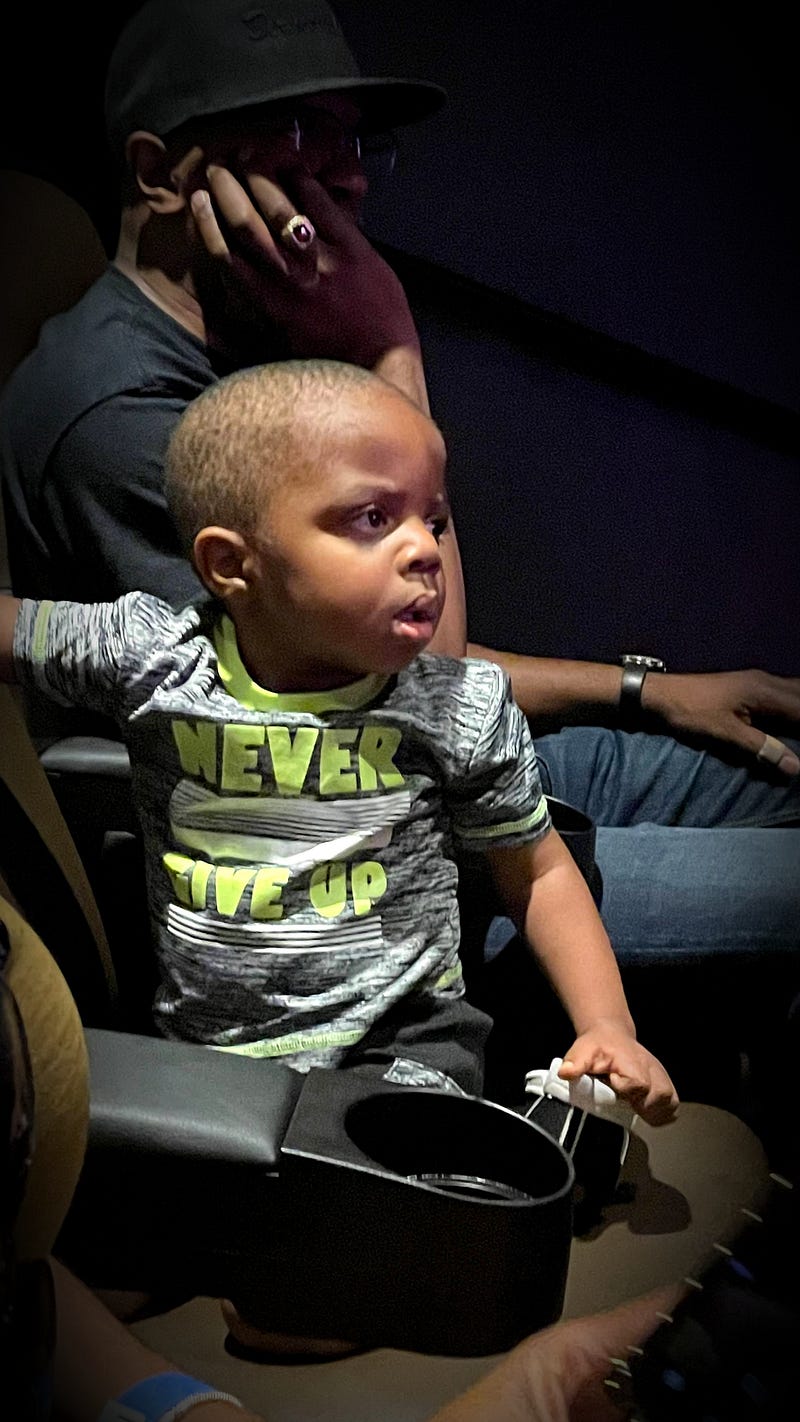
We also enjoyed documentaries: Ailey and the Questlove-directed Summer of Soul. Both of these emotionally-gripping revelations were featured in the Historic Lyric Theatre.
So, here I am in the circle of life.
Once again sitting in a historic theatre on a Saturday morning. This time, my two-year-old son is on my lap watching cartoons of my youth in one theatre and tributes to Black artists of my father’s youth in the next.
I hope these cinematic experiences inspire a revelry that will echo through the theatres of my son’s lifetime into the next generation.
Post Script
I have seen a few African Americans at the festival this year. What a missed opportunity for an audience that out-consumes nearly every demographic (per capita) when it comes to movies.
For all the discussions I have heard or been a part of about creating a new, separate Black film festival in Birmingham, I think we should build on what we have. Leverage the staff expertise, brand, and momentum of Sidewalk and expand their audiences exponentially with more support for the existing Sidewalk Black Lens programming, presently led by Birmingham’s own T. Marie King. Sidewalk has proven itself with SHOUT. The organization knows how to honor community-specific mores and ethos, we should trust that experience and begin to courageously experiment with deeper engagement within the African-American community.
I am a poet, essayist, and civic strategist based in Birmingham, Alabama. Get to know me better here. Subscribe to receive occasional notifications of my posts.


