

My secret formula for making your UX design portfolio stand out from the crowd
How to actually make people look at your work
It’s no secret anymore that hiring managers only spend a few minutes looking at your portfolio. What’s the point of putting in all that work if no one is going to look at it?
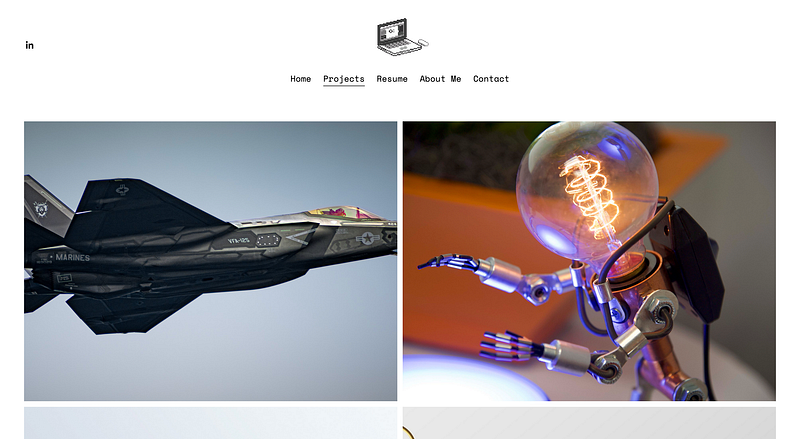
If your portfolio looks like a standard grid, like the rest of them, you’re not going to be able to attract any attention, nor get a hiring manager to look further through to your work.
The Razzle Dazzle
The first thing you have to do is capture the attention of your would-be hiring manager with something that sparkles and shines. Not only that but you have to reflect who you are — whether that is professionally, personally, or artistically.
- Professionally. Slick, clean, and modern. Most people with a professionally branded portfolio fall into one of those three categories, but there are also those who choose a brand based on their profession. If they are a developer, then their portfolios are adorned with the patterns of microchips or the digital rain from the matrix. If they are a toy designer, then their portfolio is whimsical, with pidgin dolls adorning their homepage. You can choose a couple of different approaches, but the key is to ensure that you aren’t just doing what every developer or every designer is doing.
- Personally. What are you hobbies? What is your Raison D’etre? Do you have something strong and real and beautiful that you can put on your portfolio to show the world who you are? Maybe you really care about freshwater fish keeping. You could make your portfolio fish themed.
- Artistically. What art movements do you feel drawn to? Da-daism? Cubism? Impressionism? What aesthetic do you like the best?
Combining them together…
I’ve come to believe that the secret is to combine these three things. But it took me some years to discover how to make it all come together in a way that works.
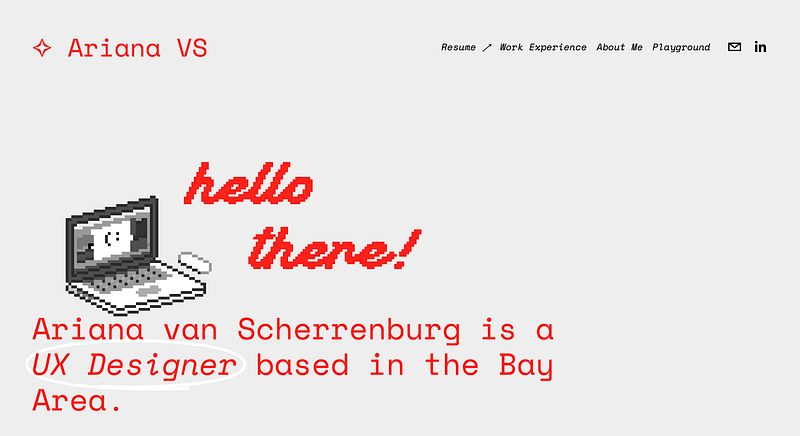
My new portfolio combines a few things about me: I’m a UX designer, I have a hobby creating pixel art, and have a personal interest in the original Macintosh icons created Susan Kare.
When I combined all these things, I finally felt like I had managed to create something I’m happy with.
Movement!
It’s another no-brainer that movement helps to catch the eye and create a story through motion design. One of the things that the little computer on my website does is animate when I hover over it.
It can be a small way to add delight to your portfolio by adding small animations. It doubles as a way to build your credibility, as interaction design is a skill in the UX Designer toolbox.
Your website as a showcase
As a UX designer, it’s imperative that your website is designed well. It reflects not only on your design skills but also on your ability as a designer to be able to create good case studies, manage interaction design, create graphics and choose colors.
While you might not be doing all these things, it may be a boost to your application if you can do most of these things in some capacity — if you can’t then there are plenty of tools online to help you figure it out.


