
My role model stole my ideas — now what?
Time to rethink who you follow and admire.
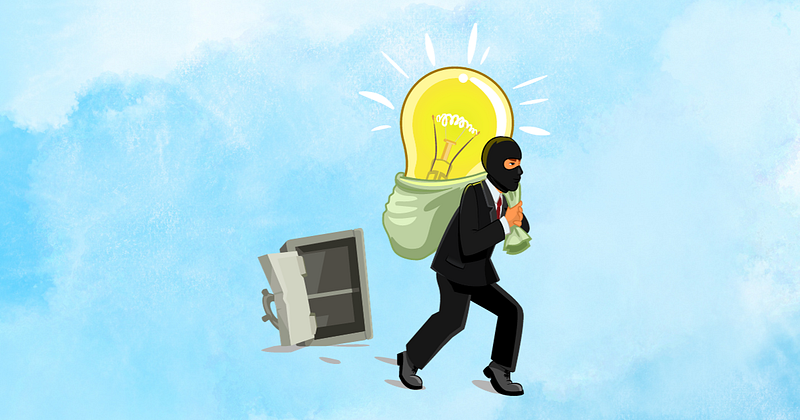
I’m new to Medium, but the whopping 44 followers I have must already know I’m into languages and language learning. Through the years, I’ve taught myself several languages and had immense fun.
Language learning changed my life upside down and is a significant factor in who I am today. It has kicked me out of my comfort zone and transformed me in ways I couldn’t have imagined. I owe it everything.
For this reason, in 2020, I wrote a book to help other low-budget learners like me learn a language for free. I poured my heart and soul into that book, using examples from my life for each new idea I proposed.
The book had some success. But as I was thirsty to use its methods to learn new skills and do other things, I didn’t promote it much. I stopped writing about language learning altogether.
Three years later, I discovered that one polyglot I greatly admired copied most of the ideas in my book and turned them into online courses.
I was floored. That polyglot already had a name, a big audience, and a lot of respect. Why would he steal my ideas and make them his own?
As I watched videos and read articles from that polyglot, the similarities were too many to ignore.
He wrote a book and built an entire site off of my ideas. He was making it big.
Something inside me started hurting badly. I didn’t know what to make of this.
Should I be happy that a person I used to look up to has copied my ideas? Does that mean that my ideas were helpful in the world?
Should I be sad that my role model used my ideas and his big audience to make tons more money off of them?
Should I confront him?
I was devastated. Puzzled. Betrayed.
How could this fantastic polyglot, this person with seemingly flawless language skills, steal my ideas one by one? How could he not credit me or mention me in any way? How could he claim these ideas were his own?
I felt powerless. He owns a business, a team, a website, everything. I am no one. Speaking out against him could result in me getting canceled instead. Also, ideas can’t be copyrighted.
I lost my sleep for days on end. I forever shattered that person’s image in my head.
After the storm in my head calmed a bit, I started thinking.
What if what he did was the norm and not the exception?
What if most successful people out there that we admire and look up to are, in fact, the smartest copycats?
Truth is, the world is full of these examples of people – even very famous ones.
“We have always been shameless about stealing great ideas.” — Steve Jobs
There are claims that Alexander Graham Bell didn’t invent the telephone. Shakespeare stole the idea of Romeo & Juliet from a 1500s poem. Led Zeppelin allegedly stole countless melodies and lyrics. A social network founder got accused of stealing, too. And let’s not mention how many men were credited for women’s inventions over the centuries because women didn’t have a say.
And now, this famous polyglot gets credited with my ideas, making my own idea of him change radically.
My idea of having role models and following them blindly has changed, too.
These new ideas I have are definitely worth stealing. In fact, I recommend it:
What I’ve learned from my ideas getting stolen

The people we admire have probably not come up with new ideas. They just know how to sell old ideas better.
Primarily online, the importance of selling yourself and pushing yourself effectively far outweighs your ability to come up with new ideas. Your role models might not be the pioneers they say they are or even the best at what they do. They just made it to your search results faster.
“I’m a writer, not a marketer” doesn’t cut it. In a world of millions of writers, promoting yourself correctly is crucial to grow your audience.
Having a unique idea won’t get you far. Borrowing an old, valuable idea and knowing how to express it uniquely will get you further. Finding effective ways to show it to the world will get you there.
When you publish your ideas, they’re no longer your ideas. They belong to the world.
And the world can do anything it wants with these ideas: sell them, use them, and build on them to create something better. If you love your ideas too much and hate to lose ownership of them, don’t share them. But what’s the use of an idea if it’s not shared?
No famous person deserves your blind following. In fact, I encourage you not to follow me blindly, either, should I ever become famous.
Test me, instead. For everything. I hope my good traits will outweigh the bad ones. If a miracle happens and I become famous, I’ll be open about my weaknesses and will do my best to overcome them. I’ll make the most of my strengths and help others do the same. Only then will I know I have succeeded.
Which brings me to the next point:
Rethink your idea of what “success” is and what makes a person successful. Rethink who you look up to. Are they really worth that title?
There’s more to a person than their ability to sell themselves. My idea of success? A person who puts their heart and soul into their craft and helps others along the way.
Now, what happens if someone steals my ideas again? Well then, I know my new ideas were good, too.
Getting your ideas stolen is the best proof that the world needed them.
It’s that simple, really. If that person became successful with my ideas, helping so many others, there’s a reason I had to share them.
They were two times helpful, through my book and now through everyone following his content. Imitation is the highest form of flattery, as they say.
And if I had such good ideas, maybe I could work on them to make them even better. Which brings me to the last point I’ve learned:
Believe in your ideas. Even if no one else does.
In the end, what really hurt me wasn’t that the person got successful from my ideas. It was that he believed in my ideas more than I did.
He got the results I was hoping to get because he put in the effort I should have put in. He worked on them much more than I did. His name and audience took care of all the rest.
What to do next
What could the following steps be?
This is what I tell myself:
Work on your existing ideas. Create, create, create. Whatever you do, do it with passion, heart, and soul. Come up with more ideas. Share them with the world. Be the change you want to see and help others along the way. Do what you love and do it often.
I believe the rest will follow. Even if no one else does.
I learn how the world works, one skill at a time, and then help others do the same in a fun and affordable way. Check out my book on how to become fluent in any language for free here.
If you enjoyed my article, buy me an ebook to help me grow and post more often!
Thank you so much for reading!


