
BROADCASTING BEGINNINGS
My Radio and Television Career Started With a Phone Call
My father’s tough love lessons led to my success
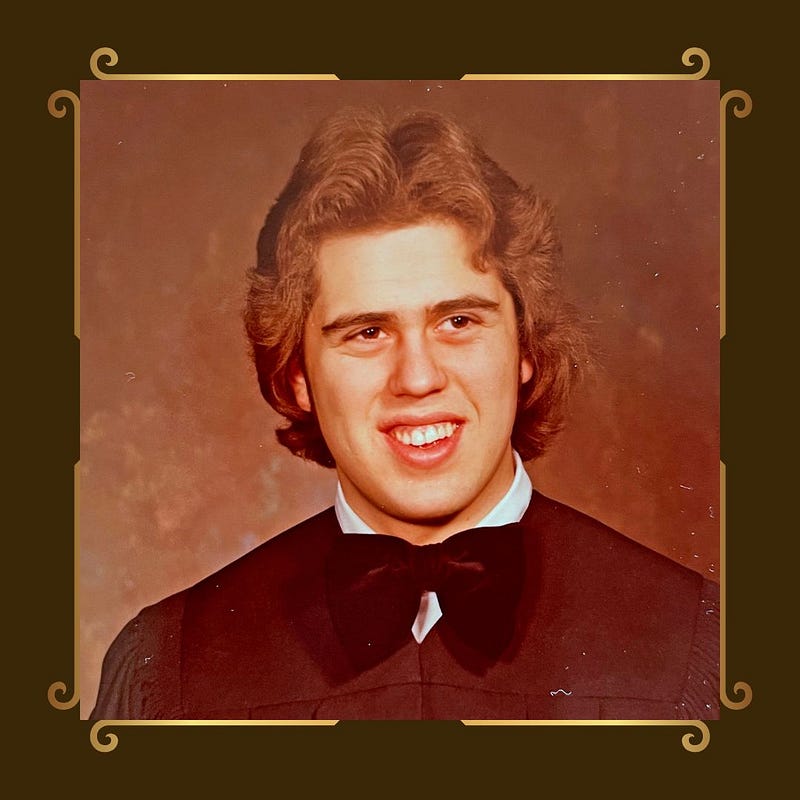
I was starving myself. I was young and afraid of the hooligans I was living with, afraid they were going to hit me with a flying beer bottle. I slept in a room at the Yellowknife YMCA that contained nothing more than two single beds with urine stains on a smelly mattress and not even a blanket. I used my extra clothes to keep warm and to use as a pillow. My middle-class upbringing didn’t prepare me for this.
When I moved away from home at eighteen, fresh out of high school, I took my first job in radio in Canada’s Northwest Territories. I called my parents in tears, begging them to let me come home, less than a day after I walked out of their front door. That was just after I missed getting hit by a beer bottle thrown from several floors up. This is where I lived now because I couldn’t afford anything else.
My bosses took advantage of me. They didn’t pay me a living wage and I couldn’t afford to eat except for a burger or sandwich every few days. I survived on coffee and cup o’ soup.
And then I was diagnosed with an ulcer, at nineteen years old, and had to call my parents with my hand out for money to buy medication. My fear of failure and of disappointing them meant I couldn’t quit. I had to stick it out if I ever wanted to succeed in this sometimes cutthroat industry.
How many fifteen-year-olds know what they want to do for the next forty years? I was overwhelmed by the choices and lacked the confidence to realize the possibilities. I didn’t know what I wanted to do but I knew I couldn’t wait to get out of school.
Part way through eleventh grade, as I was looking through the TV guide for something to watch, an ad caught my eye for a broadcasting school.
Can you picture yourself as a radio deejay or a news announcer?
Well, no, I couldn’t — but I was intrigued.
Just call this number for a free voice evaluation.

Girls told me I had a nice voice (once it changed) but my grammar and diction were terrible like most high school teens. What have I got to lose? So I called the number and left a message and then forgot all about it.
A couple of days later I got a phone call from Mr. Slick, a man with a booming baritone voice. He spoke with that stereotypical radio voice so there was no doubt who I was talking to.
Mr. Slick said, “I got your message and you sound like you have a good radio voice. I’d like you to come in to our downtown studios for a proper evaluation.”
I fell for his lines like a lovestruck teenager. How could I refuse? I have a good radio voice? Really? We made an appointment for after school the next day, and I took the bus to the downtown studios.
Although I was nervous, Mr. Slick was encouraging. I’m sure I had heard his name before and while his voice sounded familiar, it could have been any radio announcer in any city in the country.
I bullshitted my way through the interview, at least I thought it was an interview. He set me up in the voice-over booth with a couple of scripts to read into the microphone. When I was done he seemed impressed.
“You know, your reading voice is much stronger than your regular speaking voice. You need to work on your enunciation though. I’m confident you can have a successful career in the business if you want it.”
And then came the sales pitch.
It would cost two thousand dollars for the ten-part correspondence course. It focused on voice, enunciation, and grammar. I’d be given books and tapes for each segment and then would have to bring each tape in for review.
I took all the paperwork and went home to tell my parents about my new career choice. They were surprised, actually shocked may be a better word.
Mom said, “I never knew you wanted to be an announcer.”
“Oh yeah, I’ve always wanted to be on the radio but I just thought I couldn’t do it,” I lied. I’d never thought about it until just a few days earlier.
My parents coughed up the money, but I had to promise to dedicate myself to the program and I couldn’t let my high school marks suffer.
It wasn’t easy juggling everything because I also had an after-school job. I was a janitor’s helper at an elementary school at the end of the school day. There were times that I procrastinated and my broadcasting lessons suffered. Unlike work and school, there was no one telling me when I should complete each assignment. After I paid my money, the school didn’t care when or even if I completed the course. I had to figure it out for myself.
When I finally got my certificate about a year and a half later, the instructor got me a job at a local department store as the in-store announcer. It meant I could quit my job cleaning toilets, changing urinal cakes, and mopping the floors at the elementary school. I was anxious to practice some of the things I had learned while the search continued for a real radio job.
Jobs were hard to find. This was the late seventies and the world was at the start of a massive economic recession. It took about a year before I was finally able to land my first radio job. It was not what I expected. It was for a news announcer, not for a deejay position. And it was in Yellowknife, in Canada‘s Arctic, and would start in November at the start of a long cold winter.
My salary would be less than I was making at the department store but my dad gave me a push, saying it would get my foot in the door and give me some much-needed experience, so I took the job. They sent me a plane ticket and I packed up the few things I had and headed out to begin my new career, my first time away from home.
My new boss picked me up at the airport. It was already dark and cold even though it was mid-afternoon. This is the land of the midnight sun in the summer and almost 24-hour darkness in the winter. He got me a room at the nearby YMCA where I could stay until I found an apartment. It would cost $110 a week or $440 per month.
I paid for a week, hoping I could find something quickly. My gross salary before deductions was only $500 and while I had a bit of savings I would need that for my first and last month’s rent so I couldn’t touch that money.
It was a small semi-private room with two beds with pee-stained mattresses. The walls were stained by years of cigarette smoke and the furniture smelled of stale tobacco. I didn’t want to share a room with a stranger, but I had no choice. Luckily I didn’t have to share often.
The other residents were transients, rednecks, who traveled north to work in the mines or on offshore oil rigs. But when they were at the YMCA in Yellowknife they were ready to let loose and they didn’t care who they disturbed with their rowdy parties. Believe me, it was not fun to stay at this ‘YMCA.’
I didn’t have money to go out for food, so I just decided not to eat.
I was feeling sorry for myself and I was depressed when I went down to the lobby and called my parents from a public pay phone. As soon as I heard their voices I broke down. I told them about my first day and how awful it was. Soon I had both my mom and my older sister in tears.
“I just want to come home.”
My dad piped up, “Just stick it out for a little while, a month or two, and if you really still hate it, then you can come home. But give it a chance.”
I think we all realized he was right. If I quit now what chance did I have to ever find success? My wise dad knew that time would soften the experience.
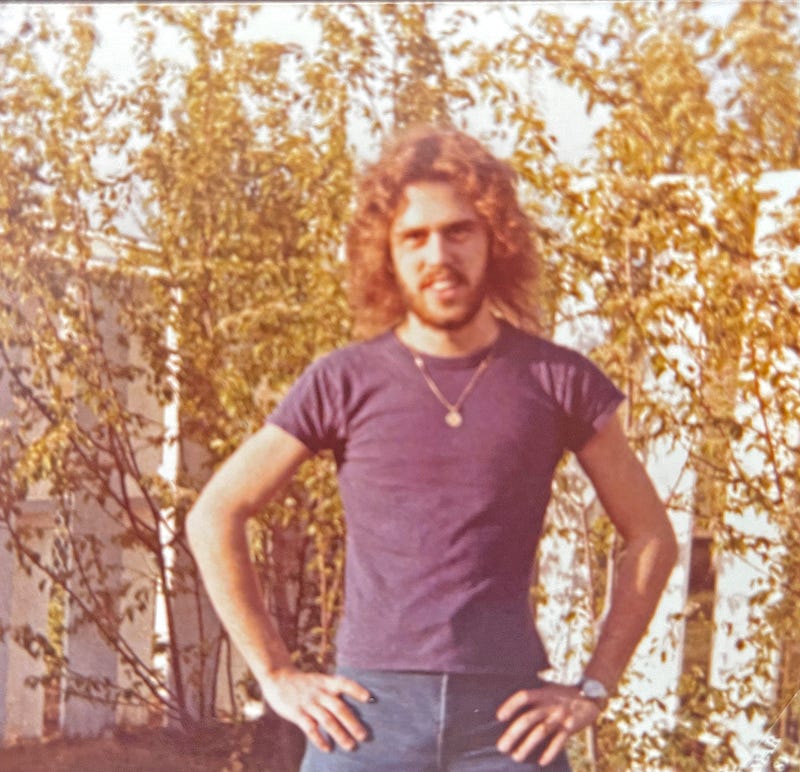
I’m not going to lie. It was awful. Since I couldn’t afford to buy food I was living off cup o’ soup that they stocked by the coffee machine at work. Every few days I splurged on a hamburger or a grilled cheese sandwich. I only weighed 150 pounds to begin with and after just a couple of months I had lost 35 pounds. My hair was long and scraggly because I couldn’t afford a haircut and I had a scruffy beard because I couldn’t afford razor blades.
Then I developed an ulcer.
I called my parents and broke down. I told them just how much I was struggling. After our first call, I didn’t want to whine to them about my situation, no matter how bad it was. I wanted them to be proud of me. But this time I told them I needed money for ulcer medication.
My dad wired me some money right away and they wanted to see my situation for themselves, so they decided to come up north for a visit. I was so happy I cried. And of course, when my mom saw me at the airport, she took one look at me and burst into tears. I had changed dramatically, a shadow of the son she sent out into the world just a few months earlier.
It was soon after they went home, my boss called me into his office and gave me a $200-a-month raise. He also let me know that one of the deejays was looking for a roommate to share his apartment. The rent wasn’t much less than what I was paying but it got me out of the Y.
Things started looking up and I started to gain some confidence. Six months after I started in Yellowknife I began applying for jobs closer to Edmonton. I jumped at my first offer to do news at a country music radio station in Red Deer, Alberta. I moved closer to home and picked up my car so I was able to visit often and get lots of home-cooked meals. Within no time I started to put back on some of my lost weight.
And just three months after that, I got a chance to work in television news. My career was underway.
Several years later, when I was packing to move to Toronto, my dad took me aside and told me how proud he was of me. He knew I struggled but I showed perseverance and it was all paying off. He said he didn’t know what was going to happen after that first phone call from Yellowknife. But he was glad I stuck it out. I agreed it was a lesson I needed to be taught and it put me on a path to success.
A final note: how did my career beginnings pan out? I retired from a 24-hour all-news station in Toronto in 2022. I was a senior producer with more than 40 years of experience in the TV and radio industry. I met rock stars and celebrities and every Canadian Prime Minister from Pierre Trudeau to his son Justin. I met Pierre Trudeau while working in Yellowknife at the beginning of my career and I met Justin while working in Toronto at the end of my career.
No matter how tough you think your job is it can always be worse. But if you are tenacious and fight through the rough stuff, things will improve. I think I’m proof of that.
My dad knew what was best. Here’s a story about our relationship, and our missed goodbye.


