
My Plan to Get From 9–5 to Freedom
After 20 years in corporate America, I’m done.
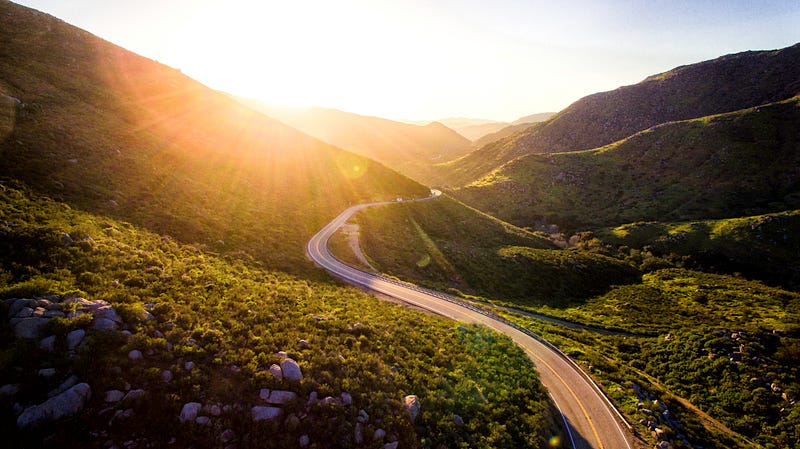
I have absolutely no interest to continue living this way — working 9–5 with little flexibility in location, pay, or time off — for another 20-plus years.
I wish it was as easy as giving my notice and running away. But it's not…I need money to live the life I imagine!
I’m sure you’re in the same situation. Not interested in the status quo of working 45 years for someone else, just to end up too old and crippled to enjoy travel and personal interests, and still barely afford retirement due to inflation.
The difference between you and me is I have a plan.
And I don’t mean that in a rude, in-your-face, way. But as a reminder that it takes intention and focus to make dreams a reality. (At least for those of us without money handed to us.)
My plan started as a long 5 years. But I’m now already halfway through it.
The lifestyle I’m creating requires me to still work on and off afterward but allows me the freedom to choose where I work, for whom I work (ideally myself), and when I work. Now that sounds like a good deal to me!
My roadmap is on auto-pilot, but it still requires regular self-check-ins, modifications, and time (in the form of experimenting with side hustles and dreams).
Focus on current income to create a financial cushion.
The core of my plan is to reach Coast F.I.R.E. (Financial Independence, Retire Early).
You may already be familiar with F.I.R.E., when someone stashes away 80% of their income, spends frugally, and lives the remaining portion of their life on $30,000 a year.
That is not for me. Nope. No interest.
Mostly because I don’t want to live frugally — now or after retiring. So instead I’m focused on Coast F.I.R.E.
The financial goal with Coast F.I.R.E. is to reach a certain dollar amount of investments, after which I’ll no longer need to contribute and it will grow on its own (thank you compounding interest!) until I’m ready for full retirement.
For those years between hitting my Coast F.I.R.E. number and full retirement, I’ll only need to cover my living costs. This means I can work part-time, full-time with gap years, or possibly not at all.
To reach my freedom number, I’ve used my 9–5 wages only.
Balancing travel and current priorities with Coast F.I.R.E., I don’t save 80% of my income, but I do save close to 40% or more on good months.
Bonuses and extra cash go into my retirement accounts. And I am playing around with side hustles to see if I can earn a bit more and reduce my remaining 2.5 years.
Focus on what freedom looks like.
I’m also spending a lot of time on what “freedom” looks like to me.
Now that I have the financial plan set, what do I want my Coast F.I.R.E. life to be?
Full disclosure, I’m married and both my wife and I created this life journey together. Lucky for me, my wife has similar interests and life goals so the conversations and lifestyle changes have been easy. I know this isn’t always the case for partners. My wife also works a 9–5 job, so our entire process has been funded by traditional work and income. If it’s possible for us, it’s possible for you too!
My current ideas include another extended travel (gap) year, or we could work for another couple of months and take a year off. Decompressing from the past 20 years of morning alarms, self-created fire drills, and unplanned overtime.
I’d love to see one of my experimental side hustles cover my Coast F.I.R.E. living costs. My side-hustle requirements are 1) Is it remote? 2) Is it personally satisfying?, and 3) Is it paying more than $100 per hour? If I can meet those criteria, then I’d already have the flexibility I currently crave.
Dreaming is part of the journey and extremely exciting! With my monthly finances and plan in place, I spend a lot more time letting my imagination run and less time on how I’m going to make Coast F.I.R.E. a reality.
And to be as prepared as possible, I’m continuing to build my skills (my corporate work has been in payroll and accounting), learn new skills (AI, content creation), and develop side hustles. I’m also thinking about potential contract or part-time jobs, like teaching English overseas, working on a yacht, and supporting a non-profit whose cause I’m passionate about.
Focus on consistency.
Most of my plan is set and running automatically, but there’s still an element of it that takes my time and attention.
I could easily derail the entire process by making a high-value purchase. I could get in an accident and face unexpected medical bills. I need to be aware of these and make sure I’m still checking my budget and financial plan — and tweaking it when necessary.
Life could also surprise me in other ways — need to support a family member or something happening to my spouse. Both of which may completely change the future I’ve created and I’ll need to pivot to a new dream.
And lastly, there’s no guarantee I’ll be alive in another 2.5 years.
Covid was a great reminder that life is precious and can be cut short. The idea of only being sure of today (and possibly not having tomorrow) is why I still intentionally spend money living life now and not shoving it all away for retirement. I want to make sure I plan for the future and at the same time make sure I don’t have any current regrets.
I’m halfway through my freedom plan and I’m getting excited!
It’s been a lot of work, focus, and commitment, but I’m starting to see the rewards and spend more time dreaming of the possibilities.
The entire dream was funded with traditional 9–5 roles, so I know this is possible for anyone.
I hope you’re already chasing your plan to get from 9–5 to freedom — and if not, that my story will not only inspire you but provide ideas to get started.


