
My Phobia is Not for Your Enjoyment
Teasing people with phobias is just not funny.

When reading an article written by Sherry McGuinn entitled, OCD Is No Fun. And It’s Not Funny, I started thinking about what it was like to grow up with a phobia. I was actually first reminded how awful this was, a few weeks ago when someone thought it would be amusing to watch me get squeamish by showing me the needle they’d just used to inject themselves with insulin. They got more than they bargained for and though they felt bad, I was put off for the rest of the day.
Now to be fair, it might have seemed like a bit of an indulgence for me to allow myself such a strong reaction when they had to take injections everyday, which they couldn’t just avoid because they were a bit afraid of needles. But then again, to be fair, I am not just a little afraid of needles nor do I get just a bit squeamish when forced to confront them.
What Are Phobias Really?
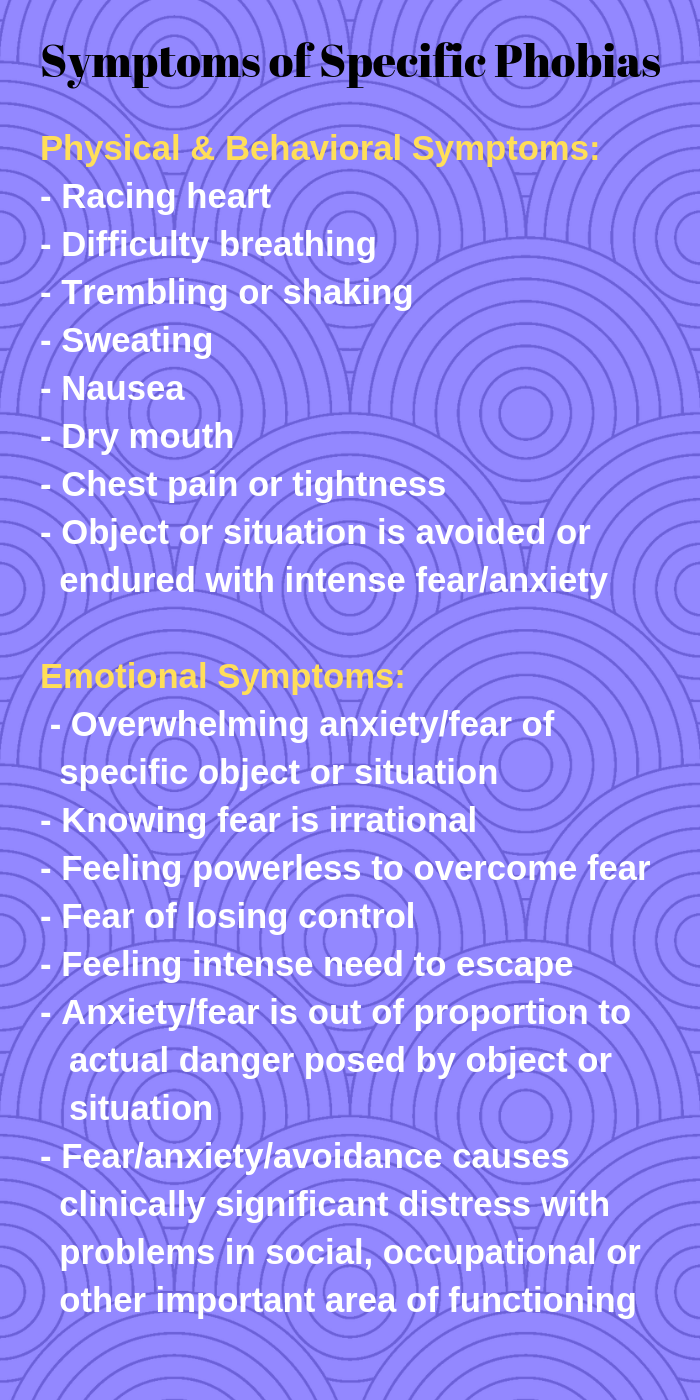
To back up a bit, phobias are not the same as regular anxiety. While everyone has things they are afraid of, the reaction of those with a phobia when exposed to the phobic situation or object is far more extreme and isn’t just a momentary response. Phobias involve extreme, irrational fears that lead to intense discomfort, distress and often full blown panic attacks, and in some cases fainting resulting in an attempt to avoid the object of situation at all costs. The panic results whether the person is actually confronting the source of their phobia, anticipating having to do so in the near future, or even when just thinking about it. Although the individual knows that the situation or object poses little or no actual danger to them, they usually cannot control the fear they experience.
Depending on the specific situation or object involved and the degree to which is can be avoided, a phobia can interfere with a person’s relationships, work and school and prevent someone from fully enjoying life. For example, it’s almost impossible for someone with an insect phobia to completely avoid them even indoors. However, as they are more prevalent outside, this phobia will restrict the person’s willingness to go outdoors, especially in warm weather when bugs are more frequently observed. This can limit their ability to attend social get togethers and other non-essential events which can affect personal and work relationships. It might also limit their choice of careers and the chance they have to experience anything nature related such as going to the beach or hiking or camping.
My Phobia — Blood, Injury (Injection), Illness
The phobia I have is called a blood-injury (injection)-illness (BII) phobia. Lest you say,“Well, no one likes needles,” which may be true, it is not the same thing. While my phobia may not be as life altering as an insect phobia, it can be incapacitating nonetheless. And while there were those who always found my reactions silly, as I get older, it is increasingly becoming viewed as immature and childish even by healthcare professionals who should know better.
A BII phobia doesn’t just involve needles but also the sight of blood and injuries, along with any kind of invasive medical procedure. Those of us with this phobia are likely to become dizzy or faint at the sight of blood, the anticipation of a physical injury, injection or invasive medical procedure or even just the thought of these things. We will show avoidance behavior, and intense, irrational fear even when observing these things in others.
The response we have is a bit different from what is seen in other phobias, as most people with other phobias don’t faint when forced to confront their fear. They usually flee. For those of us with BII phobias, fainting is the norm. This is due to a reaction called a vasovagal response, where our blood pressure goes sky high, then suddenly plummets.
And if anyone tries that you can’t faint as long as you’re lying down, I’ve got news for you. I have definitely fainted when having to undergo a medical procedure even while laying down. And truthfully, this can actually be a blessing in disguise, because being unconscious is far better than the alternative when you have this phobia. Although the dizziness, nausea, and other feelings of extreme discomfort leading up to the faint, which I can’t really describe and which you can’t fully understand without having experienced them, are no picnic.
Oh, and by the way, it’s not that we don’t know that we’re behaving irrationally. We get that. It’s very clear. I can tell you that I know I won’t die from having to get my finger pricked (even just typing those words is making me feel dizzy). I know that trying to avoid it by putting off doctors appointments is ridiculous and that children are able to get through this minor medical test without too much distress. But that doesn’t mean I can simply make up my mind to stop acting foolish or if you promise me ice cream afterwards will make it all better the second it’s over.
What’s that? Have I really fainted from a simple finger stick?
You better believe it. True story — Before going off to college when I was 18, I went for a physical. That year my doctor had changed his procedure from using a regular blood test to a finger stick. Now I knew that for a regular blood test (don’t ask me to describe it further or I’ll never finish this article) or for a shot it was mandatory that I lay down. But when the nurse, a no nonsense woman who went by the name of Whitey (who was amazing at drawing blood and who was the only one who I’d let do it until she retired when I was almost 30), said, “Surely you can manage an itty bitty finger stick sitting up, right?” I hesitantly answered, “Yes.”
And I truly thought I could. I managed the prick itself, but then when she used the pipette to draw the blood into I made the mistake of looking. Bam! That was all she wrote. It didn’t help that I was seated on a stool instead of a chair with arms and a back which might have prevented me from landing on the floor, something Whitey took personally. She was none too happy when I came to.
I later found out from my doctor, that she’d written a warning to anyone else who might be forced to repeat this little procedure with me. Written at the top of my chart in capital letters highlighted in yellow she’d scrawled,
“WEENY ALERT! DO NOT STICK SITTING UP!”
Unlike an insect phobia, the one I had wasn’t a problem on a daily basis. Granted, when I knew something was coming, the anticipation was often worse than the actual event and even when I managed to get through a shot or blood work, I would become extremely dizzy after I sat up. My mother said it was relief that it was over which was probably the case. If you’ve never felt what overwhelming relief is like, you haven’t been forced to face a phobia head on and come through it, or managed to avoid whatever it was that made you feel irrationally panicked. The relief from avoiding it is also so great that it single handedly manages to maintain this reaction and makes us look like babies when fleeing the scene.
What lengths did I go to in order to avoid the things that made me nuts? Another true story — One summer when I needed a tetanus shot, I actually tried to convince my parents that I’d already gotten one at sleep-away camp. I created a whole story which included a dark paneled room where a tall, blond headed doctor had given me me the shot. I knew my parents would check and there’d be hell to pay when they discovered I hadn’t gotten the shot as I claimed. I knew it would only put the shot off for a couple of days at most. But to me it was worth it. And no, it was never better to just to get it over with.

Kids Will Be Kids — A Bad Predicament
Kids will be kids which often means they find teasing and tricks, even mean ones, outrageously funny. I was an exceptionally shy child who would never have thought to tell on other kids. This meant they would torment me without worry about repercussions which they did with abandon once they learned about my phobia.
If you’re wondering what could they possibly have done that was so bad since they wouldn’t have had access to things like hypodermic needles, I can assure you, quite a lot. When a panic attack and dizzy spell can be triggered just by being forced to think about needles, blood and medical procedures, there are any number of ways that can be used to torture someone.
The fact that I still remember what it felt like and even specific instances that occurred including where and when they happened, should tell you how much this particular type of bullying traumatized me. And make no mistake about it, it was was a form of bullying. What it wasn’t was funny.
Whether or not these kids could understand exactly what they were putting me though didn’t matter. They could tell how upset I got whenever they pulled this. And truthfully I knew they couldn’t possibly have understood. Not because they would have cared about they way they were making me suffer, but because had any of them also had a phobia they would never have risked the possibility I might do the same thing to them
The Takeaway
It’s important to understand that what you may see as teasing someone by throwing a rubber spider at them if they have arachnophobia or a rubber snake if they have ophidiophobia, causes an explosion of anxiety that is far more than just being momentarily startled. It will also be something that the person may become extremely angry over, especially if they know you’re aware of the fact they have the phobia. And make no mistake about it, they will remember the fact that you did this. I remember the names of every kid who knowingly tortured me then laughed and even the names of the kids who just laughed or spread it around.
When forced to confront the feared stimulus, even if it isn’t in person but only the thought of it from something described, causes tremendous, debilitating anxiety for the person. If you want to make a joke about something try one that starts with Knock Knock or A Priest and a Rabbi walk into a bar. But please don’t use someone’s phobia for your own amusement. Even if a knock knock joke only get you a bemused eye roll, at least you won’t end up permanently at the top of their sh*tlist.
Thanks to Sherry McGuinn for the inspiration that lead to this story.

If you enjoyed this article, you might also like the following:
You can find links to all my Medium essays, stories, fiction and poetry here.


