
My Neofolk Journey
Albums That Enticed Me Into the Genre
When I was first discovering metal, a huge aspect that lured me in was acoustic interludes. Bands incorporating folk-like acoustic passages in otherwise heavier material seemed so ideal. Naturally, I thought, there must be bands out there that are strictly this folk sound that I enjoy so much. Of course there were — I just needed to know where to find them. This is my journey of the most important and influential albums that helped me discover “neofolk” or “folk-noir.”
What is Neofolk?
Neofolk can be a somewhat broad term. Its origins date back to the 1980s England punk rock community. The style started out as somewhat of a mix between folk and industrial music. It also can be somewhat related to post-punk, neoclassical, or darkwave. “Apocalyptic folk,” “folk-noir,” or “dark folk” are also sometimes used, as well as “martial industrial.” I’m not sure if these are well-defined sub-sub-genres or if they all just kind of blend together. Most of the well-known neofolk artists had a very industrial sound early on — mostly in the ’80s — only for it to fade into a purely “folk” sound. I personally consider almost any “folk” sounding music post-1980 or so to be Neofolk. This differentiates it from the psychedelic or pop-folk of the 1960s and ’70s. Many neofolk artists are quite experimental anyway, making it even more difficult to describe this genre. Lyrically, neofolk tends to focus on neopaganism, occultism, folklore, the ancient, and the ancestral. I also find it amazing that out of this list of 15, there are only 5 countries represented — illustrating the geographic popularity.
Ulver — Kveldssanger (Norway, 1996)
This was the first album I bought that I would consider neofolk. I knew about Ulver anyway, so it wouldn’t be long before I found this regardless. This album is very simple, containing just acoustic guitar, a little flute, some cello, and drums. A large portion of it is instrumental, but there are some “chanting” style vocals (both wordless and sung in Norwegian). There are even a couple of acapella tracks. At first, I didn’t really like these kinds of vocals. They made me self-conscious about my music choices, just like anything slightly outside the norm at the time. I also thought they sounded a bit too bold, disturbing the relaxing tranquility of the rest of the music. But as with most things, I got used to them and now couldn’t imagine the album without them. This vocal style is used quite a bit in this type of music, so it prepared me for that. For simplicity’s sake, this will be the only album I include that’s a neofolk album from an otherwise non-neofolk band. Examples of this are Agalloch’s The White, Drudkh’s Songs of Greif and Solitude, as well as some Empyrium and October Falls albums.
Admittedly, Tenhi didn’t end up being one of my favorite neofolk bands, but they were one I discovered very early on. They have more of a full band sound closer to rock but are still very much acoustic-based. They feature all kinds of interesting instruments on this album. Harmonium, synths, didgeridoo, mouth harp, and udu can be found here. There are also more “normal” instruments like violin, viola, piano, and flute. Their sound is more layered and atmospheric, and very tranquil and relaxing.
Nest — Woodsmoke (Finland, 2003)
I first heard of Nest because of their split with Agalloch. Their music prominently features the kantele, a traditional Finnish stringed instrument. It’s incredibly relaxing and features very few vocals. It does tend to get a bit repetitive after a while though.
The next three artists are sometimes referred to as the “big three.” These are somewhat known as the founding fathers of neofolk and the most influential artists in the genre. They all began sometime in the 1980s in England. They mostly started with a more industrial or post-punk feel, and slowly became more “folk,” but with a discernable sinister feel.
Sol Invictus — The Blade (United Kingdom, 1997)
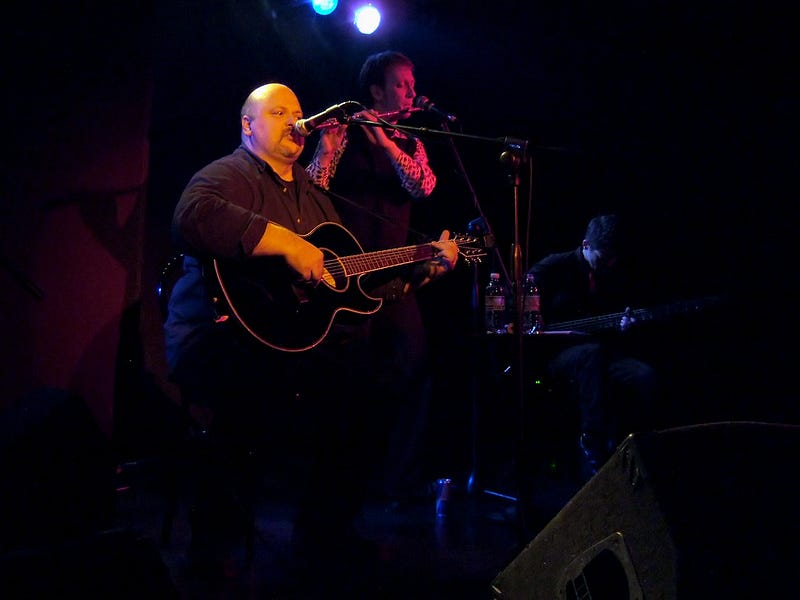
My beloved Agalloch also inspired me to check out Sol Invictus by covering their song Kneel to the Cross. This song is on Lex Talionis which was the first Sol Invictus album I bought. Yet, I think The Blade is really what got me interested in collecting the band’s entire discography. I think this is their most well-rounded album. Their earlier stuff was a bit too industrial, and their later stuff became quite neoclassical and lush. There are plenty of flutes, horns, and violins, all with that familiar unsettling atmosphere. I’ll be the first to admit, Tony Wakeford has a terrible voice. But his voice has become synonymous with the band and is now a defining characteristic of it.
Death in June — But, What Ends When Symbols Shatter? (United Kingdom, 1992)
Douglas P. of Death in June has his own set of controversies. I’ll just leave it at that. I still enjoy his music, so I listen anyway. This album has a very soothing and atmospheric sound, despite that dark undertone emblematic of neofolk. There are some trumpets and keyboards here, but it mostly consists of that signature gentle, rhythmic strumming. Death in June’s discography is quite varied, and I enjoy a lot of their albums. Nada! is an industrial album that flirts with dance music. Peaceful Snow/Lounge Corps is a re-recording of several of their classics with simple piano.
Current 93 — Thunder Perfect Mind (United Kingdom, 1992)
What can be said about Current 93? Their music (at least from this era) consists of mostly simple, melancholic strumming. Don’t forget David Tibet’s eccentric singing and poetic lyrics, which are also defining characteristics. There are plenty of other instruments used here, but most songs remain fairly minimalist. This is probably one of the most-listened-to neofolk albums in my collection. The original version is 1 hour and 20 minutes long, and the bonus track version is a whopping 2 hours and 20 minutes. Now, I’ll just say that Current 93 is a highly acquired taste. I don’t think I have ever actually recommended them to anyone. Tibet’s highly experimental style and strange lyrics are just too zany for most people. His fascination with religion, mysticism, occultism, and the apocalypse are apparent. Not to mention, his voice may simply annoy the hell out of you. This is probably the weirdest album on this list, and it’s actually one of their more “normal” sounding albums. Close runners-up would be All the Pretty Little Horses and Of Ruine or Some Blazing Starre.
Orplid — Orplid (Germany, 1998)
Orplid’s debut album can be quite varied and somewhat experimental. The singing here is all in German which can take a while to get used to if you’re new to the genre. Most neofolk bands sing in their native language, which I always welcome, but German can sound a bit “harsh.” I always thought this album had a very “medieval” sound to it, thanks to the occasional organ or horns. Besides simple strumming, there are some “heavier” parts as far as folk goes. There are some chanting vocals and some female vocals. There are also piano-driven tracks and some very atmospheric sections. Plenty of samples and sound effects are littered throughout the album. Short transition tracks filled with whispering also make an appearance. This album certainly doesn’t get boring, and Orplid’s other albums are also worth checking out. They do seem to be straying farther away from neofolk as time goes on, though.
Forseti — Erde (Germany, 2004)
Forseti returns to a more traditional sound, still sung in German of course. This album is mostly relaxing, but there are some more upbeat tracks mixed in as well. There’s a variety of vocalists and many male + female duets.
Of the Wand & The Moon — Nighttime Nightrhymes (Denmark, 1999)
It’s extremely difficult for me to choose just one OTW&TM release for this list. All five of them are nearly tied for my favorite. I think this one may slightly edge out the others though, as it’s probably the one I’ve listened to the most. It also might be the most accessible and the best overall representation of the band’s sound. Started by Kim Larsen of the metal band Saturnus, they have probably become my favorite overall neofolk band. The “big three” bands mentioned earlier are all great in their own ways, but some of their material can be too off-the-wall at times. OTW&TM have never released a sub-par album. They combine all the elements that make neofolk exceptional. Their songs are soft and gentle, with just the right amount of apprehension. Kim’s vocals are very restrained, and basically whispering most of the time. This may sound strange, but it really works with the music. There isn’t a crazy amount of experimentation here, but just the right amount of variance to keep things interesting. There are also a few upbeat and almost joyful sounding songs sprinkled in. There are many keyboards used here as well as the occasional violin, cello, and flute. Their music and lyrics are highly influenced by Norse mythology, runes, and paganism.
Sonne Hagal — Jordansfrost (Germany, 2008)
This album might not be a huge standout, but it’s a really solid one that I’ve always kept going back to. They sound quite similar to their German counterparts Forseti and Orplid, also with lyrics sung in German. There are also some similarities to Of the Wand & The Moon. Namely, the simple, stripped-down style and very calm, almost whispering vocals.
Whom the Moon a Nightsong Sings (2011)
After collecting a fairly large chunk of neofolk from 2003–06, I sort of cooled down for a while and focused on other genres. That changed sometime in 2012 though, when I discovered this compilation. I’m not usually a fan of compilations — I’d rather just buy albums from the artists directly. But this one is exceptional and includes many unique songs not included on albums. My beloved Ulver, Nest, Tenhi, Orplid, and Les Discrets (more of a “blackgaze” band) were all here. This introduced me to a whole slew of new bands — some neofolk, some bands just flirting with folk influences. It even reintroduced me to some artists that slipped off my radar. This sort of led me to a “second wave” of discovering neofolk. The next three bands I found through this compilation.
Vàli — Skogslandskap (Norway, 2013)
I know you’ve been waiting for another Norwegian artist to appear on this list so here it is! This album is self-described by the band as “A journey through a Norwegian wood in the autumn.” If you don’t like the majority of neofolk vocals, you’re in luck because this album is instrumental. It’s delightfully simplistic, with cellos, flutes, and piano helping paint a picture of those woods. This album really doesn’t have a “dark” tinge to it like many others here, which can also be refreshing.
Neun Welten — Vergessene Pfade (Germany, 2006)
This is another mostly instrumental album, going for more a “full band” type sound. This tilts a bit more toward the neoclassical side, with clarinet, recorder, violin, piano, cello, and plenty of percussion.
Syven — Aikaintaite (Finland, 2011)
This album is a bit of a departure from the others on this list. Syven leans heavily toward a more layered, ambient sound utilizing synths and tribal percussion. According to the band, they produce “primordial and even shamanistic music” — I couldn’t think of a better description. The vocals consist of very low-pitched choirs and chanting, and even a few harsh vocals. One of the members here was also in the band Nest, and that is evident with the sound of the kantele. Think of it as a much darker version of Nest. There are also distorted guitars here, making for an album that’s almost equal parts metal, neofolk, and ambient.
Myrkur — Folksange (Denmark, 2020)
It seems over the past couple of years, I have found myself in another neofolk slump. It’s not as if nothing good is being produced, it’s just that I get so preoccupied discovering other genres. That was until I kept seeing this album at the top of people’s best of 2020 lists. Intrigued, of course, I gave it a quick listen. It didn’t do much for me at first — I thought it just wasn’t my style. Maybe I couldn’t get used to the vocals, or it sounded too “new age-y.” But it kept creeping back into my brain and I kept giving it another try, and it has quickly grown on me. I have broken my own rule here because Myrkur used to (and still may be) a metal band. Is this actually neofolk? Who knows. It’s not very dark at all. I do know that it’s very refreshing and I think there’s a third wave of discovering neofolk coming on.


