
My Love For African American Culture And Personal Identity
There’s ignorance stemming from both sides, but as an African woman, I am truly in love with African American cultures.
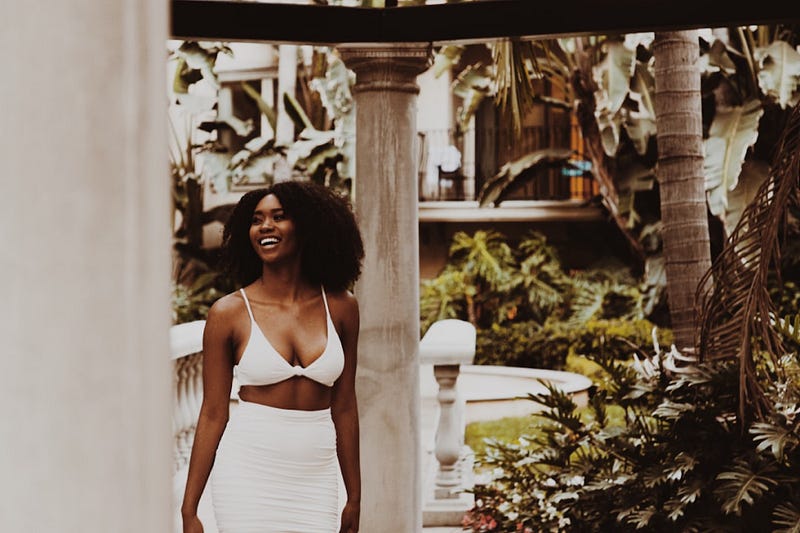
Some days I forget that I haven’t been to America yet in this lifetime.
I’m aware of a past life in America though.
I grew up in Zimbabwe until the early 2000s when I moved to the UK. My childhood in Zimbabwe is characterised by a lot of dancing and singing with my friends. A lot of the singing was R’n’B artists and whoever was the most popular artist at the time via MTV. I had a lot of Nelly, Usher, Destiny’s Child, Ashanti, and Bow Wow (he might have been one of my first crushes).
We loved the music and the shows and I dreamed of living in America too, especially when I watched shows like SistaSista, The Fresh Prince of Bel-Air and My Wife and Kids.
As I have been connecting with my identity, I have been seeing and accepting the many influences in my life — whether personal or environmental. I was and continue to be a passionate sponge — meaning when I get into something, I get into it and I live in a fantasy where that’s my life/reality for a while.
We are products of our environment. When we are children, we often don’t have much of a say regarding what those environments look like. They are at the whim of our parents and caregivers.
But as we become adults, we need to be very mindful and conscious about our environments because we will pick up whatever is there.
As an empath, I am hyper-aware of this. I recently wrote about it in relation to my hypersensitivity and introversion.
But in general, we tend to pick up the positives and negatives of any environment/connections that we’re in.
This also serves as a beautiful and also painful reminder of how endings in relationships don’t mean that our connections ever truly end.
We carry each other in some way. We learn so much from each other, from mannerisms to phrases and it can be months or years later and you find yourself saying the same thing someone from your past said.
This is why grieving and forgiveness are important when it comes to relationships that end. Because either way, they happened and they have influenced and affected us in some way. I am currently writing this article with a cup of coffee next to me. The mug I am using is from a university friend I lost contact with years ago. But the mug is still next to me as a reminder and mark of our times together.
This is why the transition from an old to a new environment is so hard. We are trying to adjust to a new environment, whilst also still carrying habits from our old environment.
African American culture is incredibly rich and beautifully interwoven into the fabric of our modern-day society. The music especially feels so personal and one with us all across geography and classes.
I was a girl-child in Zimbabwe fighting to be the Beyonce of our wannabe Destiny’s Child girl group, the same way that I am now aware there were other children doing the same thing in other parts of the world.
This is the beauty of international artists. The work they do means we are reminded of our oneness. They connect with people in London, then fly to Switzerland and South Africa and still — there are people there waiting to love and support and connect with them.
As a big fan of humanities and arts, I have been connected to how the arts connect us to our humanness across material and superficial differences. I recently wrote about this from my teenage years as an emo kid.
Music is the language of the soul — it speaks to us beyond our egos. It speaks to us beyond the conditioning and socialisation that tells us what we should like/listen to. This is why forms of cultural gatekeeping are pretty sad and depressing. Although I do understand and respect that they come from wanting to preserve the cultures.
It is worthwhile to have conversations about cultural appropriation, it’s also important to consider cultural appreciation, that we can fall in love with other cultures because of our exposure and relationships with them.
When it comes to cultures especially, we need to consider the wider human history. That we have been travelling all over the world and influencing and affecting each other. When we consider that all of humanity can be traced back to Africa, we accept that this means there are going to be a lot of similarities across cultures.
As a Zimbabwean Ndebele woman, I am close to speaking IsiZulu and understanding Xhosa which are mostly South African languages but based on us having the same ancestors — we can trace our lineage back to the same Bantu tribe. People are going to connect with whatever speaks to their hearts that goes beyond their social and cultural expectations.
Although we accept that we love African American artists and how our lives are enriched by our exposure to their work, white supremacy and colonisation continue to warp the perspective of African Americans.
Media representation and mainstream media’s propaganda and intentional selectiveness regarding what images are shown about Africa and black people is something that all black people feel and have been affected by. Ignorance is encouraged through what is shown and omitted in education too.
I learned this when I moved to the UK and I sat through ignorant and hurtful comments regarding being from Africa. The sentiment that we are not “civilised” was especially the most popular one among some of my peers.
This is exactly the mindset colonisers had when they introduced their ways of being as “better” to our ancestors.
A couple of years ago I had a white woman in her 30s genuinely surprised that I went to a boarding school in Zimbabwe. In her mind, she probably thought we were schooled by and with animals like Mowgli from The Jungle Book. (I wouldn’t be opposed to it truthfully — then I would be closer to my true nature without the patriarchal and colonial conditioning right?)
The wounds left by colonisation on our collective consciousness are something for each one of us to reckon with and reconcile with. Regardless of race and heritage.
But the othering that persists as humanity means that it’s so much easier for people to point their finger at someone else whilst missing themselves.
The lostness and unconsciousness have humanity disconnected from who we are as spiritual beings. Fear-based systems and structures have encouraged us to continue to perceive an “other” that we are “better than”.
If we can convince ourselves that there’s a group of people who are worse than us, we can hide from our own wounded parts. From our pain and trauma that is not only generational and from our immediate families, but also what we have experienced from being born into a world that has told us that we are inferior because of the colour of our skin (along other isms and phobias).
Unfortunately, there is a lot of animosity between Africans and African Americans. This extends to Black British people too. I have sat through conversations with Africans who feel a sense of superiority over being clear on their roots compared to African Americans who don’t know theirs.
This sense of superiority is not only born from ignorance of how mass media has encouraged this but also from our woundedness and the pain that comes from being treated as less than.
If we’re not facing this pain, we are going to project it on other people. Meanwhile, we’re playing right into what colonisers and those who have sought to destroy this planet want.
I have a lot of empathy for humanity at large, but especially for people who are disconnected from who they are because I understand that it is not their fault.
Growing up in Zimbabwe in the late 90s to early 2000s, we used the N-word. It wasn’t in the context that it’s used however towards any black person as a slur or in empowered reclamation. Instead, it was about a specific type of black man — one who was seen as an emulation of African Americans. So it was when he was sagging his pants, wearing chains and how he walked with that slow swagger. Picture early 2000s Nelly.
Today I’m aware of the debates as to whether non-African-Americans can use the N-word or not and I respect where that comes from. We don’t have as much of a history with it as they do.
Meanwhile, I’m aware of African Americans also being ignorant and vitriolic towards Africans. They have their own hateful words towards Africans that I’m not going to share here. But these words are also along the lines of Africans as being uncivilised and barbaric.
It is also born from pain. For colonisation to root, colonisers needed to not only detach us from our roots but to instead leave there a seed of our roots as demonic and toxic to the extent that today, there are a lot of black people globally who demonise the spiritual ways of our ancestors and anything that is visibly African.
A lot of movements regarding black celebrities being demonic and evil come from other black people. Beyonce for instance has been accused of being a devil-worshipper — this has only further intensified with her owning African spirituality and images in her music and music videos.
My love for African American arts and culture has been something I have engaged in academically and just from my interests. At university, I studied English with American Literature. The highlight of my time there was the essay and presentation I did on HBO Insecure and workplace microaggressions. My favourite writers are Audre Lorde and bell hooks.
A few years ago I was very into fighting for better representation for black women and most of the shows I watched were Sci-Fi American shows. So in my writing, I read and researched even more about how African American women were treated during slavery and how that continues to influence the images that we see today. When I do my research and my reading, I don’t see it as an “it was an American / them” issue, I see it as “it was us too”.
In my exploration, I see that I am one with all. There’s no way to separate myself from what happens in one part of the world because it affects me wherever. When it comes to things like using hair relaxers in Zimbabwe, we knew of them because of American brands being imported into the country.
Ultimately, we are one with each other.
Our fragmentation as a collective has and continues to bleed into the narratives that we are fed about each other. It’s only when we confront these shadows within ourselves and accept the presence of pain and grief that we can really connect with ourselves and each other.
We are easier to control when we perceive ourselves as separate from each other. As black people, if we are letting the geography and the lines that were created by colonization and slavery continue to encourage us to judge others — we are missing that we carrying on the works of the colonisers.
We are missing that we are dismissing our own ancestral pain.
Personal Identity
Last year during my trip back to Zimbabwe I connected to how I am a citizen of the world.
I can not neatly fit into any one country because I am constantly aware that I carry influences from all over. My language and accent reflect this. You cannot neatly place it. I have a Zimbabwean/ British accent but with a lot of Americanisms. I fully embrace and accept that I am influenced by African American culture and I have a lot of respect and love for it too.
It’s important that we see each other beyond our borders. Because when we don’t we miss how much we can really learn from each other and how we are connected.
I am a beautiful fusion of different cultures leftover within me from my interests and this colours how I see the world. As I continue on my self-discovery path, I am meeting the ways that I belong and don’t belong.
So having conversations with people who expect me to have one kind of perspective is not only hard, but also these days I struggle to even fully explain the multitudes and layers of something that they say. This is the perks of being a writer.
So with other Africans, when they expect me to agree that “yes, we are better than African Americans because we know where home is”, I am really just thinking of all of this.
That the problem isn’t that one group of people don’t know where their home is, the problem is that humanity has forgotten who we really are.
We cannot change the past, but we can do better. For us to do that, we open our borders — in our hearts and in our spaces, and we welcome each other regardless of our differences.
If we feel like someone is without a home, we open our homes for them too. Because ultimately, we all come from the same home — Africa.
Thank you for reading, Laurel
Enjoy my writing? Please consider buying me a Ko-Fi, it’s very appreciated by this growing writer, thank you for your support!