
My Lifemap
And 3 steps to create and use your own one
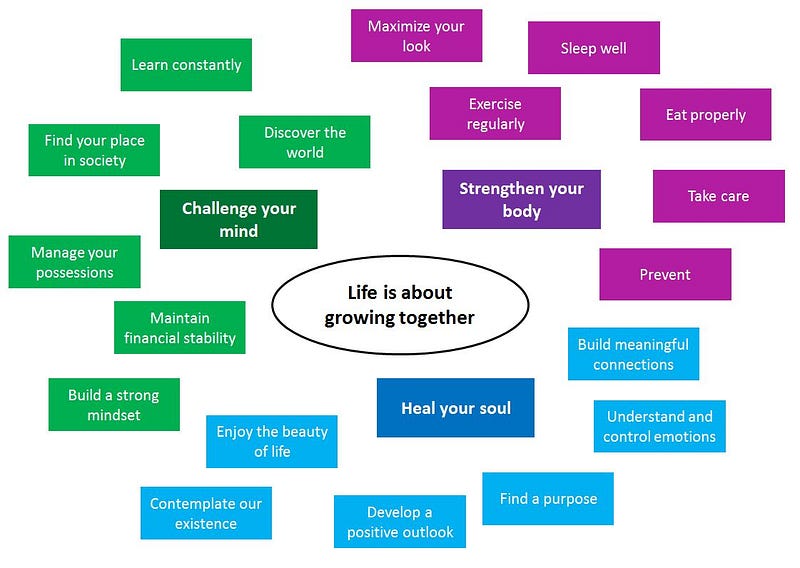
Time is our most valuable resource, and more often than we’d like to admit, we end up spending it on activities that offer no real benefit. In addition to wasting our time, we also tend to spend money on things that don’t bring us happiness, expend energy on battles that aren’t worth winning, and get lost in thoughts that lead us nowhere.
To optimize how to allocate our resources, we must first gain a deep understanding of what we truly want. Without taking the time for introspection, our actions will be dictated by external influences and circumstances, making us feel as though we are merely drifting through life, without actively steering towards our desired destination.
Since everyone prioritizes different aspects of life, there is no universal action plan for a meaningful and fulfilling life. What I can provide is a tool to facilitate your introspective journey, a tool I like to call lifemap. This is nothing but a mindmap and can hopefully help you answer life’s most crucial question:
“What does truly matter to me?”
Here are the three steps you can follow to create and use your own lifemap.
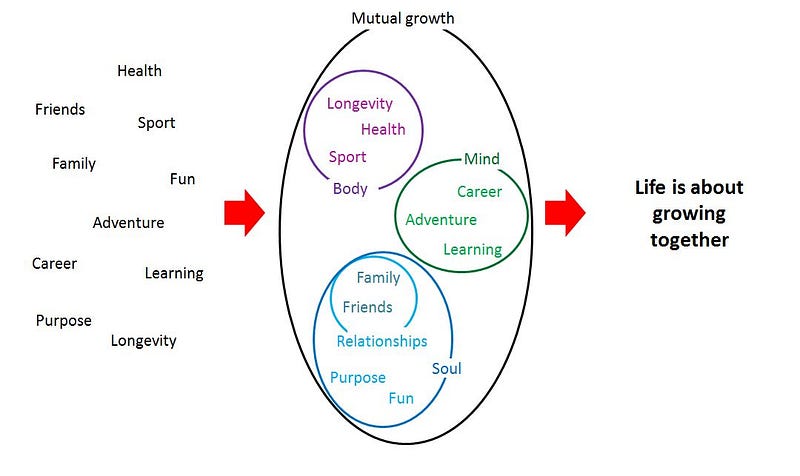
1. Cluster
List all the things you believe add meaning to your life and then group them together until you identify the most overarching theme. This central theme represents what life means to you. Be aware that this process isn’t an exact science and that clustering may not always work.
The primary objective of this exercise is to encourage you to look at the broader perspective instead of getting lost in the details. By keeping the big picture in mind, we can better assess the impact of our actions and prioritize them accordingly.
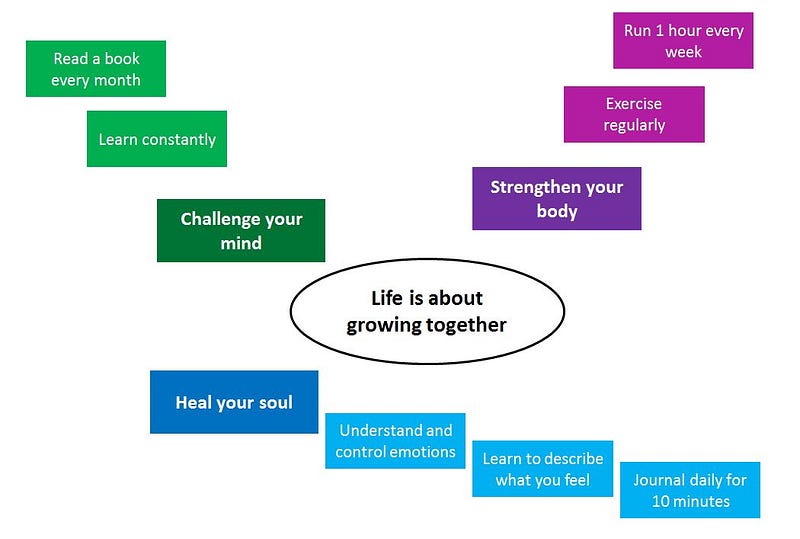
2. Drill down
Place “Life is about …” in the center of your lifemap and then proceed to enumerate all the actions necessary for achieving what you believe life is truly about. Delve into each statement, drilling down until you reach a subcategory that enables you to describe actionable steps and habits.
Ensure that the bottommost subcategory in each branch is implementable and then, there you have it: you have successfully created your lifemap!
From now on, before you invest substantial resources in anything, assess its alignment with your lifemap. If it doesn’t add any value to your lifemap, then allocate only the minimum resources necessary.
Always frame your actions in your lifemap so that the outcome depends solely on your efforts. Life is full of circumstances beyond our control, so seek fulfillment in accomplishments that are within your power.
For example, instead of stating “be promoted to x in company y”, express it as “work towards achieving a promotion to x”.
While constructing your lifemap, you’ll likely discover that not all the actions required to reach your goals are things you necessarily want to do. Yet, leading a fulfilling life often demands stepping outside of your comfort zone. Hopefully, this lifemap will push you to finally complete the tasks you know you need to do, but for which you have always found excuses to procrastinate.
3. Update
Now that you have your lifemap, it’s time to put it to use! Ensure you adjust your habits accordingly, take action and work diligently toward accomplishing the goals you’ve written down.
A lifemap is helpful only when you challenge it and update it regularly. You may achieve some of your goals, or over time, you might discover that your aspirations have changed. Therefore, it’s essential to periodically review all branches of your lifemap for introspection.
Remove, add, rearrange, and reformulate as necessary until you regain the confidence that following your lifemap will set you on the right path.
We alone are responsible for determining how to live our lives, and for choosing which path to follow and where to go. We must accept that reaching our destination will demand time, consistency and compromises, and we must accept that we may never achieve all the goals we will set for ourselves.
However, at the end of the day, does it matter more to arrive at our destination, or to know that we are heading in the right direction?


