
My Life Without TV Until COVID-19 And George Floyd
How I Became Addicted to CNN
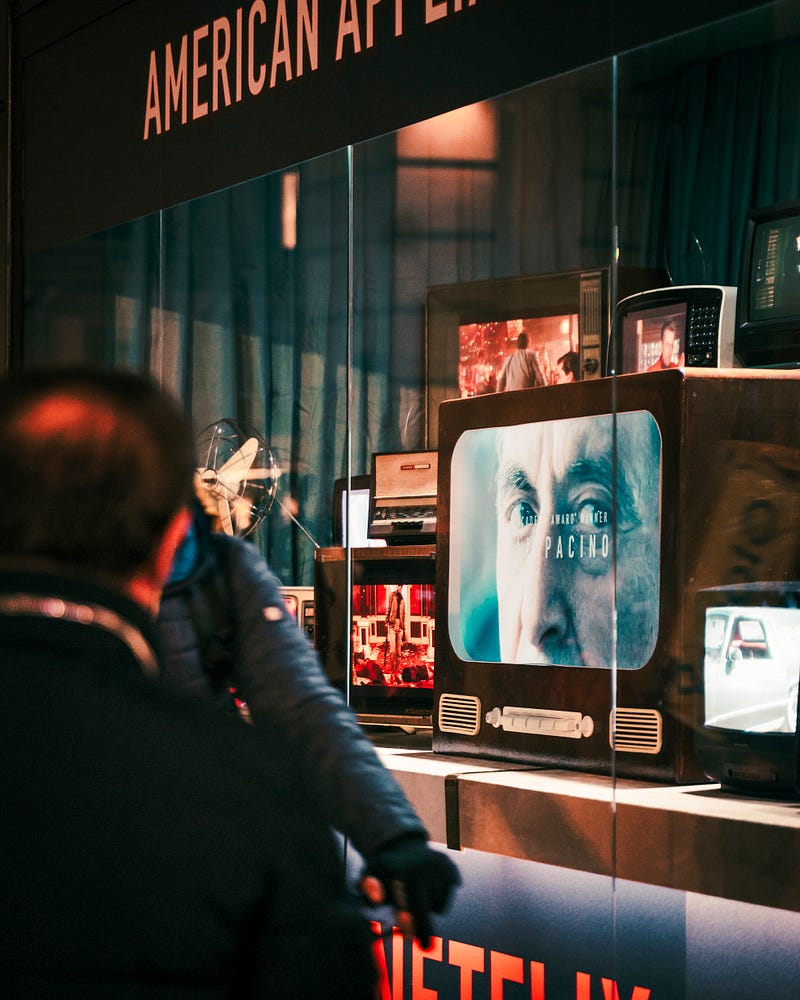
TV hit Denver in the 1950s but I didn’t care until I became a TV addict watching for the latest news about COVID 19, the murder of George Floyd, and protests for justice.
Watching TV in a Window
Nobody had a TV yet. My cousins and I stood outside the window of an appliance store watching what looked like a movie in a box. My friends and I were intrigued. Some couldn’t wait until their father would buy them this thing called a “television.”
Soon everyone in the neighborhood had a TV. Everyone in my extended family had a TV. Probably everyone in Denver had a TV except the Wagners who lived on Cook St: my father, my mother, and me. The Wagners who lived on Cedar Avenue had a TV. Grandmother Wagner had a TV.
My Uncle Buys a TV
On New Years Day, my Father would drive us to my cousins’ house. They had a TV. We watched the Rose Bowl Parade broadcast live from Pasadena. Oohd and ahhd at the floats. Drank orange juice and ate donuts.
Imagine, if you will, the Rose Bowl Parade in black and white!
My Best Friend’s Father Buys a TV
My best friend’s father bought her family a TV. It was a sad time in our friendship. We’d be happily playing jacks or tether ball in Sharra’s backyard. Then she’d announce that she had to go inside to watch Roy Rogers and his horse Trigger on TV.
“You can watch too. Mama says it’s ok. She’s made a pitcher of Kool-Aid for us. I think she has cookies.” I didn’t want to watch TV, even with Kool-Aid and cookies. So I’d go home and back to the book I’d been reading.
My Father Buys a TV
Finally my Father, not all that interested in TV but not wanting to be left out, bought a TV. It lived in the basement.
He watched TV on Sunday night, on the condition that my Mother, my Grandmother, and I watched with him. He’d pound on the ceiling with a broom handle to make sure we knew to come downstairs to watch with him. After “The Ed Sullivan Show” and “What’s My Line” ended, the TV went off until next Sunday night.
My desk for doing homework was in the same room as the TV. One of my Mother’s friends discovered this. “Mary, how can you have the TV in the same room where MaryJo is supposed to be doing her homework? Surely that’s a distraction.” My Mother assured her the TV wasn’t keeping me from doing homework.
It had never dawned on me that I might turn on the TV. Not that I didn’t find other distractions to keep me from my homework, but that’s another story.
No TV in Jersey
Chris, one of our sons, was critically ill in Denver while we were living in NJ. Knowing the situation was too much for Chris’ wife, Eric, my husband, took a leave of absence from his job to help care for Chris. Eric would be in Denver for four months before I called the cat sitter for Rabbie and Mitzi so I could fly out to Denver.
For four months, our TV remained silent. It never crossed my mind that I might want to watch TV. Why would anyone watch TV if one could read?
Turning on the TV in 1982
However, I did watch TV twice, once in 1982 and again in 1983. One morning I got out of bed, made coffee, wandered into the living room in my pajamas, and turned on the television.
Tuning into the morning news, I was mesmerized by clips from old newsreels and radio broadcasts: Eisenhower speaking to the Troops before they boarded the C47s which would take them to Normandy. Roosevelt reassuring the American people on the radio. Edward R. Morrow, the famed journalist of World War Two, reporting on the paratroopers landing in Normandy, the troops storming Omaha Beach.
I had tears in my eyes. How odd? On June 6, 1982, I had turned on the TV. I was watching the 38th anniversary of D-Day with no plan ahead of time to do such a thing, no realization of the importance of the day.
I never watched TV and certainly not first thing in the morning. And why did I have tears in my eyes? I thought of all the men in my family: my Father didn’t join the service. He was too old and had a heart murmur. Nor did Uncle Harold; he was too old too. Uncle Bob did, but he was a medic stationed in California. Uncle Jack did also, but he never left the States either
Growing up, nobody had ever talked about D-Day or the War. Despite having a PhD in American history, except for a book about women during the War and a movie about Rosie the Riveter, I’d never studied D-Day or the War.
A year later, June 6, 1983, I turned the TV on once more. Again, not planning to watch TV. Not realizing it was the 39th anniversary of D-Day. Stephen crawls out of bed, gets ready for school, and wanders into the living room.
“Mom, what are you doing? You never watch TV.”
My Birth-Father on TV
Many years later, I would discover that my birth-father, John Derrick Halls, 101st Airborne, 506 PIR, landed in Normandy and died in the morning of June 6, 1944 at the Battle of Brecourt Manor. The actor, Andrew Scott, would play him in Steven Spielberg’s HBO series, “Band of Brothers.”
I can’t explain what led me to watch the D-Day commemorations in 1982 and 1983. But the tears I couldn’t explain at the time were for John Derrick Halls.
Fast forward: March 2020
Covid 19 hit the country. 100s are dying, soon thousands. The hospitals are overwhelmed without enough ventilators, PPE, and intensive-care beds.
Some suggest that perhaps we should let all those over 65 die. I gasp. I panic. Someone thinks it’s ok for me and Eric to die from the virus: a mom, a dad, a grandmom, a granddad, a great-grandmom, a great-granddad. It’s not time for us to die. Our family needs us.
We don’t understand if other countries can squash the virus, why can’t the U.S.
Now Eric and I are watching TV news every night, night after night. I’m wearing a mask to the grocery store, arriving when it opens at 7 am on Tuesdays for seniors. I’m staying home and worrying about Eric who goes to work each morning. He’s considered an essential worker. Sometimes in the middle of the day, I turn on the TV for more news.
Eventually the daily number of deaths start going down. Politicians stop suggesting old people should be left to die. I calm down for myself, for Eric. We are white. We have health insurance. But we’re appalled at the high percentage of Americans dying from COVID 19 because they aren’t white and don’t have health insurance.
We’re still watching TV every night although not three or four news shows one after another.
May 25, 2020
Then George Floyd is murdered in Minneapolis by a cop with his knee in Floyd’s neck for 8 minutes and 46 seconds. We’re re-addicted to hours of TV news.
In addition to the number of deaths from COVID-19, we’re grieving, once more, the death of another unarmed Black man. We’re old enough to remember the Civil Rights Movement, the murder of Dr. Martin Luther King, President Johnson signing the Civil Rights Act.
Now, 56 years later, we gasp at how little progress has been made.
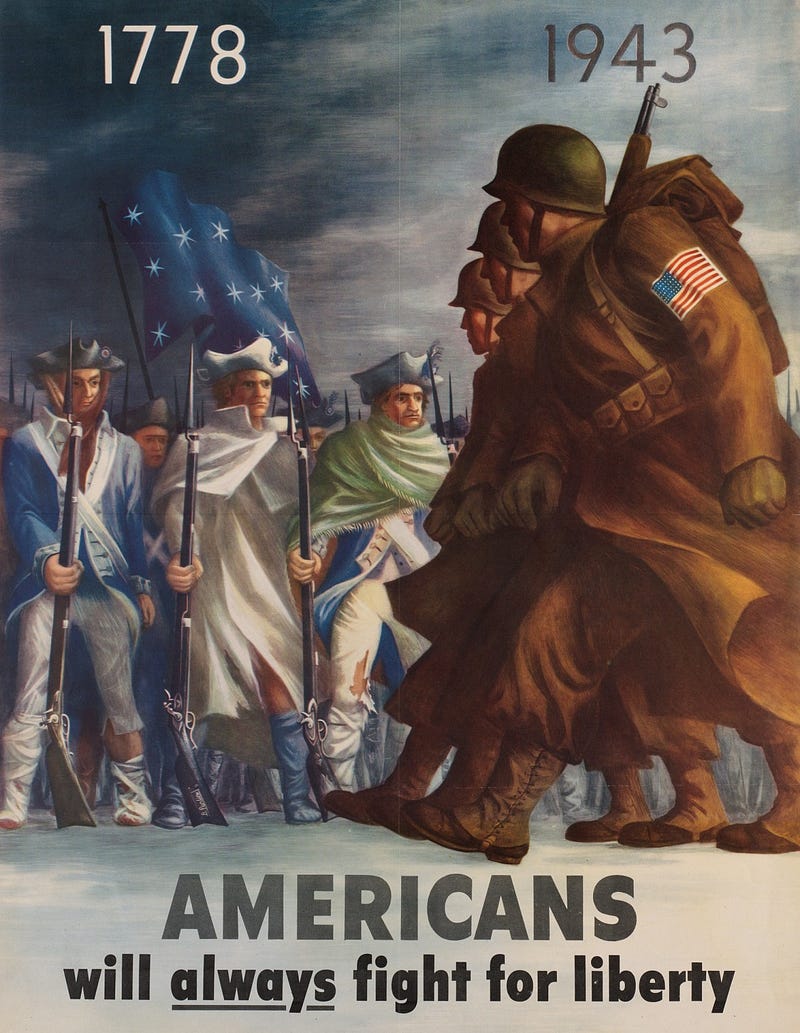
I look again at a poster from 1943. Once upon a time, we did the right thing. American troops liberated starving Jews from Hitler’s concentration camps: more than 20,000 prisoners at Buchenwald. Our troops also liberated Dora-Mittelbau, Flossenbürg, Dachau, and Mauthausen.
We have fought for liberty. We have fought for justice. We did it in Europe. Why can’t we do it at home?
I am sad. Maybe I wouldn’t be so sad if I could go back to the days when I never watched TV.
Read about my birth-father in Band of Brothers. He would die from Nazi gunfire on D-Day, the first one killed in the HBO series.