
My Life Started When I Started to Accept
Actionable practices you can do now to break the cycle of repeating the same mistakes and improve your relationship with yourself.
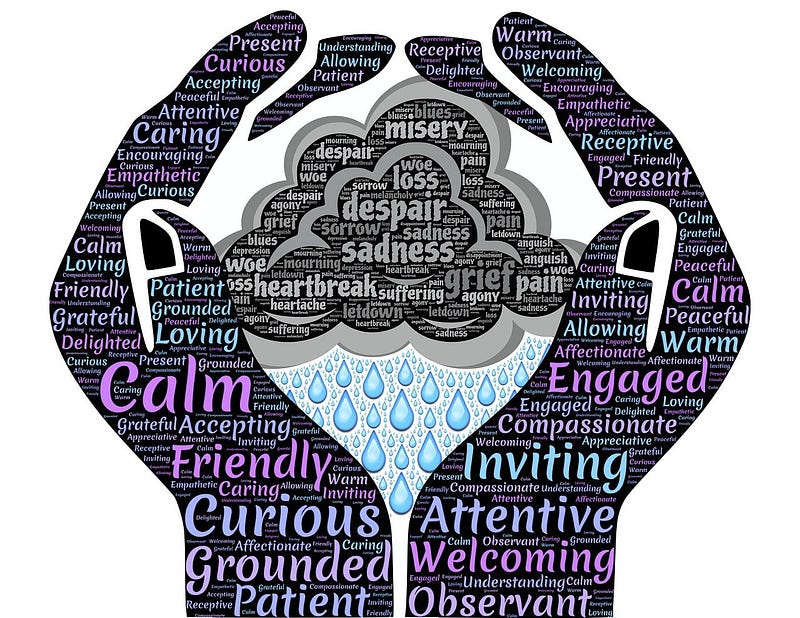
In Mark Manson’s book, “The Subtle Art of Not Giving a F*ck,” he describes the cycle of being preoccupied with your own thoughts. Some individuals become angry when they dwell on their own anger, feel sadness when reflecting on their own sadness, and so forth.
This is a common human cycle that nearly all of us experience at some point in our lives.
I, too, went through this cycle for years. My specific cycle was one of frustration, stemming from caring too much about things that were beyond my control. Consequently, I repeatedly failed to achieve the desired outcomes, leading to ongoing frustration.
The process of breaking free from this cycle didn’t happen overnight. Instead, it took a series of rejections, trials, and failures, coupled with acceptance, for me to truly move forward. Eventually, I found myself on the other side, having moved on from this cycle.
In the upcoming sections, I will go through some examples of when acceptance can be vital, and guide you through the journey of embracing acceptance.
Don’t Avoid Negative Feelings
“The desire for more positive experience is itself a negative experience. And, paradoxically, the acceptance of one’s negative experience is itself a positive experience. (p.9)” ― Mark Manson, The Subtle Art of Not Giving a F*ck: A Counterintuitive Approach to Living a Good Life
Fighting negative experiences instead of addressing them is a critical issue that we should strive to resolve.
It’s a fact that all of us are aware that negative experiences are a part of life, and they won’t cease until our last day. However, for some reason, we continue to be surprised by challenges, issues, or unfavorable events that come our way.
We often ponder questions like “Why me?” or “Why now?” These unhelpful questions arise from our emotional minds, distracting us from a simple truth: life is an unending sequence of problems. Solving one problem inevitably leads to another. We’re not in a flawless heaven; we’re on Earth, a place filled with imperfections.
Furthermore, in today’s world, where everything is marketed as “flawless” or “perfect,” even the people inhabiting the virtual world of the internet continually assert that their lives are superior to yours.
The problem is that they often display the best aspects of themselves and their lives, whether on social media or in real life. In such a world, it’s crucial to continually remind yourself that what you see is not the complete picture, no matter how splendidly it may appear otherwise.
Actions you can take now
When you face any sort of negative experience, from someone rejecting your invite on social media to someone rejecting you in real life, to any other thing really, what you need to do is
- As humans, we have emotional and logical minds, you can’t remove the emotional mind, instead, you just have to deal with it. This concept is beautifully described in “Thinking Fast and Slow — by Daniel Kahneman”.
- Speak to yourself, whether internally or aloud, and reassure yourself that it’s okay to feel the way you do.
- Remind yourself that it’s not a matter of life or death (unless it really is of course!) and that you are entirely safe, with no need for immediate action. Instead, take a step back and, when you feel calmer, let your logical mind guide your response.
- When your emotional mind is ready to take the lead, consider taking small steps to address the negative experience.
- You have the option to discontinue something if you feel it’s not right for you; not everything or everyone is meant for you just because you really want it.
- Acknowledge that you have limited control over many things, and if you’ve already attempted various approaches and still can’t effect change, then it’s quite likely that it’s simply not meant for you.
You Don’t Have to Be Perfect
“You have to excel in your job”
“You have to be the best parent and make no mistakes or else your child will hate you”
“You have to excel in your education”
“You have to be so rich to live a happy life”
“You have to travel extensively to explore the world”
“You have to become a well-known blogger or vlogger, earn money online, and own extravagant possessions”
Errr, no you don’t.
It’s important to recognize that while these goals can be inspiring, they don’t define your worth or happiness.
Everyone’s path is unique, and it’s perfectly acceptable to prioritize what truly matters to you and find your own definition of success and contentment.
Remember that a fulfilling life is one that aligns with your values, not just societal expectations.
People’s Opinion of You Doesn’t Have to Be Your Reality
Often, when people share their perceptions of us, we tend to treat it as an absolute reality, as if we are exactly what they see. This can be especially true when the person offering their perspective is someone close to or dear to us.
It’s important to recognize and accept that their view is just one perspective, and it’s okay to feel hurt by how they see you.
However, it’s crucial to remind ourselves that their perception doesn’t have to define our reality.
Even if there’s some truth in what they say, and it could benefit us or those around us to make changes, we shouldn’t resign ourselves to the idea that we’re unchangeable.
Our minds sometimes interpret feedback from loved ones as if it’s a fixed characteristic, but in reality, personal growth and change are entirely possible.
If there’s room for improvement, we should genuinely work on it and not give up on the belief that we can change for the better.
Embracing Change In Others
It’s an undeniable fact in life that people and circumstances change over time. It’s a natural part of our journey. As people grow and evolve, their needs, aspirations, and priorities shift. It’s only natural for individuals to change.
So, why do we expect others not to change?
It’s essential to embrace the changes in others rather than complaining about them.
Adaptation to their new selves is key, even if it means letting them go.
If you value their presence in your life and they are willing to stay, engage in a meaningful conversation. Try your best to be resilient enough to accept others’ new selves and adapt. However, if you find that you can’t adapt, it may be best to let go. Life is about evolving and growing, and sometimes that means parting ways with those who no longer align with your journey.
Embracing Change In Yourself
As we grow, our needs, interests, and priorities naturally change. Sometimes we resist these changes, like when a person gets married and sees their friends less. They become more focused on their family and home life. It’s essential to accept this evolution and not dwell on what we think we might be missing out on.
Your new self is a reflection of the choices and commitments you’ve made. Commitment is often misunderstood or viewed negatively, but it’s actually a key to happiness in relationships. It’s fulfilling to invest in making a relationship work.
Instead of resisting your new commitments, embrace them as acts of giving. Giving can be incredibly fulfilling and lead to happiness. And remember, if you find that you no longer like something or have changed your mind, don’t immediately give up. Consider the genuine commitments you’ve made, especially if they involve someone else. Work together to find solutions rather than simply walking away. If you’ve exhausted all options and still can’t adapt, then it’s okay to move on from what’s making you miserable.
You Have Very Little Control
Accepting the limited control we have over various aspects of life, especially the past, is a fundamental truth that we often overlook.
It’s essential to remind ourselves of this fact, as it can lead to greater peace and acceptance of the present moment. The past is unchangeable, and understanding this can help us focus on making the most of the present without even worrying about the future too much.
We can’t change the past, so we might as well accept it.
Give Up Attachments
Focus your care and attention on things that truly matter and are genuine priorities in your life.
Learn to let go of those things that only bring you misery and aren’t worth your concern.
Becoming overly attached to people or ideas can be harmful because you’re investing heavily in something that is temporary and ever-changing.
It’s essential to reach a balance between forming meaningful connections and remaining adaptable to life’s inevitable fluctuations. This balance allows for a more resilient and fulfilling way of living.
In conclusion, acceptance is vital in overcoming many of our struggles. When we refuse to accept and persistently fight against reality, we often find ourselves trapped in the same recurring emotional cycle.
Find me on X/Twitter | Join my 📚 Books Newsletter | 💻 Tech Newsletter


