My Journey Through Eating Disorders and Body Dysmorphia
From Teenage Bulimia to Adulthood Binge-Eating and the Hatred of My Body Throughout
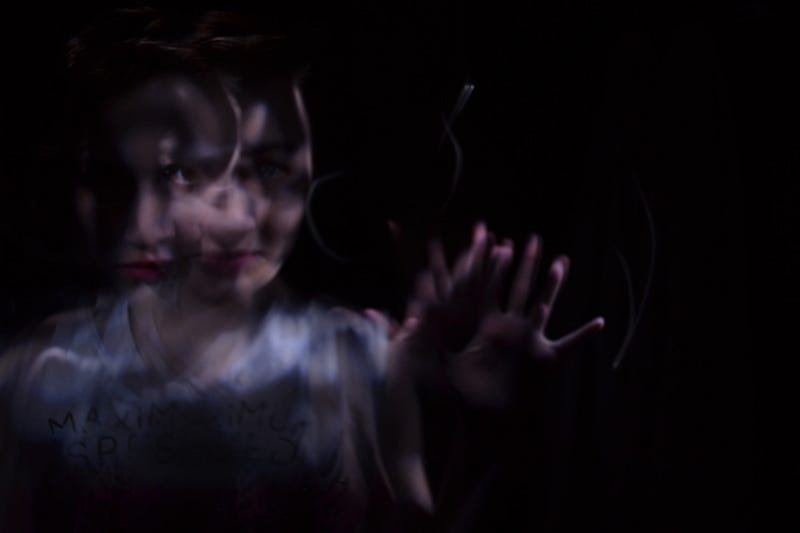
I’ve always had an extreme hatred of my body, but an intense love for food.
When I was twelve, my body went through a growth spurt. I literally blossomed overnight from a gangling child to a nearly-formed young woman. Not only had my height increased, but breasts and curves formed too. I didn’t know what to do about my new self, except to hate it. My female classmates were still petite, flat-chested, and stick-figures. As a result of my new image, I attracted the unwanted attention of boys at school and some adult males.
The teasing and harassment in school were relentless. There were three boys who pushed the boundaries way too far too often — from simple teasing, to constant name-calling, and the eventual inappropriate touching. I felt ugly, cheap, and disgusted with my own body. By high school, their behavior only intensified, as did my extreme hatred for my body. And then older men in my small town began to notice me. I was met with catcalls and attempted touchings. Even my sister’s boyfriend molested me one summer.
I didn’t want to be seen. I wanted to be invisible.
By the time I was fourteen, I developed a love-hate relationship with food. I loved all the rich foods my mother made — she was an excellent cook — everything from homemade rolls and cinnamon rolls, to sausage gravy and spaghetti, to yummy homemade candy, pies, and cakes. And yet, all of those foods only added to my growing weight problem and even more teasings at school. As a result, I would eat everything I loved, and then moments after the last morsel touched my lips, I would hate myself and run to the bathroom to purge.
Bulimia would be my constant companion for the next decade of my life. The eating and purging caused me to develop an acidic stomach and ulcers, and as my weight continued to flux from too thin to too fat, my hatred for my body continued to grow too. I also developed an intense exercise regiment — thousands of sit-ups every day and long walks every night. I rarely allowed myself time to relax or sleep and developed an unhealthy addiction to sex.
I still wanted to be invisible, but I only continued to attract attention.
By the time I reached my early to mid-twenties, my eating disorder had begun to wane. I could no longer purge as my esophageal lining was severely damaged and I only brought up blood. The urge was still there though and at times, it still is. And so, I developed a new bad habit — binge-eating and fasting. I would binge-eat everything I loved for a day, sometimes two, and then would do an intense water fast for three days to a week. Then the cycle would start all over again.
Although this satisfied my addiction, it did nothing to help the way I saw my body. From my twenties until mid-thirties, I hid under layers of black clothing and gothic-style make-up. I dyed my hair black, burgundy, or electric blue. And I escaped into crowds of gothic, punk, and heavy metal — and more unhealthy sexual encounters.
If I couldn’t be invisible, then I would be outrageous.
Now, some thirty years later, as I reflect back on my body dysmorphia and eating disorders, those urges to hate my body and gorge/purge or binge/fast still linger with me. It has taken decades of therapy for me to learn to love all of my body’s flaws and develop a friendlier relationship with food. I credit my somewhat-success to learning Mindfulness as therapy. To be aware of my body and mindful of eating.
I’d like to say that I am completely healed, but if I allow myself to go even a few hours without being mindful, I easily slip back into my old thoughts and practices. I know this will continue to be a lifelong struggle, as are all of my mental illnesses. The only difference now is that I know what is wrong with me, I have the means to help myself, and all it takes is for me to be aware.
©2020 Lori Carlson. All Rights Reserved.
Thanks for reading about my journey. If you’d like to read more of my work on this theme, please consider one of these:
Lori Carlson writes poetry, fiction, articles and personal essays. Most of her topics are centered around Relationships, Spirituality, Life Lessons, Mental Health, and the LGBTQ+ community. She currently writes for Loose Words,💜POM💜 , Illumination, The Friday Fix, House of Haiku, Know Thyself, Heal Thyself, The Purple Pen, Blue Insights, a Few Words, Invisible Illness and Tempest in Under 1000


