
My Houseplants Are Not as Faithful to Me as I am to Them
It may be time to rethink my alliances.
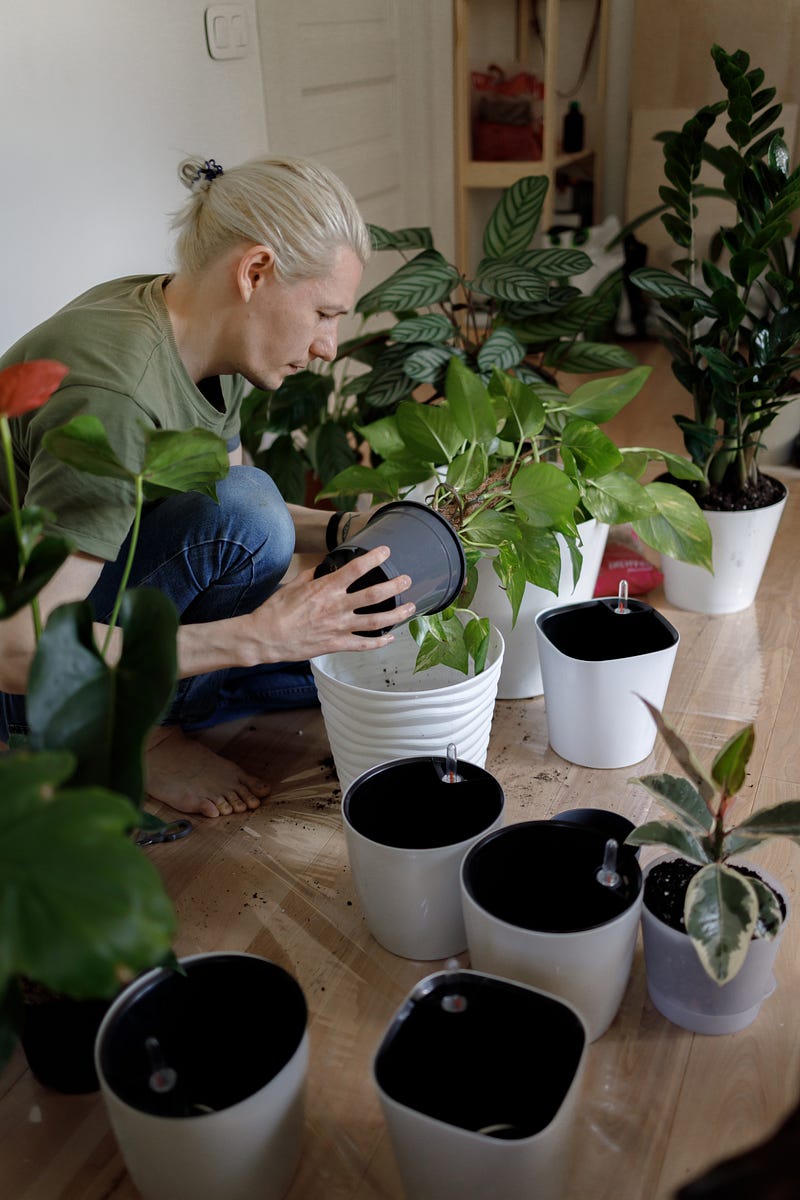
I come from a long line of house plant nurturers. My grandmother would cultivate any living green thing (I think some of them were actually weeds) she could bring into her home. She seemed to have a knack for making vegetation thrive.
This passion fell to my mother in a natural course of events. In fact, my grandmother once gave my mother a single leaf from her philodendron plant to root and grow in her own home (she was successful in creating that new plant). I still care for that very lush and healthy plant — many years after the death of both my grandmother and my mother (I shudder to share exactly how many years — read that as decades — that plant has been under my care and supervision).
That philodendron has shared at least five residences with me. To date, it has never let me down. It has survived both my conscientious care and a few instances of more negligent care — admittedly, it has not always been the focal point of my life, but it survives sometimes in spite of me and not because of me.
My sister followed in the path of our fore bearers. She is often quoted as saying that as long as there is a single green leaf left on a plant, she will do everything in her power to keep that plant alive. Her home houses as many house plants as she can comfortably arrange on tables, windowsills, plant stands and door stops.
And so, you see, I come by this near obsession honestly enough. House plants are superior to actual living, breathing pets in that their needs are simple. They generally require only a drink of water every week or so, maybe a squirt of growth inspiring fertilizer every month or so, and a suitable place in the sun (as their particular species might require).
They do not require semi-daily feedings, bathroom facilities, walks in the park or trips to the veterinarian for shots. They also do not require a license.
All positive attributes for any living thing that shares my environment.
On the negative side, house plants do not seek to cuddle on your lap, lick your hand or sit calmly by your side and listen to the trials and tribulations of your day.
This, I admit, is a little disappointing.
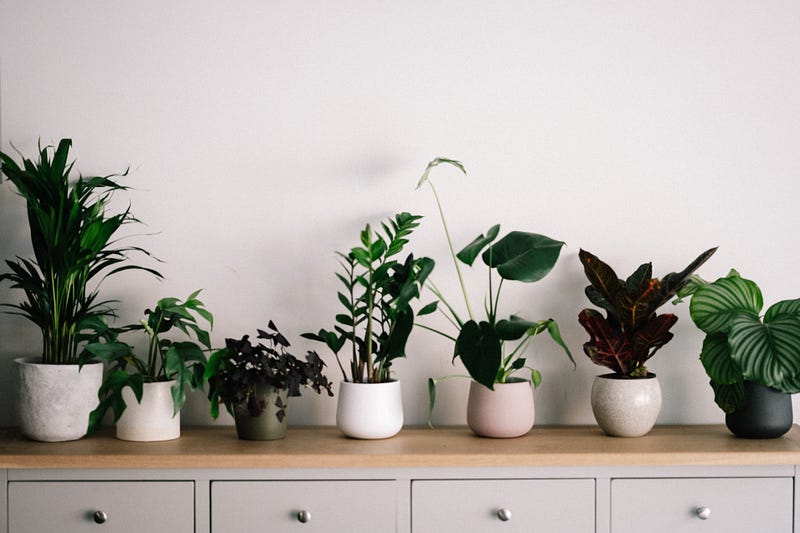
I am currently the proud plant-parent of approximately 18 house plants. I say approximately because, on any given day or week, there may be one or more drooping leaves whose removal may necessitate putting that individual plant on life support — or, sadly, an occasional trip to the back woods for burial.
There is also the happy possibility that a plant may need transplanted to a larger residence pot or may have grown so large as to need to be separated into two or more pots for further, successful expansion.
And, of course, I am always open to adding a new member to the family.
Thus, the population can vary from time to time.
While I may claim to be a reasonably devoted plant nurturer, I must also admit that my green thumb is only a pale green, at best. I try, I guess, I refer to a few plant books I have on hand, I check the Internet from time to time — all in a modest effort to maintain a viable ecosystem for my horticultural menagerie.
I know, of course, that house plants are simply that — plants. They have no brains. They have no emotions. They have no visible means of communicating with their human caretaker (that would be me).
And yet, I do sometimes find them to be sneaky little devils. On the plus side, I am frequently delighted to see a new leaf, or possibly a flower bud, start to elbow its way out of the earth and reward me for all my best efforts to care for it.
On the downside, I am all too often disappointed to see a cluster of yellow or brown leaves take up residence in a portion of a plant, necessitating amputation or, as previously stated — when the decay is serious enough — a walk to the back woods.
I can find little rhyme or reason for when and why a house plant I have nurtured for months or years (the aforementioned philodendron not withstanding) decides its time on earth is through.
I must admit a certain level of emotional attachment to my house plants — some more than others. It’s like a parent who will never admit to having a favorite child — but actually has one.
I enjoy my little colony. I rejoice in their growth. I mourn their passing (briefly — oh, ever so briefly).
But I’ve come to the realization that my house plants exist primarily to please themselves.
They live. They die. It is all according to their own life cycle and predetermined schedule.
They are only here for my enjoyment as long as they are here.
And for that I must be grateful and satisfied.
RECENT STORIES