
‘My Greatest Fear is not being Worthy of my Suffering’
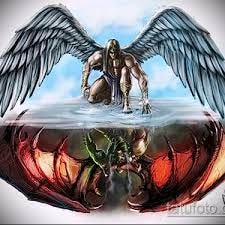
Dostoevsky led a miserable life. His father was murdered. Two of his children died. He gambled away his wife’s wedding ring, and suffered seizures that would incapacitate him for months at a time. He was sentenced to be executed, anticipating his death for weeks, only to be pardoned at the gallows, from where he was sent to the misery of slave labor in Siberia. Loss of love, loss of life, loss of sanity, loss of freedom.
This is akin to the trials of Job, in which God breaks a human only to demand faith past the very point of despair to which God inexorably led them. Hence Dostoevsky confessed:
My greatest fear is not being worthy of my suffering.
Our self-righteousness cries out that we are being punished unjustly, that the Universe is run by a horrid creature, as powerful as He is loveless. But this ignores the basic premise: that God is paying special attention to the one He breaks. God breaks you the way He breaks a coccoon. God breaks you the way contractions break open the womb.
Being broken validates the beliefs that feed our shadow. The light tells us to embrace the shadow, that light and shadow are one. The shadow tells us to fight the light, that once the light is extinguished, once shadow can fully separate itself from light, the shadow can rule. As Milton’s Lucifer states in Paradise Lost,
Better to reign in Hell than serve in Heaven.
To become the shadow, you must disavow the light. To become the light, you must both be the shadow and be beyond it: integrate into consciousness both our transcendent love and our solipsistic denial of that love. God breaks us to get us into our shadow, where we can finally hate Him.
To truly overcome our resistance to love, we must become conscious of it, experience it, own it. It is spiritual bypassing never to have hated God. Once you bury your baby, you know Whom to hate.
This is not the way we lose faith, but how we complete it. Jung teaches us that when we avoid our shadow, we avoid our light.
One does not become enlightened by imagining figures of light, but by making the darkness conscious.
Dostoevsky could only be worthy of his suffering if he saw it all the way through. I could tell you that he was a profound Scorpio or potentially bipolar or label nomenclature from myriad belief-systems. I would do better to use another writer to describe this one:
The past and present wilt — I have fill’d them, emptied them. And proceed to fill my next fold of the future.
Listener up there! what have you to confide to me? Look in my face while I snuff the sidle of evening, (Talk honestly, no one else hears you.)
Do I contradict myself? Very well then I contradict myself, (I am large, I contain multitudes.)
Walt Whitman understood that the multitudes within himself embodied unique aspects of his consciousness that did not merge in this life. Within us are beings who seek love as well as those who can only live by shunning love, or believing love shunned us. The multitudes of Dostoevsky became, of course, his characters.
To know Dostoevsky’s characters is to encounter those who most palpably embody the presence or the absence of God. A black hole apotheosizes the presence of gravity, and so swallows light. Dostoevsky’s Kirilov apotheosizes a lightless being in whom God forgot to…failed to…refused to create Himself:
This is the horror of Dostoevsky’s The Possessed. While God creates Man in His own image, Man recreates himself in God’s absence. Dostoevsky became worthy of his suffering by admitting what it convinced him of: that the very part of himself that most dismissed God would take His place.
If there is no God, then I am God.
Kirilov states this credo and soon after, commits murder because, why not? Kirilov then murders himself because, why not? The god of a godless world does whatever he wants without wanting it. Doing this means nothing just as not doing it means nothing. All Existentialism comes from this harrowing awareness: it doesn’t matter, and it doesn’t matter that it doesn’t matter. All Existentialism is Dostoevsky’s footnote.
Even a narcissist believes he himself is real, while everyone else is his ego’s hologram. A narcissist may project his nihilism on all others while still believing in his own ego. But Kirilov, a quintessential nihilist, believed in nothing, including himself. To treat life, including one’s own, with the value that one does the lives of video game characters — that is the soulless world Dostoevsky created within himself.
Be worthy of your suffering by going further than it takes you. Be worthy of the destructiveness by creating through it. Be worthy of not taking on the self-pity suffering offers you. Be worthy of enduring the journey the self-pity tempted you with. Be worthy of believing in despair the way priests believe in God. Be worthy of believing in the hope that can only be found after despair. Be worthy of your rebirth by believing in its futility.
Worthiness of one’s suffering is the willingness to take a path beyond the horizon of our perceptions, of our beliefs, of our tolerance for suffering. As Jung tells us, ‘the deeper the water, the sweeter the treasure.’
Christians call this inner journey ‘The Dark Night of the Soul’ (which Batman alludes to as a chthonic hero). Jung called this archetype ‘The Night Sea Journey’ in which the hero spends three days and nights in the belly of the beast, like Jonah, only to be rebirthed. Christ himself spends three days and nights in Hell between the Crucifixion and Resurrection. Suffering as a womb. Be worthy of your womb by forgetting it is one. If you quit on your way through Hell, there you will stop, and there you will believe your journey was leading you. Churchill told us: ‘If you’re going through Hell, keep going.’
Wherever we quit the path, that is where we ascribe its meaning as destination: as far as we were willing to take it is as far as we believe it was willing to take us.
To follow me: https://medium.com/@myartman
To subscribe: https://medium.com/@myartman/membership


