
My Grandmother’s Death
The right to die
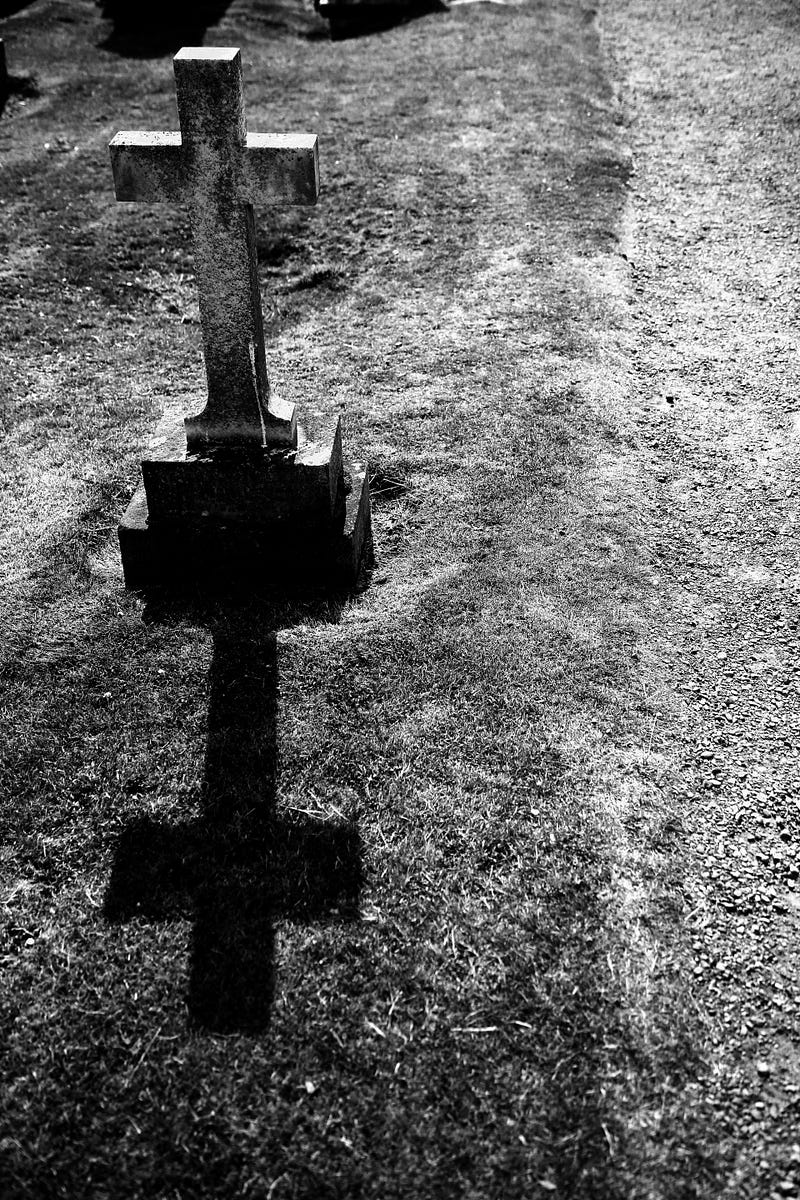
I recall my actions during my Grandmother’s death.
My Grandmother died when I was working on a Masters’s degree in computer science at Indiana University; I had been spending long hours studying.
When I noticed that my Grandmother was very sick, I immediately made arrangements to fly to Greenville, South Carolina, where my Grandmother was admitted to the hospital, where my Uncle practiced medicine.
She had some intestinal cancer that prevented her from discharging body waste. The hospital had inserted tubes through her nose down to suction out the bodily fluids.
I stayed with my Grandmother constantly during her last days; periodically, my parents and my Uncle would drop in.
I recall one time being in a daze and mumbling something about computer science incoherently. My Uncle and parents heard this in one of their periodic visits; my Uncle disdainfully accused the school.
I couldn’t believe the hospital staff was allowing me to call the shots.
(The hospital allowed me to call the shots, most likely because of my Uncle’s clout and the inevitable.)
I kept insisting that the hospital prolong her life by keeping the tube suction up. Finally, her pleading eyes convinced me of the futility of the actions.
I relented, my insistence of the tube suction ceased.
The last image I had of my Grandmother was the life leaving her eyes as her ghost left. If you have ever seen human eyes as the human transitioned from life to death, it is something you will never forget.
I came away with a much different few of the famous Jack Kevorkian.
Jack Kevorkian was a pathologist who assisted people suffering from acute medical conditions in ending their lives. Kevorkian’s actions spurred a national debate over the ethics of euthanasia and hospice care.
Jack Kevorkian ( May 26, 1928 — June 3, 2011) championed a terminal patient’s right to die, embodied in his quote, “Dying is not a crime.” He was convicted of murder in 1999 and was portrayed in the media as “Dr. Death.” There was support in his cause, and he helped set the platform for reform. Kevorkian said he had assisted 130 patients to die.
In 1998 Kevorkian was arrested and tried for his direct role in a case of voluntary euthanasia on a man named Thomas Youk who suffered from Lou Gerrig’s disease or ALS. He was convicted of second-degree murder and served eight years of a 10-to-25 year prison sentence.
He was released on parole on June 1, 2007.
After leaving the hospital, where my Grandmother had just died, I travelled from South Carolina to Indianapolis, Indiana.
I was distraught from my Grandmothers death; My parents and I travelled in my parent’s car from South Carolina to Indianapolis. At Indianapolis, I exited my parent’s car and picked up my car.
Suddenly we were going our separate ways. My parents headed North toward Kokomo, and I headed southwest towards Bloomington.
I found myself on my own, shortly after the person I loved the most in this world had died.
A feeling of extreme loneliness came over me. I had never and probably will never feel more lonely.
As the days passed, the natural human protection mechanism went into play. The sad memory was eventually pushed away by happier ones.
The happy memories may not have been as significant, but they did the job.
This story was inspired by the story: The Two Forms of Death: One Known by Your Brain the Other by Your Heart written by Lisa Gerard Braun.


