
My Friend “Broke” Tinder After Changing The Way She Swiped Online
Because even Tinder is built on… Love? No! Codes and algorithms!
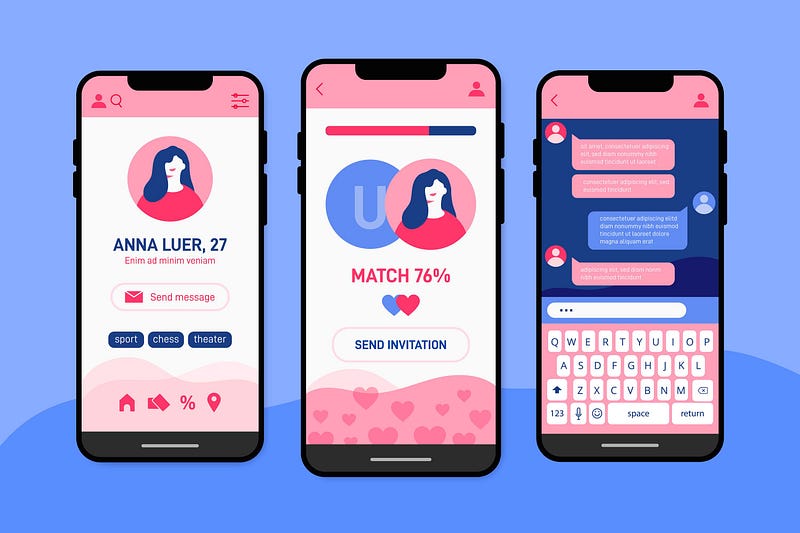
My best friend has been telling me about her underwhelming online dating experience for months: how barely anyone has decent profiles, how so few people match with her, how almost no one messages her first.
Daisy — let’s call her that — has felt frustrated for a while and was considering ending this tedious Tinder experiment.
But a week later, she called me and sounded super excited.
“I figured out a trick! — she almost yelled in my ear. — And I got so many matches! Guys are messaging me now. I broke Tinder!”
I laughed very loudly at the last comment. But I got curious: what did she do, what was the so-called “secret” she figured out?
There aren’t probably any secrets to apps, more like algorithms, lines of codes, and other programming-related stuff. Daisy would know much more about it: she’s the computer programmer in our friend group, I’m just a simple banker.
“I broke Tinder! — she repeated. — Okay, maybe I didn’t break it per se. But now I know how the algorithm works.”
Apparently, Daisy decided to discuss her Tinder disappointment with other ladies at work. And one of them had a piece of interesting advice.
“You have to understand how Tinder works, — she told Daisy. — It’s a program; it has a built-in algorithm. The more attention your profile gets, the more visible it becomes. But it also reacts to your activity as well. If you only swipe ten times a week, Tinder won’t show your profile to many men. But suppose you swipe often, especially if you do it a hundred times a day. In that case, the algorithm will react to you being active, it will recognize your profile as a potential “star” profile, and it will begin recommending you to a high number of users.”
First, Daisy didn’t believe it. Then she realized there might be some science to it. So, Daisy decided to give this theory a shot. She started swiping like crazy.
“Jo, I swiped right on hundreds of profiles in a span of an hour, — she told me, sounding much less excited.”
“How did you manage to do that? — I asked in disbelief. — You told me so many guys have empty profiles or horrible pictures.”
“I had to close my eyes and swipe right without looking at them!” — Daisy shouted at me.
We both chuckled. But I also felt horribly for the men she swiped right on, as those guys probably got very happy about getting a match and messaging her.
What if some of them didn’t get much attention on Tinder? What if some guys were looking for a genuine connection and then got fake-matched with D, who wasn’t interested at all?
I know the online culture makes people feel disposable, and I was always against it. Having that said, hearing about someone conducting a successful Tinder experiment was very interesting.
“I started getting soooo many matches; it’s insane. Every minute, I would get a few. My phone died at some point, and I had to charge it. Then I had to turn off notifications; that’s how bad it was! I got matched with hundreds of guys. Can you believe that? And I got likes, but without matches, from many more. I went from getting one match a day to one match every 20 seconds”.
I agreed it was insane. But, I suppose this is one of the principles many apps and programs are built on: they respond to active users. Daisy didn’t necessarily “break” Tinder, but she figured out a way to get noticed:
1. Swipe on a large number of profiles — possibly hundreds — in a short period. This creates an illusion of you being ultra-active and enthusiastic.
2. It signals to the algorithm that you’re a productive user, and the algorithm shows your profile to many more users.
3. As a result, those users see your profile and may swipe on you in return.
4. Even if you didn’t swipe on them, your profile still gets a lot of visibility, and you will get a large number of swipes.
Tinder isn’t rocket science. I think it’s pretty obvious the more you swipe, the more marches you get. But it was funny to hear about my friend tricking the algorithm to record her activity as very productive and making her profile more visible. I know that Bumble charges for this feature, but I’m not sure how other apps work.
And the result? Daisy scheduled a few dates, but all of them were pretty horrible. By the end of the day, a dating app can offer you many matches, but it doesn’t guarantee the “quality” of the human being.
Daisy is considering getting a cat now.