My First takeaway from “Brief Answers to the Big Questions” by Stephen Hawking
Is there God?
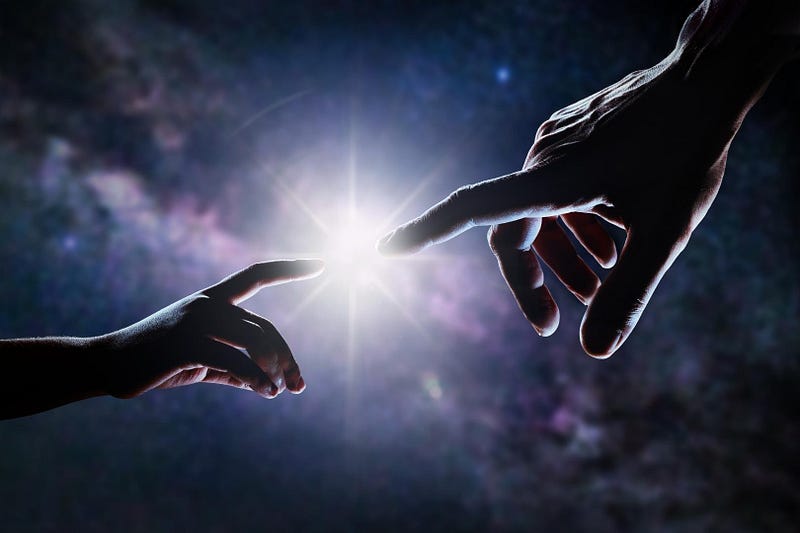
That’s the very first question which Stephen addresses in his last book. Although he tries to take the question diplomatically in order to not offend anyone’s beliefs, he openly expresses his confidence that God does not exist.
Now, this is my first article where I am trying to write down my impressions and take-aways from the books I read. Looks like I started with a difficult question, though. So, take me easy and support my writing by hitting that “follow” button.
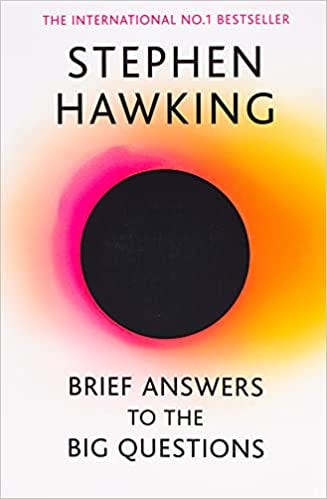
If you have not read the book, I highly recommend doing that. “Brief Answers to the Big Questions” is an addictive lecture which drags you in a world of philosophical and scientific arguments to the major question we might have as human kind.
Who is God
As controversial as it might be, Stephen highlights that it is important to define how we imagine God. We could see him as a human shaped entity or we can see him as the Laws of Nature, as the Universe in itself. For sure, that is not how most of the people imagine God.
The contradiction between science and religion has been present since centuries, and science seems to win more and more terrain as it provides more and more answers to questions and explains phenomena which were attributed to divine origins in the past.
He brings the simple example of the eclipse and how trivial it looks to us today, which obviously was not the case for Vikings.
Beside the God dilemma, Stephen also describes some scientific aspects of our world. Here is what cough my attention the most.
The ingredients to cook an Universe
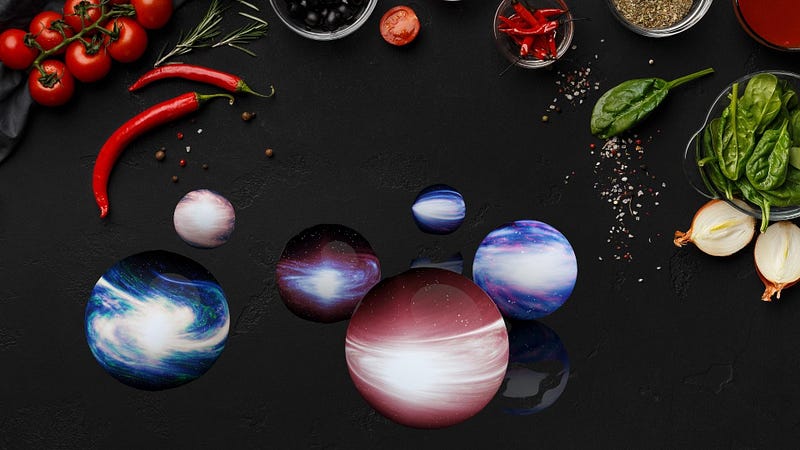
There are only 3 basic ingredients:
Matter — something that has mass. There is plenty of it everywhere. From the floor under our feet and the liquids we drink up to the Sun and enormous Galaxies.
Energy — We all know what is it, as we encounter it day by day. Simply turn your face to the Sun and you will feel it. Energy fills the complete Universe and makes it dynamic and continuously changing.
Space — a lot of it. We all are used to the idea that the Universe is enormous. But it is incomprehensibly big. We cannot even imagine that scale.
An interesting point here is that the Matter and Energy is the same thing, indeed. That what the brilliant scientist Albert Einstein tells us by his famous formula E = m * c².
Thus, there are only 2 basic ingredients, in fact.
The Negative Energy
That’s one of the most strange things in our Universe. According to the laws of physics, this might explain the origin of Big Bang, i.e. how to create a whole Universe out of nothing.
Stephen explains this concept by simple analogy with a man building a mound on a plain ground. To do that, he also digs a hole in the ground. Now the 2 entities, the hole and the mound are perfectly compensating each other. Similarly, the Big Bang generated and equal quantity of negative energy as the quantity or positive energy. The two are always equal and that’s a law of nature.
Back to Big Bang
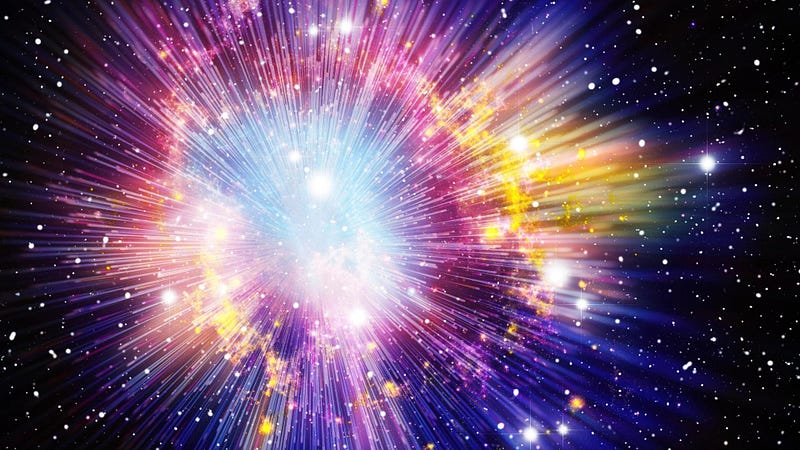
Unbelievably long time ago, the Universe was the size of less than a proton. That’s really like it appeared out of nothing. From that moment enormous energy quantities have been released while the space itself was extending.
Here, a difficult question is whether God has created that quantic laws which permitted Big Bang to happen? Stephen thinks the science can give more credible answer than a divine intervention.
In addition to creation of space, something else wonderful happened. The time itself was created. a question like “what was before the Big Bang?” noes not even make sense because the was no time before Big Bang.
The more we approach the time of Big Bang, the smaller and denser the Universe becomes, until it concentrates in a infinitely small and infinitely dense Black Hole, where even the time does not exist.
Then, does the questions “what was before Big Bang?” makes sense?! Let’s see what Stephen says in his next chapter:
Hope you enjoyed. Follow to see my other take-aways from the “Brief Answers to the Big Questions” book, or the following books that I will read.
Keep you curiosity up!
Alex