
My First Memory Of Humiliation
A story about assumptions and poor communication between teachers and students.

Adults and children do not always communicate effectively. As a child I often came to my own conclusions about what an adult’s words meant — and I was not always correct. My first memory of extreme embarrassment was a result of my misunderstanding of a teacher’s instructions.
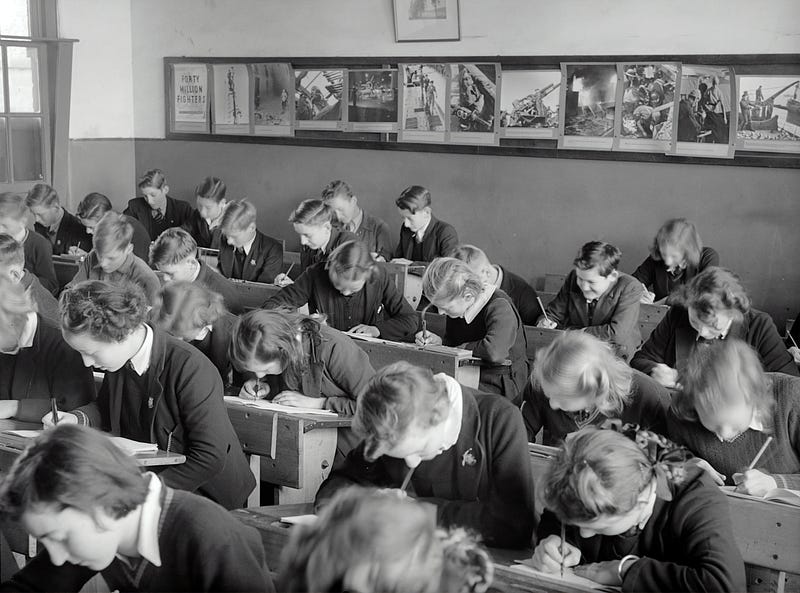
Remember that time in grade school when you got your first taste of humiliation? I remember mine like it happened yesterday. It was first grade. The class was preparing to take our first written vocabulary test and our teacher emphasized a few important things.
- Absolutely no talking during the test-no exceptions.
- When students finished their tests they were required to remain seated and quiet until all students had completed the test.
The teacher promised us certain doom in the form of a zero on the test if we broke the simple rules. She didn’t mention any circumstances that might allow for some leniency so I assumed her words meant exactly what they meant.
Halfway through the test, I realized that I had to pee. I was too terrified to raise my hand because that would mean that I would have to break the rules, by speaking, and then I would fail the vocabulary test.
I held out as long as possible until it became an emergency. Instead of asking to go to the girls’ room I looked to my right and saw Brian ONeil, the boy who every little girl in the class had a crush on. I don’t know why but I started crying when he looked at me … and the crying must have pushed the “go” lever in my tiny bladder because there I was sobbing and simultaneously peeing in my plastic chair. The surface of the chair seemed to turn me into a geyser and … I was somehow peeing in all directions. I could not stop it. I was accidentally urinating all over my classmates…it felt like an eternity.
In a blur the teacher rushed to my side with a brown paper bag and gently ushered me to the bathroom, assuring me that it would be okay. I sprinted to the girl’s restroom, sobbing the whole way.
“Even when your day goes bad, there is a reason to be glad. Accidents happen to all people.”
The paper bag had a pee-your-pants-emergency-kit inside. The kit included a plastic bag, one small pair of new undies, a pair of clean pants and socks, a packet of baby wipes, and a small doll with a delicate pink dress. Attached to the pretty doll there was a carefully worded note.
“Even when your day goes bad, there is a reason to be glad. Accidents happen to all people.”
The note and the little doll brought me momentary relief from the humiliation, and in retrospect, that teacher was very sweet to include these gifts in her emergency package.
As I freshened up I noticed that the pair of underwear I was given had the word Tuesday stitched in purple embroidery. This made me cry again, irrationally-because it was not really Tuesday it was Monday at the time.
That unimportant detail set me off again and it took me 30 minutes to gather the courage to make my way back to the classroom.
“The event was life-altering for me in a lot of ways, and it stemmed directly from my assumptions based on a misunderstanding of an adult’s words. As a parent, memories like this helped to shape my effectiveness at language and communication that a kid can comprehend.”
I thought I would never get past that terrible day. I was afraid everyone would tease me for the rest of the year…but the very next day another little girl in class had a much worse accident involving not only number one …but also number two.
Poor little Lisa! Her accidental poop incident was much more embarrassing than my tiny sprinkle the day earlier. I know it is terrible to take comfort in someone else's bad day- but …I confess…Lisa’s accident took the spotlight off of me and I was happy for this reason only. I feel bad saying it now though. Damn, kids are cruel.
As for Brian O’Neil, after that day I never was able to look him in the eye again. Even years later after graduating high school, I still could not bring myself to have a conversation with the guy- and we had the same friends and classes all the way through school. It took a lot of effort to avoid interacting with that boy over the years. Silly right?
The event was life-altering for me in a lot of ways, and it stemmed directly from my assumptions based on a misunderstanding of an adult's words. As a parent, memories like this helped to shape my effectiveness at language and communication that a kid can comprehend. I would have been much better off had my first-grade teacher explained that the rules can be bent for emergencies.
I did not understand- it is that simple.
When looking at the definition of the word understand it is plain to see that my problem on the day I peed in class was a simple lack of comprehension.
un·der·stand
/ˌəndərˈstand/
- perceive the intended meaning of (words, a language, or a speaker).
Definitions from Oxford Languages
Another Crazy Example Of Misunderstanding
Another memory from childhood that stemmed from assumptions almost got me kidnapped. Read about that incident from my point of view as a five-year-old girl in this story:
The takeaway when looking back is this: Words can be misunderstood — especially when the language isn’t specific or literal to the very letter. Kids only know as much as they are taught. The meaning taken from the things kids hear can be misconstrued to a damaging extent, so we should be precise in our chosen words with young people.


