
My First 24-Hour Ultramarathon on a Ketogenic Diet
Can a high fat diet fuel 24 hours of endurance exercise?
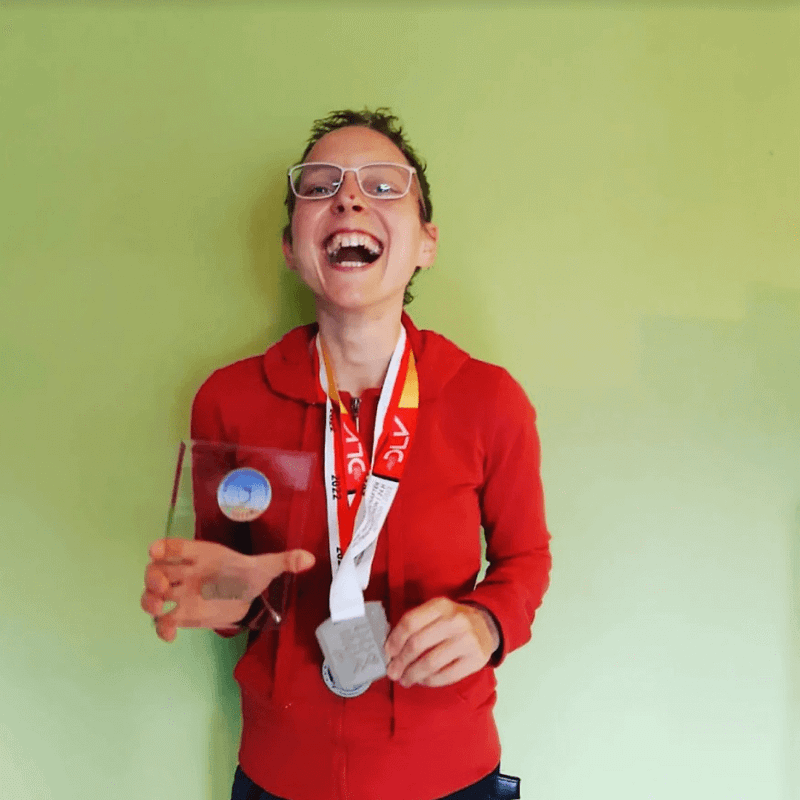
When I decided to go back to eating keto earlier this year, I was committed to following this eating strategy also during my first 24-hour ultramarathon.
I have been a runner for more than 15 years and have experimented with diets for just as long. There’s hardly any eating strategy I haven’t tried.
I started eating vegan in 2006 because I wanted to reduce my ecological footprint.
Health was not a concern yet.
However, some years down the road, symptoms of irritable bowel syndrome and an intense craving for fish led me down the low-carb diet path.
I eventually followed a ketogenic diet for 4 years, and it kept my gut happy most of the time.
In 2021 I reignited my passion for running, and along with increasing my mileage, I increased my carbohydrate intake. I started to add fruit, starches, and honey and fueled both of my ultramarathon races exclusively with honey.
My results were satisfying. I finished 3rd in the Schwerin Trail Lake Ultra and 1st in the Bernau 50K.
However, I had repeated episodes of IBS, which disrupted my training quite a bit. I had also been struggling with hypoglycemia during my runs.
Hence, I thought it would be an exciting experiment to reduce carbs again and see if I could do well in ultramarathon running while following a ketogenic diet.
Theoretical benefits of a ketogenic diet for ultramarathon running
One of the most cited benefits of following a low-carb diet as a runner is burning a higher percentage of fat as fuel.
Theoretically, this gives you the advantage of relying on your stored body fat for energy. You’d need to eat less during races and would minimize gastric distress.
Another claim is that a ketogenic diet can make you bonk-proof.
Hitting the wall is the point when your body runs out of available glycogen and switches to fat burning. However, since you’re already fat adapted and use fat instead of sugar to fuel your running, you won’t experience this energy crisis during a race.
My diet before the race
As a science geek and learning enthusiast, I have read numerous books, blogs, and scientific papers on the various diets I’ve tried, including the ketogenic diet. Hence, I had a solid understanding of the theory and how to eat a ketogenic diet in praxis.
I have also experimented with different “versions” of the ketogenic diet, including a 2-year stint on the carnivore diet from 2012-to 2014 and a recent vegan keto experiment.
Before my vegan keto trial, I focused mainly on meat, eggs, dairy, coconut oil and coconut butter, avocados, and a few vegetables with the lowest carb count. I often had “zero-carb” days, where I’d eat no plant foods. During training, I would eat coconut butter and a homemade energy gel, a mix of nut butter and MCT oil.
One week before the race, I tried to eat a vegan ketogenic diet.
It probably wasn’t the most intelligent decision to change my diet just one week before a race, but I had some exciting results.
I included animal products again during race week, but I stayed on the keto diet.
Racing a 24-hour ultramarathon on a ketogenic diet
I wasn’t sure about the food options provided by the race organizers, so I prepared my homemade energy gel and baked some coconut macaroons. I also packed macadamia nuts.
The evening before the race, I panic-bought coconut chips, more macadamias, cashew nuts and cheese, and a sugar-free Pepsi. I packed a few macadamias, my running gel, salt tabs, and caffeine pills into my running belt, ate dinner, and went to bed.
I slept well that night and woke up feeling well rested.
However, I couldn’t go to the bathroom, which made me anxious. I tried to calm myself down, knowing that a toilet would be available every 1.4km.
I had 2 gulps of my energy gel and a coffee and made my way to the park, where the race would start at 10:00 am.
I don’t remember the starting signal, but I remember telling myself how hard this already is after just the 2nd lap. I took another gulp of my energy gel and a salt stick chew, which seemed to do the trick.
For the next couple of hours, I was running well and was in a good mood.
I did have severe tummy issues, though, and needed to use the bathroom a couple of times. I also avoided putting any more food into my body and drank only water.
Despite my stomach issues, I covered the first 100 km in just under 12 hours and was elated.
It was then that I decided to back off a little. My stomach pain was concerning, and I didn’t want to risk any severe damage since I was also bleeding (I apologize for TMI). So, I slowed down, sent my girlfriend a text message, and continued in a slower run-walk pattern.
Then I decided to walk a loop to recover a bit, then another one, and then…I couldn’t bring myself to start running again.
My mood took a turn for the worse, and I finally decided to eat something.
To my delight, the aid station also had low-carb options. Cheese, mixed nuts, olives, and salami were provided. I power walked and nibbled on nuts, cheese, salami, and olives during the next couple of hours. I ate some macadamias and coconut macaroons as well.
However, I could not recover my mood or energy. I also stopped eating again because I felt nauseous, and nothing looked appealing.
However, I managed to cover 154 km and came in 2nd in my age group and 11th woman overall.
Not bad, considering my longest run was the 62 km in Schwerin in 2021 😁.
Loss of appetite and craving carbs post-race
This was my first and last race on a ketogenic diet.
It was an interesting experience and showed me that I could run 24 hours without carbs.
However, I think that I could have done better if I had refueled with sugar instead of fat.
There’s a reason why the best runners eat a high carbohydrate diet, and I still believe that you need carbs if you want to run well.
In contrast to what others have reported, I also don’t recover faster on a ketogenic diet. In fact, I have experienced the opposite. Muscle soreness is significantly reduced when I eat sufficient carbs.
I wasn’t hungry throughout the race, but I also couldn’t reenergize myself with food when I finally ate. I also lost my appetite for meat and higher fat food items and craved carbohydrates.
I decided to listen to my body and gave it waffles, fruit, and rice, trusting that it knows better than my analytical mind what it needs 😉.
P.S. You can read every story I publish by joining Medium: With only $5 per month, you can support me and other writers.
By signing up with this link, I’ll get a small commission but it won’t cost you any extra. I would be very grateful.
Plus you can start writing for money yourself 🤑 !