
Why You Should Stop Saying She’s Not a “Good Enough” Feminist
It doesn’t matter whether we wear boots or stilettos, if we both want equality.
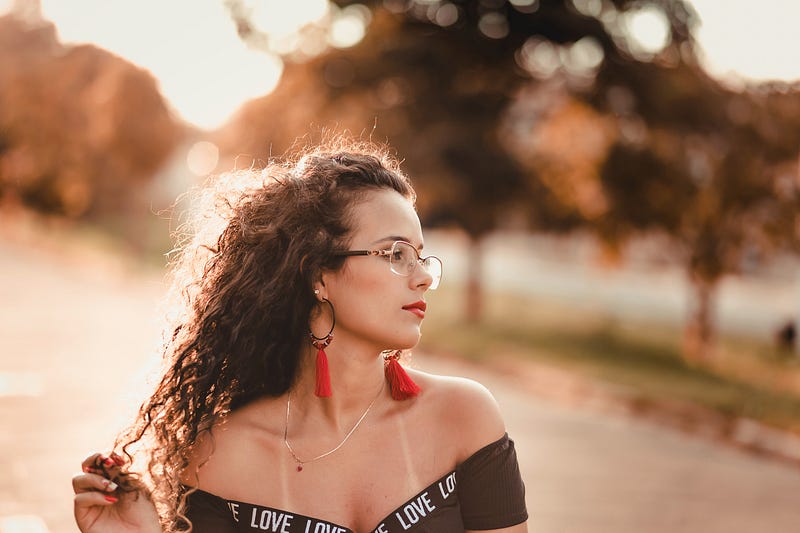
I have a lot of emotions, and I cry often. I love deeply and live passionately. I have flaws, and I struggle with them — just like everyone else. It’s part of being human.
I am a feminist, and I’ve been judged for that label many times.
People judge — that’s a part of life, too.
But unfortunately a real problem arises when people judge one another over petty details that get in the way of a bigger issue. Feminism is a prime example of this; just a few days ago I read a comment on social media from a woman criticizing another woman who identified herself as a feminist.
Her criticism was that this woman didn’t deserve the label, because she was incredibly feminine, wore a lot of makeup, and wanted to be a stay-at-home mom — so somehow could not be a “good enough” feminist.
Now, I didn’t know this woman, but it definitely rubbed me the wrong way. Sadly, this actually wasn’t the first time I’d seen criticism along those lines from people just trying to make themselves appear “better”.
First of all, lady, her choice of whether or not to work outside the home is none of your business. Second, you’re assuming right off the bat that because this woman wants to stay home and have children and happens to fulfill the more traditional gender role of “caretaker” that she expects every other woman to do so, too.
I personally don’t know her, but I would go out on a limb and say that if she self-identifies as a feminist, she probably does not expect every other woman to stay home and be a housewife. Just because she’s filling that role doesn’t necessarily mean she’s not still fighting for gender equality.
That’s part of the whole point: that we have a choice in the matter. And that we as a society don’t shame women for making her own decisions, whether they are more “traditional” or not.
Calling someone a “bad” feminist further tears apart those of us who are trying to challenge the patriarchy of our society. It takes the attention away from the true issue and causes even more division.
We may have different views and ways of expressing ourselves, but ultimately have the same goal: gender equality.
Feminism is “the doctrine advocating social, political, and all other rights of women equal to those of men, or an organized movement for the attainment of such rights for women.”
Equality and respect.
If that’s the goal, pointing out the ways in which you are a more badass independent woman and somehow therefore “better” feminist than someone else, gets us nowhere.
I get angry — really, truly, angry — at the double standards, stereotypes, and expectations placed on women by society, which I’ve witnessed and experienced most of my life. I often have a right to be that frustrated.
But even if it’s justified, I’m labeled a bitch by those who are threatened by a woman with a voice. An unfortunate outcome at times, but so be it. I’m not going to just sit still and look pretty.
But do you know what bothers me even more? Women trying to somehow make their activism a competition.
You’re not going to make a change if you’re so worried about whether you look good doing it. Stop trying to make sure people know you’re a better feminist than they are, just because you believe your definition is the right one.
Enjoying being more “girly” sometimes and occasionally getting emotional doesn’t make us any less feminist. What rule was set down that all feminists have to appear strong and angry and loud all the time? We’re angry and frustrated, and that often evokes emotion. Women cry. Men do too. So people cry — that’s life. It doesn’t change my beliefs.
Frankly, my feminism isn’t yours to define.
Sometimes I wear makeup and get “dolled up”, and sometimes even the thought of wearing a bra makes me exhausted.
Sometimes I like to curl my hair, and other times I don’t want to shower for days.
I wear leather boots one day, strappy sandals the next.
I’ve had long hair and a very short pixie cut; both were fun. Neither made me feel like more or less of a feminist.
I’m sex-positive, but accept that everyone is different and has the right to do what they want with their own body.
I’m strong and independent, and don’t need protection, but that doesn’t mean I don’t enjoy having it available.
I’m typically good with children and want my own one day, but I am also pro-choice. My decisions don’t have to be the same as every other woman’s.
I laugh at things that are funny, and cry about things that are sad. I feel for others, and I genuinely want to make a change.
The fact is that wearing lipstick and mascara doesn’t make me any less strong or determined.
And wanting to please my man because I love him doesn’t mean I’m bowing down to the patriarchy.
And staying home to raise her children absolutely does not mean that that woman can’t still be a “good” feminist. More power to her.
Whether we are introverted, outspoken, hot-headed, cool as a cucumber, feminine or masculine, or we wear ripped jeans or stilettos —it honestly does not matter.
If our goal is equal rights, opportunities, and treatment of women, maybe we should stop making it a challenge amongst ourselves and focus on what we can do as individuals and as a group to make that happen. We all want to dismantle the patriarchy. Let’s focus on how to do that.
“Well-behaved women seldom make history.” — Laurel Thatcher Ulrich
However a woman wants to interpret that is up to her.
I thankfully have a strong group of women who all support each other, and we all go about it in different ways. We use each of our strengths to make a difference.
Maybe you’ll shout it from the rooftops, or speak about it to youth groups. I’m going to keep talking and writing about it. Maybe that woman who was criticized will educate her friends, and raise independent daughters and compassionate and understanding sons.
Who knows?
The point is, if we stop trying to be the best and pointing out how others are doing it wrong, and instead try to do the best we can for each other and for the future of society, maybe we can start to make a change.
We’ve come so far. But there’s still a long way to go. So let’s forget our differences and get back to focusing on what really needs to change, for all women — whether they are “good” feminists or not.
© Samantha Blake 2020
If you liked this one, you might also like:


