
ILLUMINATION
My Fear Started When 1,000 Homes Turned to Ash
Why the threat of fire is so real
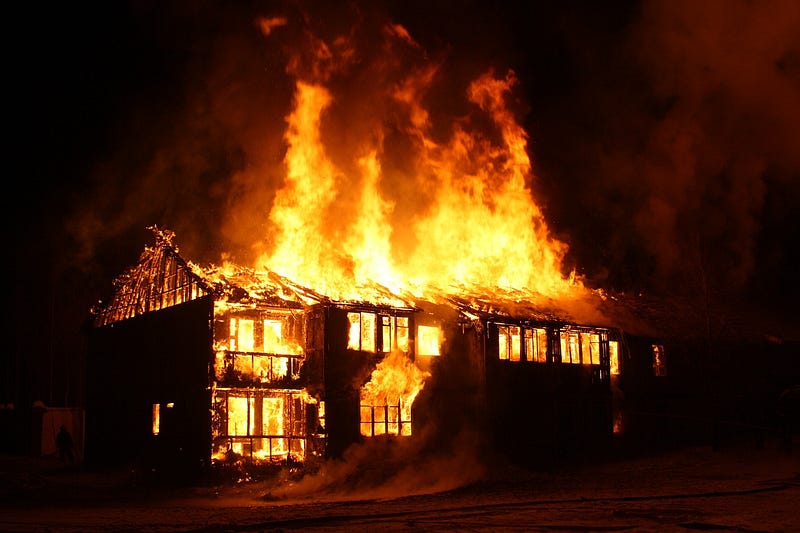
My friend and I walked to the door two weeks ago. The sun was bright, the sky blue, and there was a breeze. But her reaction was like mine. “This is fire weather.”
Neither of us used to react that way to a beautiful day in the Winter.
For two nights before that, the wind roared, with jolts against the house periodically, as a tall Arborvitae tree banged against a gutter.
For more than a month, I’ve been getting regular alerts from the Weather app warning of Red Flag warnings. Winds were blowing with gusts from 25 to 70 mph. For weeks in a row, there was the threat of fire from as little as a spark.
The Big Awakening
Before December 30, 2021, the wind was an annoyance, keeping me off of certain roads especially those against the foothills, as even with both hands firmly on the wheel, gusts can pull the car off course and into oncoming traffic.
On that fateful day in December, my husband Andy and I took a walk across from our nearly 20-year-old neighborhood. It was a windy day but not too bad for a walk where we were. As we turned into the neighborhood, we could see billows of smoke behind our house, to the south. We ran back.
Thank goodness it wasn’t our house. It was about 17 miles away, but it seemed much closer. It took a while to find out what was happening. We don’t get local channels as we’d need a powerful expensive antenna this far from Denver. We just stream, and not much is local. There was nothing yet on the radio.
I found the most up-to-date and accurate information on our local Channel 31 app. I was glued to that app for days.
The Most Destructive Fire in Colorado History
You may remember reading about the Marshall Fire. It took out over 1,000 homes and some businesses in both unincorporated Boulder County and the cities of Marshall, Superior, and Louisville, just south of Boulder, Colorado. It was the first time that a wildfire attacked dense cities and suburbs in Colorado history. Yes, there was a large fire near Colorado Springs in 2013 in an unincorporated area, the Black Forest Fire, that took out 509 homes, but it was surpassed significantly by the Marshall Fire, which is currently the most destructive fire in Colorado history.
The winds near us had picked up. Once we heard more about the fire, we gathered key belongings and put them by the door, including the cat carrier and food for my cat. Until they got that raging fire under management, we were on edge. After all, by the fire, winds were ripping at over 100 mph. The winds also kept changing direction, so though we were 17 miles away, if the wind headed north, we’d be in trouble.
The area where the fire started was on my route to my previous home, 40 miles south. Every time I pass it now, I get reminded, instinctively looking around as I drive through. There are still foundations where homes used to be not far off that path and charred hillsides, starting to show signs of life.
The Before Times
Until June of 2021, I lived in a city west of Denver and further east of the foothills, in a brick mid-20th Century house that was built by a contractor who was afraid of fire. I know this because my first husband and I purchased that house from the original owners. They still had the owner’s manual. Not only was the exterior primarily brick, but interior doorways were metal, and walls were covered with lath and plaster. I had no fear of fire living in that house, despite the wood floors. I’m sure the builder would have preferred concrete, but he had to follow the county’s building code.
The Aftermath
After the Marshall Fire, we began to worry about everything related to the danger. It was a huge awakening. Homeowners discovered the hard way that their insurance didn’t cover replacing their houses. Boulder County building costs are considerably higher than the national average, and that’s all many insurance companies cover if homeowners had even updated their policies since the pandemic surge in housing prices.
Homeowners and renters, who were in many economic brackets, found that their musical instruments and other valuables weren’t adequately covered. We donated a guitar to one such musician who lost everything.
One friend of mine had been staying in a brand new hotel in the fire’s path while work was being done on his house in Boulder. They had to quickly evacuate before the hotel became ash and rubble.
We immediately set about getting our house properly insured. Our existing company would not cover the actual value of our house, so we had to look further. We found one company that would cover us adequately and that we could afford. It was shocking to learn how insurance companies get away with under-insuring homes here.
A Previous Fire, And Insurance Nightmare
A friend of mine used to have a large, family-sized cabin near Grand Lake, Colorado, about two hours from Denver near Rocky Mountain National Park. It had been in her family for many years. It burned to the ground in the East Troublesome Fire along with 365 other homes in October of 2020. It was then that she found out that her insurance covered just a fraction of the replacement cost. She had been trying for a few years to get her insurance agent to review her policy, but he didn’t respond. She sued. It took a few years, but she won. She didn’t get enough to make her whole, but enough for a modular to be built on the spot. It’s still in progress almost four years after the fire.
The moral of the story is, to shop around and update your insurance regularly, especially when home prices soar.
Reactions and Cause of the Marshall Fire
Ever since the Marshall Fire, I’ve been on edge every time it’s dry and windy. Every time I get an alert from The Weather Channel. Every time I see smoke to our west.
You may ask what caused that fire. The county finally determined last year that it was a combination of an Xcel Energy power line downed by the wind that sparked, and close by, a fire that both the landowners and the fire department thought was out, but reignited in the wind.
What’s terribly ironic is that it snowed the day after the fire started. That’s what helped put it out. Thank goodness.
Why I’m Fearful Still
We live just a few developments east of open space. Boulder County has a lot of open space, farms, and ranches near the suburbs, and unfortunately, the grasses, which are the easiest to catch fire, aren’t always mowed enough.
Since I’ve lived here, there have been three small fires five miles west of us, by a highway that goes from Boulder up to Rocky Mountain National Park. One of those fires was started by students and faculty from the University of Colorado who were studying climate, sending up drones during very windy days. One crashed and started a fire. That one was contained, but you can see the burned-out foothills from fires that weren’t stopped before taking out houses and many trees on the other side of that highway.
Wind tends to blow west to east here. From our neighborhood, you can see one of Colorado’s 14,000-foot mountains, Longs Peak. A climate scientist down the block says Longs Peak protects us from the worst storms. However, it also prevents us from getting more moisture. Weather flies over us and goes further east.
Before we lived together, I always had more snow and rain than Andy, my husband, did. It’s demonstrably drier here and more vulnerable.
I panic around holidays like July 4th when idiots decide to get illegal fireworks from Wyoming and set them off in one of the parks in our neighborhood. Last year, fortunately, was a wet spring and summer, but that’s not the norm. So, on dry days, I worry that some kid will toss a cigarette out his window and start a fire that sparks nearby, or a homeless campfire will get out of control and spread.
On February 29 at about 1 am, a 42-year-old brainiac set off commercial-grade fireworks at a dog park in Aurora, east of Denver. One exploded and killed him. How dumb do you have to be to set off fireworks during red flag warnings, and also not know how dangerous they are? He could have burned down that neighborhood. He had two buddies with him, all from a town further east. They were visiting “food and beverage businesses.” Drunk, maybe? I hope they learned something — Darwin Awards at work.
Climate Change Amplifies Human-Caused Fires
I know that just about everyone everywhere is dealing with some aspect of climate change. It might be increased flooding or hurricanes or tornadoes (we have those, too, as well as hail storms). There’s probably nowhere that’s safe anymore.
We’ve been in an El Nino pattern since last year. In a lot of areas, that means more moisture and last year, we had that. Not this year, though, at least not here on the plains. The mountains are getting plenty. Colorado seems to be in a split zone where it could be wet or dry. We get spurts of wet, but not much, and it’s melted in hours when we get some snow.
There was a fire recently on one of the Flatirons in Boulder. They ruled out natural causes, so humans caused it. Could have been a homeless encampment fire or a careless hiker with a cigarette. Or, perhaps it’s one of the underground coal mine fires in that part of Boulder that has been raging for over a century.
I want to be optimistic, but it’s hard these days.
When climate change comes home to roost, it’s best to be aware and prepared. We don’t have a packed bag and important stuff ready to go. We did after the Marshall Fire, but we put everything away. I think it’s time that I do it for myself. You just never know when someone is going to do something stupid and burn down the neighborhood.
Safe — For Now
Update March 16. A massive storm came through Colorado two days ago. Boulder and Denver received between one and two feet of wet, heavy snow. Some foothills areas got up to 33 inches. I had texts from friends around the country, so I assume the storm made national news. Here? In the shelter of Longs Peak, we may have received eight inches. It melted as it fell. There was very little shoveling to do. The streets were clear. The snow is much appreciated — a short reprieve. But by today, the sky is blue as ever, and snow is receding on the lawn.
Note: I want to give shout-outs to the two news organizations linked in this story, Colorado Public Radio, which has done a phenomenal investigative job since the Marshall Fire, and KDVR, Channel 31 in Denver, which did the best job of updating during the fire, with people on the scene. CPR, in particular, pushed both the county and the state to do a better job of investigating fires, pointed out our lack of good fire prevention, and lighted the way for new legislation.
Sondra Singer is a writer, storyteller, and musician who has a new electric UBass. She writes memoirs, essays, poems, and other stories on Medium. See her website here.


