avatarRobert Gowty

Free AI web copilot to create summaries, insights and extended knowledge, download it at here

3199

Abstract

fit:800/1*ZkTEWACgQHTtuoYfjco78A.jpeg"><figcaption>A very rare sighting of a she oak skink with three babies. By the author.</figcaption></figure><p id="226e">Bird life is includes parrots, black cockatoos, wattle birds and raptors, including the distinctive white goshawk.</p><p id="2b1a">There is also a fascinating array of insects, including the stone fly, one of the oldest species of insect on the planet.</p><p id="521a">There are also Tasmania’s legendary inland crustaceans, which sadly are becoming rarer and rarer. I’ve spotted an <i>Astacopsis Franklinii </i>in the creek once, though I can’t seem to put my finger on the photo at this moment.</p><h2 id="17b2">The Fungi and Flora</h2><p id="4e83">Even within a small one kilometre radius surrounding the shack is a plethora of micro environments. Grassland, river bank, rain forest, native forest and decaying giant timbers.</p><p id="6eca">Within each, a dazzling array of trees, bushes, flowers, fungi, grasses and ferns.</p><figure id="d8b9"><img src="https://cdn-images-1.readmedium.com/v2/resize:fit:800/1*dxaWpJD3EBeqJ39aOaxaZg.jpeg"><figcaption>By the author.</figcaption></figure><h2 id="b8f2">The Landscape</h2><p id="1e12">From the yard I can see the mountains around Mount Field, which in winter are usually covered in snow. This year, however, there is very little snow which is making everyone nervous. Without the snow melt, the bush will dry out and as such, prone to bushfires.</p><p id="4c2c">Despite Tasmania’s lushness, it is very susceptible to bushfires, and as wildfires rage across across the planet, there is a sense of foreboding here.</p><p id="ca08">Still, there are creeks, lakes, waterfalls and the river itself, with Russell Falls being one of the most popular tourist destinations in Tasmania.</p><figure id="f895"><img src="https://cdn-images-1.readmedium.com/v2/resize:fit:800/1*vfLrSLUXtwyQoabgHHThTA.jpeg"><figcaption>Snowier times. By the author.</figcaption></figure><h2 id="347c">The Trout</h2><p id="c936">In 1864 the trout was introduced into Tasmania and is now endemic throughout many of the waterways.</p><p id="4316">There’s nothing more relaxing than sitting by the river, dropping a line and pulling in one of those invasive species.</p><figure id="2a19"><img src="https://cdn-images-1.readmedium.com/v2/resize:fit:800/1*ZRmBFpvYmt44YMly4bcY4w.jpeg"><figcaption>It’s a big one! By the Author.</figcaption></figure><h2 id="f310">The Air</h2><p id="67d9">The air is Tasmania is like champagne, fresh, clear and enlivening, a definite improvement on Melbourne, or as we used to call it, Smellbourne.</p><h2 id="3b70">A Philosophical Reflection</h2><p id="e3ea">How does a tree know how to grow?</p><p id="bebd">There a so many patterns of the natural world that we do not understand.</p><p id="c250">Many humans claim to strive towards a higher purpose, yet that purpose seldoms strays far that person’s self interest.</p><p id="8d39">What is that purpose?</p><p id="ab8f">What if we are the most intelligent beings in the universe?</p><p id="42ca">To seek that higher purpose without the wisdom that comes from truly understanding the world around us seems like a fools dream.</p><p id="2fb8">

Options

If we don’t understand how the trees grow, why the animals behave the way they do, or how the wind and rain swirl around us, than we have not begun to understand the world around then we have not begun on a path to wisdom.</p><p id="9552">For a species to become extinct before we have come to understand why that animal had evolved into a separate species is to facilitate the destruction of wisdom.</p><p id="78e0">When I walk around the trees and fields by the Tyenna River I feel a strange normality and freedom. A feeling, that once, one day a long time ago, we walked the world in a different way. And the first stirrings of our desire for wisdom were forming in our head. The desire to understand.</p><h2 id="df71">The End</h2><p id="13ca">While I’d love all my Medium friends to drop by to say hello, also remember, wherever you are in the world, help protect the nature around you.</p><figure id="161b"><img src="https://cdn-images-1.readmedium.com/v2/resize:fit:800/1*QfJewfgvBr674vmxVdJuEw.jpeg"><figcaption>In the rain forest. By the author.</figcaption></figure><p id="a5d5">You have just passed another Deluded Custodians Monthly Challenge. Thanks as always to <a href="undefined">Ann James</a> — Last month’s winners and this month’s challenge here.</p><div id="4b98" class="link-block"> <a href="https://readmedium.com/the-deluded-custodians-july-winner-and-august-challenge-7cff5d273c8d"> <div> <div> <h2>The Deluded Custodians: July Winner and August Challenge</h2> <div><h3>Celebrating One Year of D.C. Danger, Will Robinson</h3></div> <div><p>medium.com</p></div> </div> <div> <div style="background-image: url(https://miro.readmedium.com/v2/resize:fit:320/1*XcM1wq2exh_u_bsSdCnVaw.jpeg)"></div> </div> </div> </a> </div><p id="101f">More Tasmania Stories.</p><div id="bfef" class="link-block"> <a href="https://robertgowty.medium.com/roadkill-and-loathing-in-southern-tasmania-part-i-a6caebda0594"> <div> <div> <h2>Roadkill and loathing in Southern Tasmania. Part I.</h2> <div><h3>The Journey Begins.</h3></div> <div><p>robertgowty.medium.com</p></div> </div> <div> <div style="background-image: url(https://miro.readmedium.com/v2/resize:fit:320/1*l7a0NP049GyV_2D2dirZNg.jpeg)"></div> </div> </div> </a> </div><div id="4e06" class="link-block"> <a href="https://robertgowty.medium.com/in-a-tasmanian-forest-with-rex-corgi-de7d425711b8"> <div> <div> <h2>In a Tasmanian Forest with Rex Corgi</h2> <div><h3>Everyone loves to go for a walk.</h3></div> <div><p>robertgowty.medium.com</p></div> </div> <div> <div style="background-image: url(https://miro.readmedium.com/v2/resize:fit:320/1*3k1KEAU2EBX9DrnNjtaoYA.jpeg)"></div> </div> </div> </a> </div></article></body>

DELUDED CUSTODIANS AUGUST CHALLENGE: AN OPPORTUNITY TO DEMONSTRATE IT’S NOT ALL WEIRDNESS IN TASMANIA

My Favourite Place: The Tyenna River

Where the fish are jumping and the mountains are high.
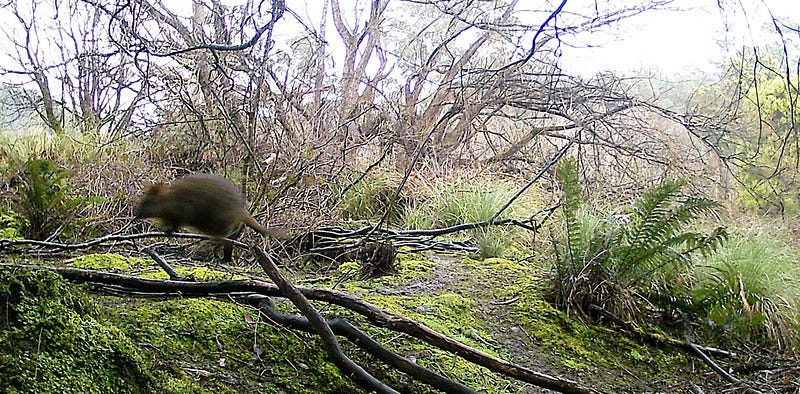
Pademelon in Flight. By the Author.

In the late aughts we purchased a little shack in the upper Derwent Valley in Tasmania. At the time, I had never been to Tasmania.

The moment I first laid eyes on the Tyenna River, as we pulled out the rural town of Westerway, I fell in love. Tasmania is something that most of Australia is not: lush.

A medium sized island, about a tenth of the size of Britain, it’s located to the south of mainland Australia. Soon it would be my home.

The shack is a Spartan affair. No bathroom or toilet, it’s a dash to the national park down the road if nature makes a calling.

Heating, which is essential in the depths of winter, is from a smallish wood stove at one end of the main room. To call the main room the kitchen and dining room would be optimistic.

There is electricity and the vintage refrigerator is adorable.

The shack is surrounded by a couple of small farms that were once owned by the same family (also the previous owners of the shack) and by the bush. The farms haven’t operated as such for decades and down through the bush runs the Tyenna River.
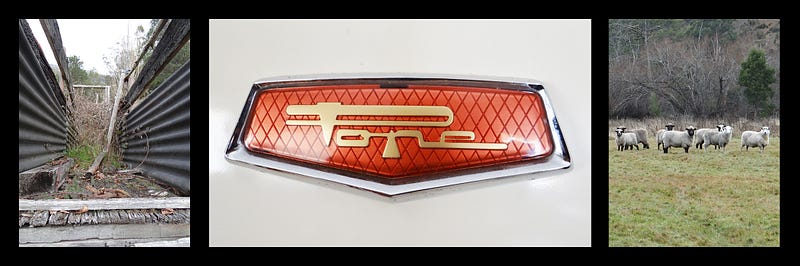
The Old Pig Run. The Fridge Logo. Some Sheep. By the Author

The Wildlife

The three most common species are the pademelon, the brush-tail possum and the native hen (AKA the turbochook).
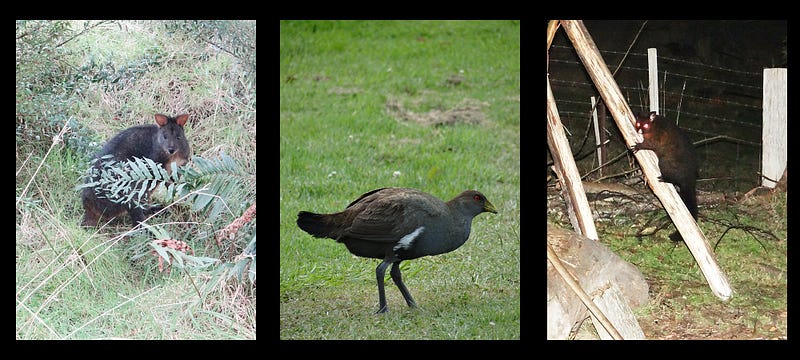
Pademelon. Turbochook. Brushtail Possum. By the Author.

The picture at the top was captured yesterday morning with my wildlife camera.

There are also wallabies, quolls, Tasmanian devils, rakali (water rat) and ringtail possums, although sightings of these are much rarer.

Also present is one of the strangest orders of animal, the egg laying mammals known as the monotremes, of which there are two species: the platypus and the echidna. While not a distinct species from the mainland, because of the colder climate they are much hairer than their mainland cousins.

The human male is also hairer than the mainland equivalent, with the beard growing to lengths that would not usually be considered acceptable in polite society.

Less common are the reptiles, although in summer the regular skinks are plentiful. There are blue tongued lizards, she oak skinks, tiger snakes and white-lipped snakes. There are also scorpions.
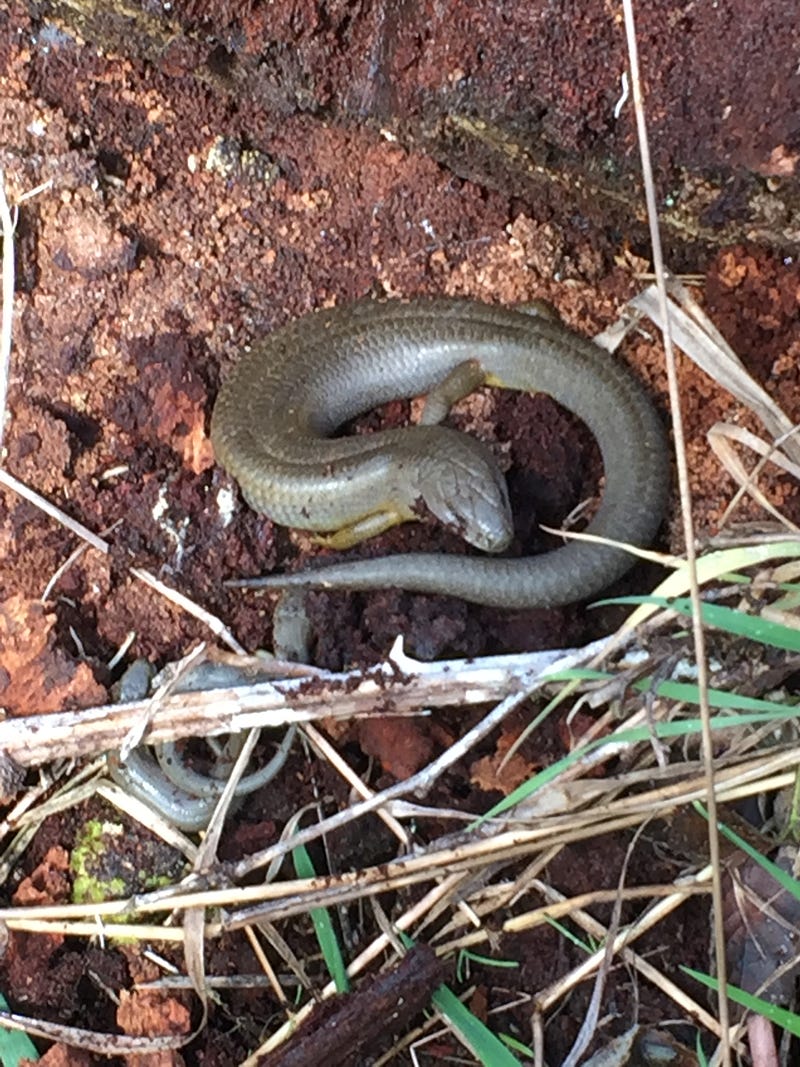
A very rare sighting of a she oak skink with three babies. By the author.

Bird life is includes parrots, black cockatoos, wattle birds and raptors, including the distinctive white goshawk.

There is also a fascinating array of insects, including the stone fly, one of the oldest species of insect on the planet.

There are also Tasmania’s legendary inland crustaceans, which sadly are becoming rarer and rarer. I’ve spotted an Astacopsis Franklinii in the creek once, though I can’t seem to put my finger on the photo at this moment.

The Fungi and Flora

Even within a small one kilometre radius surrounding the shack is a plethora of micro environments. Grassland, river bank, rain forest, native forest and decaying giant timbers.

Within each, a dazzling array of trees, bushes, flowers, fungi, grasses and ferns.
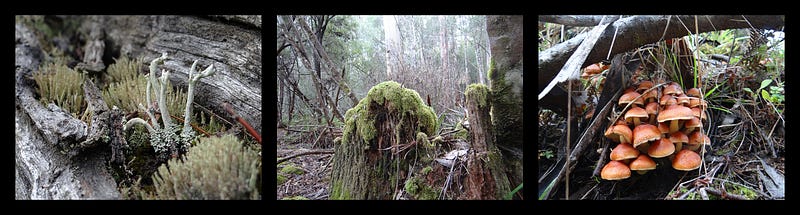
By the author.

The Landscape

From the yard I can see the mountains around Mount Field, which in winter are usually covered in snow. This year, however, there is very little snow which is making everyone nervous. Without the snow melt, the bush will dry out and as such, prone to bushfires.

Despite Tasmania’s lushness, it is very susceptible to bushfires, and as wildfires rage across across the planet, there is a sense of foreboding here.

Still, there are creeks, lakes, waterfalls and the river itself, with Russell Falls being one of the most popular tourist destinations in Tasmania.
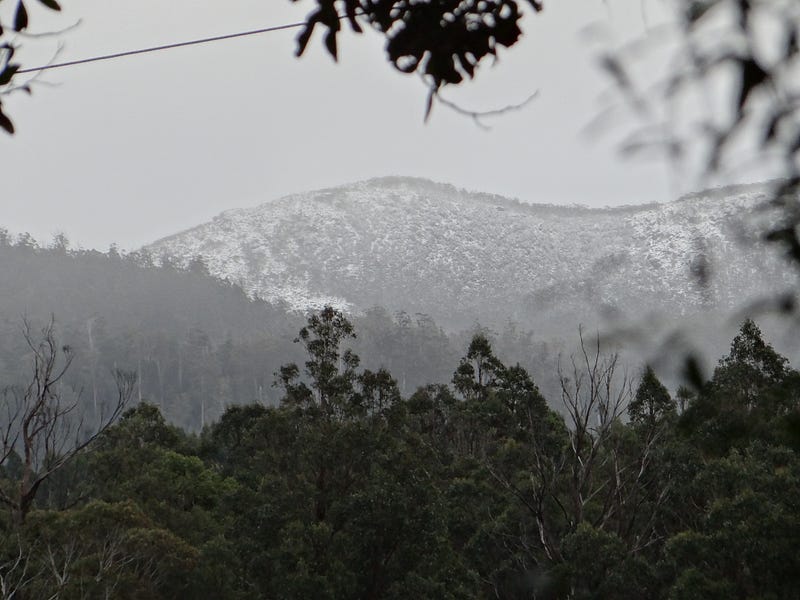
Snowier times. By the author.

The Trout

In 1864 the trout was introduced into Tasmania and is now endemic throughout many of the waterways.

There’s nothing more relaxing than sitting by the river, dropping a line and pulling in one of those invasive species.
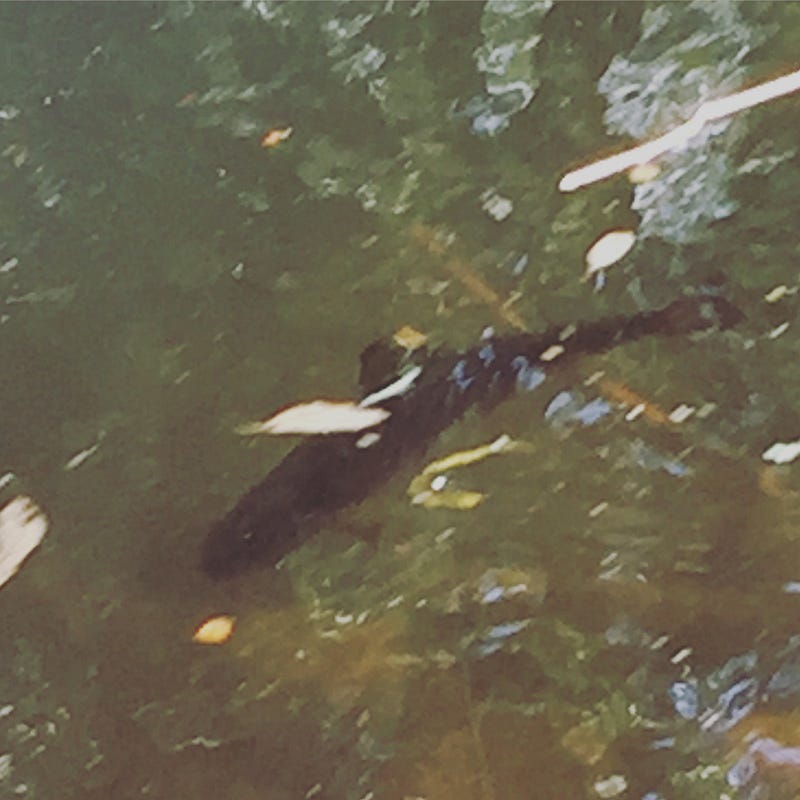
It’s a big one! By the Author.

The Air

The air is Tasmania is like champagne, fresh, clear and enlivening, a definite improvement on Melbourne, or as we used to call it, Smellbourne.

A Philosophical Reflection

How does a tree know how to grow?

There a so many patterns of the natural world that we do not understand.

Many humans claim to strive towards a higher purpose, yet that purpose seldoms strays far that person’s self interest.

What is that purpose?

What if we are the most intelligent beings in the universe?

To seek that higher purpose without the wisdom that comes from truly understanding the world around us seems like a fools dream.

If we don’t understand how the trees grow, why the animals behave the way they do, or how the wind and rain swirl around us, than we have not begun to understand the world around then we have not begun on a path to wisdom.

For a species to become extinct before we have come to understand why that animal had evolved into a separate species is to facilitate the destruction of wisdom.

When I walk around the trees and fields by the Tyenna River I feel a strange normality and freedom. A feeling, that once, one day a long time ago, we walked the world in a different way. And the first stirrings of our desire for wisdom were forming in our head. The desire to understand.

The End

While I’d love all my Medium friends to drop by to say hello, also remember, wherever you are in the world, help protect the nature around you.
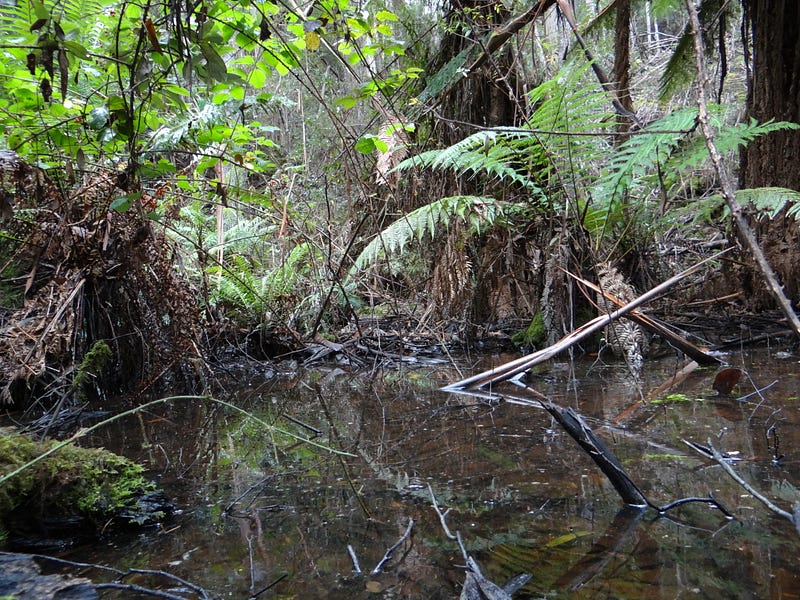
In the rain forest. By the author.

You have just passed another Deluded Custodians Monthly Challenge. Thanks as always to Ann James — Last month’s winners and this month’s challenge here.

More Tasmania Stories.

Tasmania
Nature
Nature Writing
Photography
Smillew Is Tasmanian
Recommended from ReadMedium