
My Favourite Novels of 2018
Fourteen influential reads, from Morrison to Nabokov.
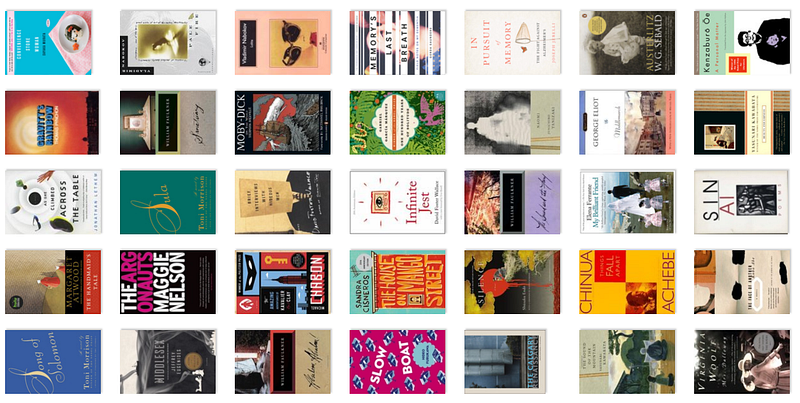
I set myself a goal of reading 52 books on Goodreads, and ended up finishing 64. Most of that was during my last semester of college, a blessed free-time-oasis that sadly bled into a drowsy summer and then a raging, ball-blistering first semester of medical school.
It was a strange and upsetting transition. Of the 64 books, only 11 of them were read while I was in medical school. I want to believe that to be a doctor, you must be a human first. That should mean having time set for classes, for study, but also for reading widely. It’s a belief that I think many ex-college readers face when they finally grow up.
Nevertheless, I am a fiend for reflection. The books I read this year (this article’s title may be misleading — the novels I chose weren’t published in 2018, I just read them this year) were powerful and inform everything I’m learning about medicine. I’ve really learned that literature, beyond the linguistic pyrotechnics and the weight of history, is about people. With that in mind, I’m happy to share what I felt were the most influential novels that I read this year, in chronological order.
1. 1Q84 by Haruki Murakami (01/11)
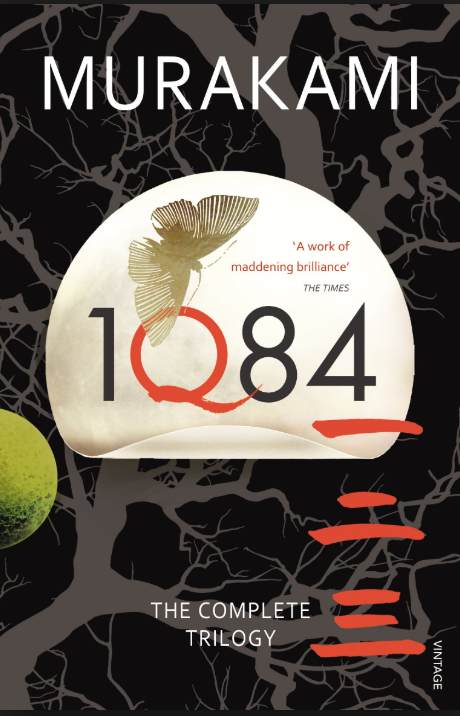
I read somewhere that Murakami wanted this novel to be his “Brothers Karamazov”, and while I can’t quite make out the similarities beyond the number of pages, I will say that 1Q84 really cements what could called “Murakami-esque.” Some die-hard fans were probably disappointed at the length, the meandering and repetition. For me, the physically expansive but narratively narrow and obscure nature of 1Q84 was almost therapeutic. Murakami’s keen sense of paranoia and loneliness must not be skimmed, but bathed in — and as the steam rises and blinds the reader, a strange connection is made. This is what The Times calls, “maddening brilliance”.
2. American Pastoral by Philip Roth (01/24)
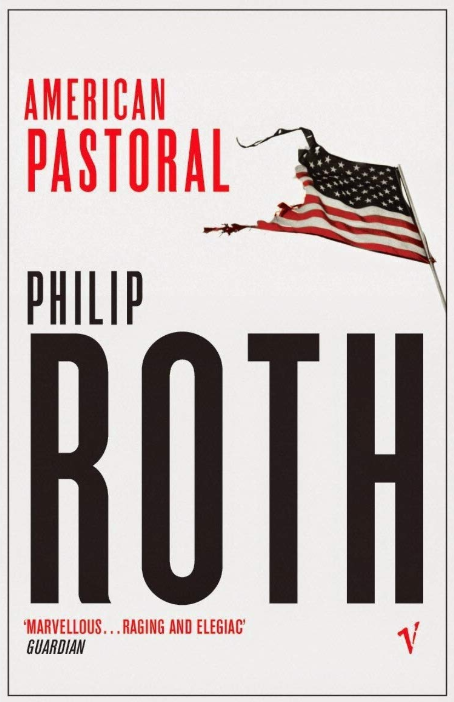
It’s kind of sad that the year I nosedived into Philip Roth’s work (I ended up reading American Pastoral along with I Married a Communist and Human Stain together) was the same year that the author passed away. Reading this novel helped me understand why this author will never be forgotten. It contains a passion so colourful and bitter that I felt like I was reading Wüthering Heights on giga-American steroids. Roth’s long, steaming paragraphs carved spaces in my mind for real anger, but also sadness. Like all good students of the “Western Canon”, I read American Pastoral because of Harold Bloom’s infamous tetrad of white male American authors. If nothing else, this novel opened my eyes to the screaming underbelly of the rage and resentment of America’s modern political climate.
3. The Road by Cormac McCarthy (02/11)
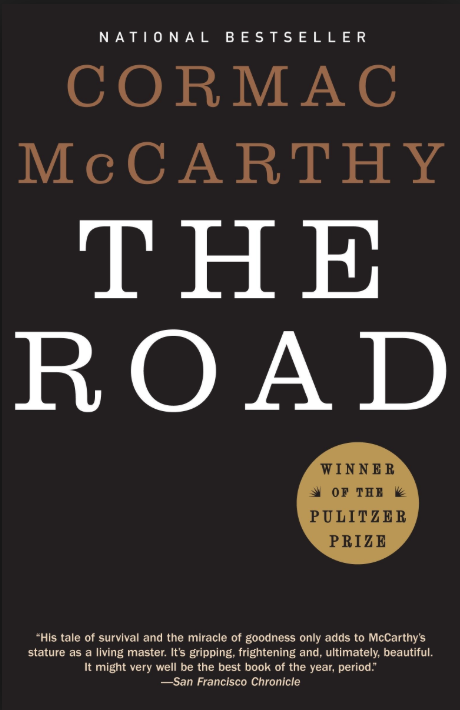
Speaking of the tetrad of white male American authors…I feel like after I read Blood Meridian and The Road, Cormac McCarthy has been popping up everywhere. (Literary lesson of 2018: Redditors are obsessed with McCarthy and Murakami)
In earnest, I really enjoyed this novel. I read it in a day, and it gave me the darkest night of the soul ever. Like a lot of readers, the immense emotionality of the novel’s terse, and purposefully broken prose sunk in when I learned about how influential McCarthy’s relationship with his son was. The idea that raising a kid is like traversing a wasteland, constantly in fear of releasing them into the blistering wilderness of adulthood, weaponless and hungry, vulnerable and unnamed — it’s something that still gives me shivers.
4. Beloved by Toni Morrison (02/27)
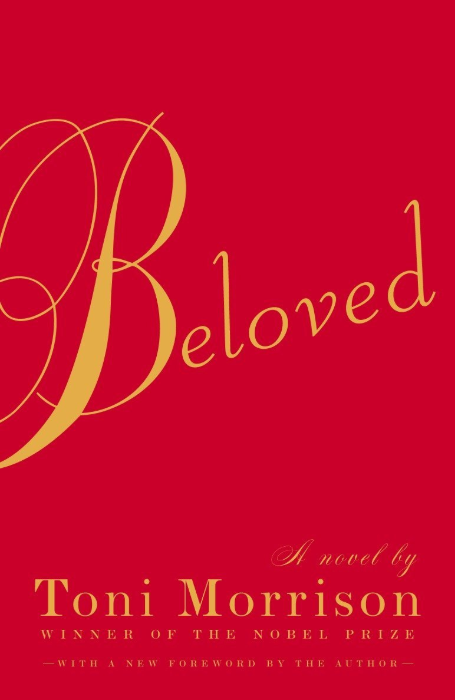
This year, I made some serious attempts at stepping into postmodern fiction. (As angsty early-20s are want to do) To be honest, it made me a bit nauseous. Beloved was a profound antidote, taking me back to my modernist reading roots. I’m in love with any novel that can pull off stream-of-consciousness, and Morrison employs it perfectly to condemn America’s history of slavery, and its modern after-effects.
At times, this novel reads like a poem or a song. Every phrase carries a devastating image, and through variation and nuance, these images grow and interlace into a domineering symphony about family and memory.
5. Bluets by Maggie Nelson (02/28)
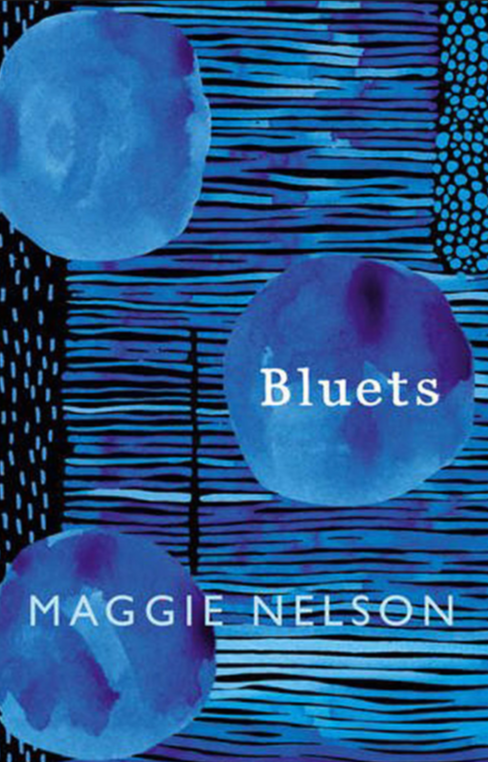
Okay, this is not really a novel — but with a shotgun to your head, how would you categorize Bluets? All I know is that since reading this book, I can’t get its writing style out of my head. (It’s the only book I’ve actually re-read this year) Bluets perfectly captures the power and gravity of obsessive writing, but with distance and fragmentation replacing fire and mania. It’s a book that can be nerdy, academic, emotional, cold, bored, or in awe. It made me wish there was a book on the color red and yellow and green, a series of such awesome reflective writing that stretches to infinity around the color wheel. Maggie Nelson is one of two living authors on my list, and I’m praying that she will keep writing forever.
6. Mrs. Dalloway by Virginia Woolf (04/07)
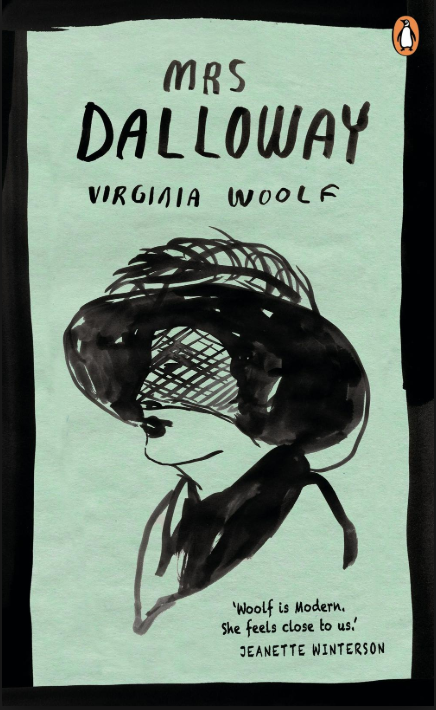
I remember reading Orlando a few years ago and loving it, but then deciding to give up on Woolf after a botched attempt at To the Lighthouse. In my last semester of college, I was assigned to read Mrs. Dalloway for a Modernist literature class and I will admit I was afraid of Virginia Woolf. This novel is now one of my all-time favorites.
As mentioned above, I’m a sucker for stream-of-consciousness done well. Mrs. Dalloway’s greatest achievement in my eyes is using this linguistic technique in not only building the internal world of Clarissa and London, but also in creating an imagined community charged with memory, meaning, and redemption.
I try my best to highlight passages in novels that I find meaningful or beautiful. I’m usually disappointed when I only highlight a couple times in a book, but my copy of Mrs. Dalloway is freaking soaked with yellow ink. This is a novel that needs to be read while listening to powerful music. This is a novel that makes me want to stand up and applaud.
7. Austerlitz by W.G. Sebald (04/27)
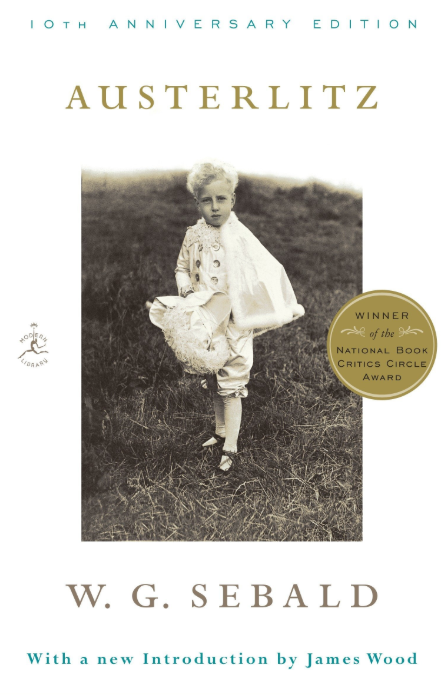
Not to beat a dead horse but did I mention that I love stream-of-consciousness writing? This novel reads like a dream, and I think that’s Sebald’s brilliance. He understood the importance of memory, in all of its emotional expansiveness and unintentional haziness, in the construction of history. Austerlitz’s narrator is a sailor of the past, navigating its waves and eddies, in despair that he will only ever know what appears on the surface, but never what lies below. Like Murakami’s work, Austerlitz’s prose can seem repetitive and even boring. However, I think that for a reader that is in a particular place, the effect can be almost therapeutic.
8. Naomi by Jun’ichirō Tanizaki (05/12)
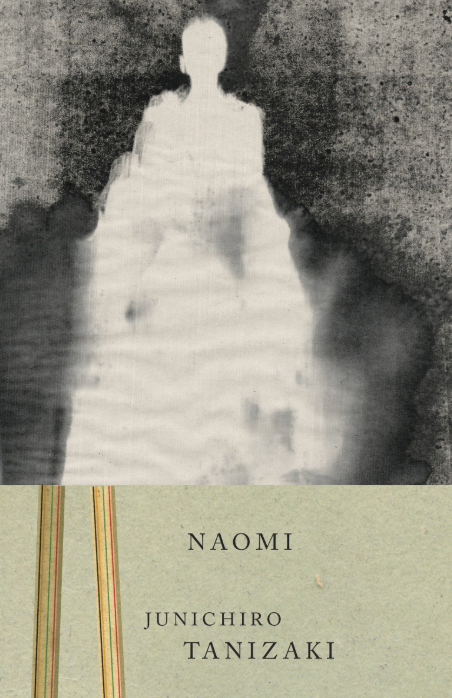
I tried my best this year to spread my Japanlit wings passed Murakami and Mishima, and Naomi was definitely one of my favourites. I know critics usually cite Some Prefer Nettles or The Makioka Sisters as Tanizaki’s superior works, but for me Naomi was the most strikingly psychological. It really feels like a Japanese Lolita except way more insular and claustrophobic. The narrator’s soporific but sincere fetish for Naomi’s exotic looks and manner is perfectly drawn out, a subjective standard I measure by how massively creeped out I was. Definitely one of my most unforgettable reading experiences of 2018.
9. The Sound and the Fury by William Faulkner (05/15)
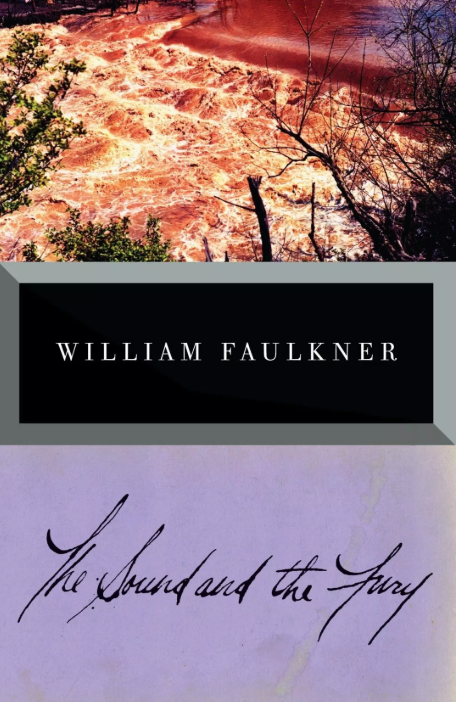
I read this along with Absalom, Absalom! but enjoyed The Sound and the Fury more. Faulkner is a master of character development, and made me feel for every single character in the story, even the irascible Jason. This book completely empties the well of meaning when it comes to themes of loss, grief, hierarchies, and family relations.
Also I’m not going to say the S. of C. word but anyone who writes in the tradition of Joyce is a friend of mine. Delving in Faulkner’s works has been a special privilege for me as a reader, especially since I understand that his writing is not very accessible.
10. One Hundred Years of Solitude by Gabriel García Márquez (05/23)
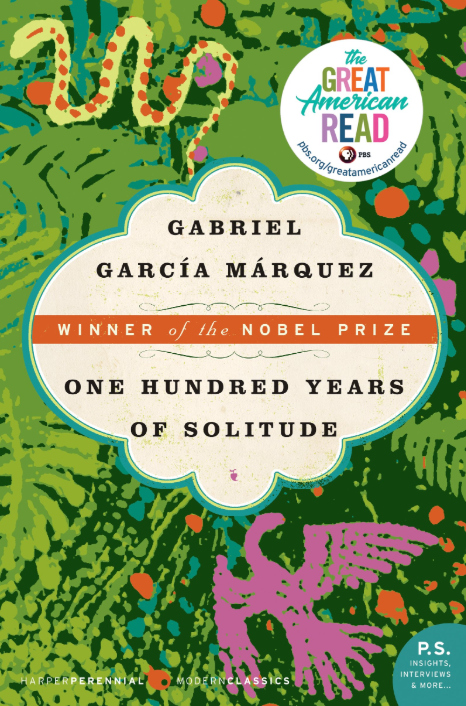
If you love this book as much as I did, please watch this Ted-Ed video. It’s great not so much for its content but the artwork, which I think captures that special ethereal dreamwork that Márquez creates in One Hundred Years of Solitude. Like Morrison’s fiction, this novel really gets the idea of myth — familial, cultural, and national. From the character’s names, the wave-like prose style, and the steroidal magical realism, this novel shows how myths wash over our experiences of reality in non-systematic tides of remembering and forgetting. This is a novel I plan to re-read, hopefully after getting through more of Márquez’s other writing.
11. Infinite Jest by David Foster Wallace (06/17)
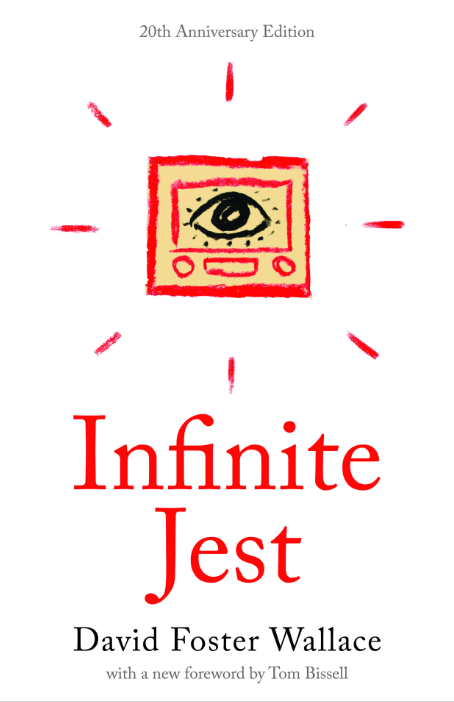
No comment.
12. Lolita by Vladimir Nabokov (07/08)
One of the best reading experiences I had this year was being introduced to the work of Nabokov. I went to Cornell, so I’ve always been wary of the famous white writers that it produced (Nabokov, Vonnegut, Pynchon). Furthermore, I was mildly allergic to postmodern fiction because of some bad experiences reading DeLillo. However, I found something different in the pages of Lolita and Pale Fire. I felt played with, but also that I was being asked to play. These novels are puzzles, but their purpose is not to show erudition or to undermine grand narratives or whatever. Their purpose is to have fun with literature and to find meaning and beauty in uncertainty, doubt, and mistakes.
13. Moby Dick by Herman Melville (07/18)
You’ll have to forgive me, but I’m from Canada so I didn’t get much exposure to American classics in high school. Maybe it’s better that way, not to be forced into a monster like this book. I feel like being “forced” to read Moby Dick would counteract its central themes — the pounding desire for freedom, for meaning and purpose. I’ve never really understood the concept of “void”, in the sense of Zen Buddhists and Expressionist art, until I read this novel. The gargantuan white whale that blinds you with obsession, that holds the meaning of the universe and of existence but shows complete apathy towards your struggles — that’s an image I’ll hold for the rest of my life.
14. Gravity’s Rainbow by Thomas Pynchon (12/13)
I let out a piteous sigh whenever I think about this novel, not because of its length or difficulty (which Gravity’s Rainbow does not lack in) but because I had to read it bit by bit throughout the entirety of my first semester of medical school. As a result, whenever I think about this book I immediately have flashbacks of my school’s grueling anatomy course, in which I had to cram all of general anatomy and physiology into 3 months. My reading pace dropped immensely, and Gravity’s Rainbow was one of a few novels I was able to finish in the past few months. I’ll likely write a few Medium pieces on this later, but this is definitely a novel that was important to me.
And this came as a surprise. I only picked up this book originally to follow a BookTube reading challenge, and mostly so I could say that I finished Pynchon’s bulky masterpiece. Also, I’ve never wanted to get into Pynchon because of my set aversion to postmodernism. Little did I know that this postmodern urtext was exactly what I needed to carry me through school. The darkness of the novel, which explores issues of scientific experimentation, warfare, national identity, and spiritualism, made me feel less alone as I combated similarly dark feelings about my own place in medical science and about death that I saw on a weekly basis in the anatomy labs. Sometimes, I feel like going out like Slothrop, wandering invisible and dehumanized, slowly fragmenting away into nothing along the otherworldly coasts of the Zone…