
My Favorite Banned Book: Brave New World
A story about a dystopian future of being locked into a government-certified, government-approved, government-enforced identity, and oh the irony
Brave New World by Aldous Huxley was published in 1932. The book got banned pretty much from the moment it was published, and it remains a perennial favorite on book ban lists.
Usually, the ban is because it portrays a society where sexual promiscuity is the norm, though some dig deeper and complain about other elements as well: drugs, the portrayal of religion, even that it is offensive to native/indigenous populations (true to some degree), or even — and this is my particular favorite — that it “lacks literary merit.”
Huxley was inspired to write the novel because his society was in a state of flux with the first hints of profound changes in attitudes toward morality, religion, and upheavals in regard to equality — whether it be demands for equality between social classes, between races, or between the sexes.
Some people describe the book as a warning against technology since the book is science fiction about engineered people who are not “born” but created via an assembly line. I suppose science fiction fans would focus on that aspect.
However, the book was really social science fiction, a profound commentary on morality and what it means to be “human.” It was the forerunner to books like 1984 and Fahrenheit 451.
I cannot speak to Huxley’s intent or personal philosophy. I cannot speak to what Huxley would have deemed a “good society” himself.
All I know is that this particular book had a huge personal impact on me. It was not the impact that book banners would presume: It did not turn me into a slut or a drug abuser. It turned me into a deep thinker.
Oh the horror, a child thinking deep thoughts about deep issues. That is, after all, what book banners are truly concerned about. They complain about things in books like sex or noting that gays do in fact exist, or dramatizing the hard truths about racism, and say they want to protect their child from exposure to these things.
However, that is a lie. That is their cover story. What they fear is that their child might read a book that will make them ask deep and probing questions… to which the parent can offer no convincing answer.
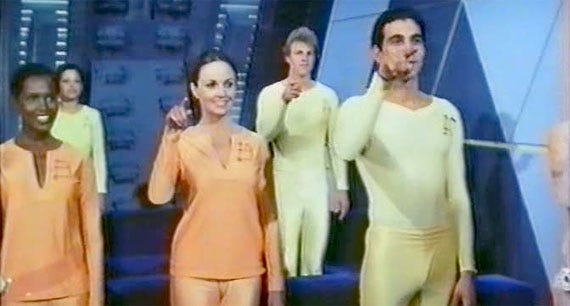
I saw the made-for-TV movie adaptation of Brave New World in 1980 and then read the book. I was 12 years old. Both the movie and book had a tremendous impact on me.
Now, it is absolutely not a book for a child. If it is in the schools, it should probably be at around the 10th-grade level and above. However, I read it at 12 because I was a precocious little bookworm.
I have what used to be called Asperger’s Syndrome, which is now just included under the umbrella of Autism Spectrum Disorder (by the way, many of us prefer the terminology Autism Spectrum Condition, for self-evident reasons). Those with Asperger’s often have advanced skills with vocabulary. That is good because we also often have debilitating social difficulties. So, having no friends gets compensated for by being a voracious reader.
I was such a voracious reader that I was even trying to tackle Shakespeare when I was eight years old, with minimal success, of course, though it was fun trying. And since I was alone with nothing better to do, why not?
Brave New World, though, really threw me for a loop.
It stood everything on its head. It was a society where if you didn’t sleep around with numerous partners, you were considered immoral and a deviant. It was a society where the terms “family,” “mother,” and “father” were all perverse and disgusting words, not to be uttered in polite company.
Anyone who wanted to be alone sometimes and enjoyed being alone was considered a freak and crazy.
Anyone who wanted to read… well they clearly had something wrong with them.
Wow. Just wow.
It was a society in which you are indoctrinated to accept the “class” you were biologically engineered to be part of. No questioning of your role in life, no resentment over the fact that some are predestined for hard labor and others predestined to be the elite class.
Wow. Just wow.
The religion is the religion of consumerism (Black Friday on steroids) where everyone is pre-programmed to want things, consume things, and waste things.
And if you feel stressed or bothered or in any way are having the slightest hint of an unpleasant feeling sneaking up on you, pop a pill and be happy.
Wow.
All the gears started turning in my head upon all sorts of issues. Questions about what is the basis of sexual morality? Is it just an artificial and arbitrary construct such that a society could decide promiscuity is moral instead of chastity and abstinence? Or is there a true absolute basis for morality?
What about class distinctions and racial stereotypes enforced by society? What about “family” and what are the ways in which it is good but also the ways in which it is emotionally destructive?
What about concepts of psychology and philosophy and art and individuality?
What about the character John the Savage and his act of supreme defiance where he declares: “I’m claiming the right to be unhappy.”
Claiming the right to be unhappy. That is what it is to be human. When we do not acknowledge that, when we wish away all suffering and pain and anxiety and questions and angst — which is exactly what book banning is actually all about, wishing it all away — then where is our humanity?
Human existence is pain. It is also the joy of surviving pain and emerging out the other side.
Yes indeed, a lot of gears were turning in my Asperger-addled brain.
Did it ultimately turn me into a slut, taking drugs, and mocking religions? All the things I presume book banners fear this book will inspire in kids?
No. Just the opposite actually, for a while.
The hero of the book, after all, was John the Savage. He questioned all the promiscuity. He questioned the drugs. He questioned the lack of religion. He questioned the lack of books (John loved Shakespeare). He questioned all the superficiality, the government control, the indoctrination.
What an irony. People ban this book that actually if you really pay attention to the whole book, makes a roundabout case against promiscuity and drug use and all the rest.
But that is neither here nor there for me.
The point is it got gears turning in my head. It got me to think about thinking.
That is something more valuable than gold. To think about what it means to be thinking about thoughts. Precisely what the citizens of Brave New World were not allowed to do.
As I said: Wow.
Many people have many reasons to argue against book bans. Sometimes it is a particular issue, such as LGBTQ people wanting to be seen and heard. Sometimes it is about Black people wanting the reality of their lived experience with systemic racism to be understood.
Sometimes it is about artistry and literary style and the desire to not have any student miss out on pure eloquence and brilliance. Sometimes it is about social justice, gender equality, economic justice, and the sins of the past not being forgotten or swept under the rug.
Yes, these are all good grounds for complaining about book bans in our schools and libraries.
To me, though, it boils down to this: Every child must learn how to think. It is not an automatic thing. It is not a preordained capacity. The mind is a garden, and it is either cultivated and tended, fertilized and watered … or it is left to the weeds.
Happily, when I was 12 years old, my mind landed upon rich soil and flowing water and bright sunshine and lovely flowers in the form, ironically, of a dystopian novel about a society where all those things were gone. My little brain launched into a burst of growth, and off I went to read more. I promptly read more Shakespeare and read about religion and read about psychology and read about philosophy and read about history and read about anthropology.
And in moments of darkness in my life, I have remembered the words of John the Savage: “I’m claiming the right to be unhappy.” Then I take a deep breath and remember that despite it all, it is good to be alive… in a world with books.
(Written in response to a prompt from Adrienne Gibbs to write about my favorite banned book.)