
My Father Could See the Land — I Try Each Day
Celebrating Earth Month 2022: My nature autobiography and an invitation and prompt to write your own
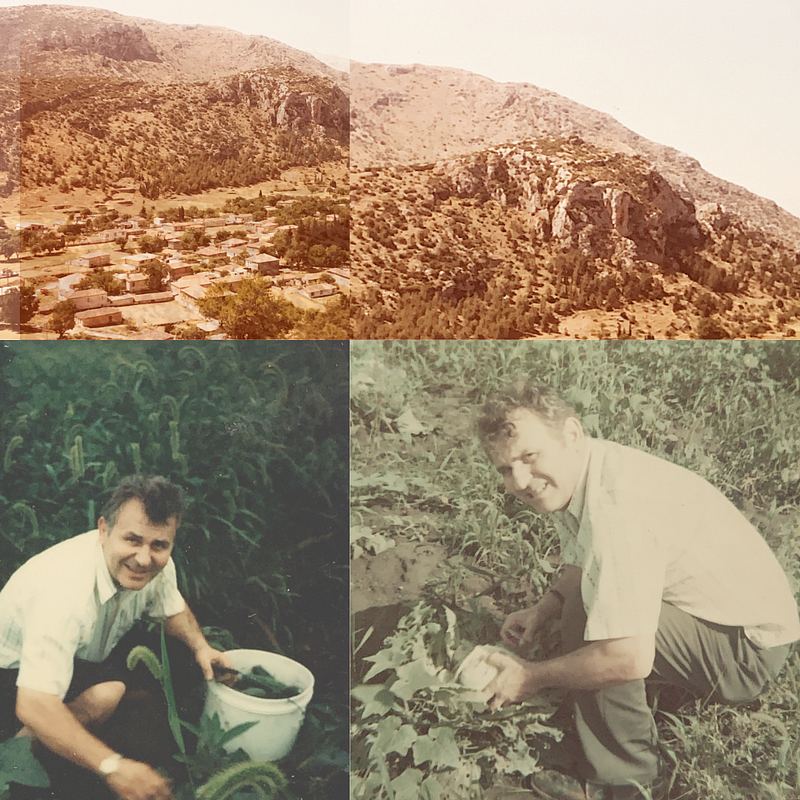
My father could see the land. He could trace the curvature of the earth with his eye. On our drive to the farthest western edge of Illinois to visit my best friend, Kate, at her family farm in Galena, we found ourselves lost in the middle of cornfields, asking a farmer for directions. The farmer looked across the rolling Illinois hills and pointed: “Locate that tree, turn at that cliff, follow the lines towards the setting sun.”
My mother and I remained baffled, but my father jumped into the driver’s seat and led us straight there. After more than an hour of failing to follow the map, we had finally arrived within minutes.
I marveled at his powers.
“Can’t you see?” he laughed. “That man explained it all perfectly. You just follow the lines of the earth.”
I couldn’t see. It was just a blur of corn and sky to me.
My father was raised in the mountains of Greece. We had traveled there once when I was four, so I only held vague memories of the place. Not only had he grown up farming the land, but he’d also spent a year when he was fifteen years old, living in its mountains, hiding from the Nazis who’d taken over his home and forced him to flee. He’d fought for his life in those mountains. He not only could see the land; he knew it; he felt it.
He could name each star, tell the stories of each constellation told by our ancient ancestors. He could find Orion and Cassiopeia, both Ursa Major and Minor.
He could spot a thunderstorm fifty miles off. “When a cloud hits that mountain’s peak, take in the laundry… the rains will be here soon.”
He could also trek steep paths without falter, whereas I couldn’t even hike a relatively even path properly. At Girl Scout camp in the forests of suburban Chicago, I was the one who tripped on barbed wire, the one who needed a tetanus shot to fend off the threat of infection. I was the one whose skin became inflamed from the bite of more than thirty mosquito bites.
Yes, thirty. Nature did not love me.
I had been born and raised in the city, spent most of my childhood in a booth in my parents’ restaurant, which was located smack in the middle of downtown Chicago on the corner of Grand and State. Nature, to me, was alley cats, winter storms and wind tunnels, maybe a few cardinals outside my window, and some lightning bugs in the park. There was the Lincoln Park Zoo, an occasional visit to North Avenue beach (but we would never actually go in the water), or a drive to Indiana to pick edible dandelions, a Greek dinner staple, on a muddy farm that wasn’t ours.
In the Artemisian Mountains of my father’s first home, Demeter had grieved for her lost daughter, Persephone; my father grieved, too. He missed the grapevines and olive trees, the ancient, rugged hillside of his childhood, the clear air and hidden streams of water, clean enough to drink. When I turned seven, he was finally able to start a garden, where he grew enough cucumbers and tomatoes to feed hundreds at our restaurant. He wished for grapes. He wished for a fig tree. He wished for the fertile land of his boyhood.
He tried to teach me how to fertilize. How to tend to the seedlings. I wasn’t at all interested. He never said it aloud, but I’m sure he wished I would be.
One year, my father read that if he dug a hole and buried the fig tree, which was a heat-loving, Mediterranean plant that was clearly not meant to survive the bleak Chicago winters, it would become dormant and survive through to spring. He nearly died trying to keep that fig tree alive. I was ten years old when he, in the middle of digging what was a grave-sized hole for that stick of a tree, threw a clot and collapsed. He survived that heart attack, but after, he faced seven long years of heart procedures and more until he died the first autumn after I turned seventeen.
Through it all, he gardened, even until the last week of his life.
But he never quite acclimated. He never quite belonged anywhere outside his own small patch of garden. My mother, too, never liked where we lived, a suburbia full of xenophobes and anti-Semites who mistrusted her Jewish background as much as they did my father’s accent. As soon as I could, I left for California, with its climate that is more like Greece and therefore more similar to my paternal home.
Now, here, I keep a garden. A decent one, with four raised beds. I grow lettuce and snow peas and volunteer tomatoes that grow from two compost bins. The raccoons destroy my seedlings and the squirrels eat my berries, but still I plant, still I dig, still I turn the leaves into the ground. I learn the colors of nasturtiums. I delight with the return of the jasmine. I rejoice at the miracle of the final product of my bins, the black gold called humus, the turning of waste into nutrients, of death back into life.
I remain nervous when I hike downhill, and I spray mosquito repellant each summer evening at four p.m., or else I am eaten alive.
But I also look at the stars. I still don’t know their names. But I think of my father.
I try, each day, to see more.
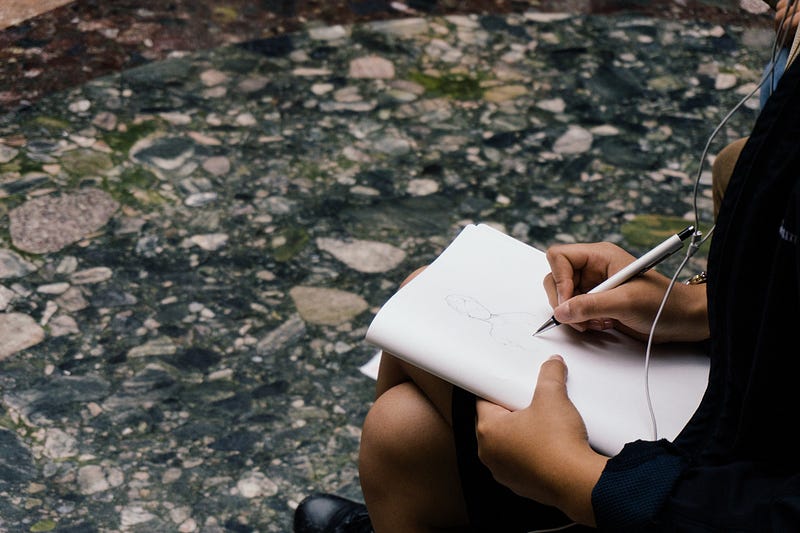
As one way to honor Earth Month 2022, write a nature autobiography in which you explore your personal relationship to nature. Your personal narrative might reflect on your own experiences as a child or you might choose to focus on your current feelings/associations/ experiences, perhaps thinking about if and/or how you have paid attention to, listened to, lived in reciprocity with, and sat in gratitude for any part of the natural world.
Here are some additional model texts:
- Robin Wall Kimmerer, “The Gift of Strawberries.” and other amazing essays in Braiding Sweetgrass: Indigenous Wisdom, Scientific Knowledge, and the Teaching of Plants
- “Invoking the Ancestors” by Aileen Suzara, “Tales from a Black Girl on Fire, Or Why I Hate to Walk Outside and See Things Burning” by Camille T. Dungy from Colors of Nature: Culture, Identity, and the Natural World
- Unbowed: A Memoir, by Wangari Maathai
STRUCTURE
In terms of structure, you may use the following sentence starters, which come straight from the assigned texts, if it helps:
From Wall Kimmerer:
- In a way, I was raised by… (she says strawberries: what natural element were you raised by?)
- I used to eat…
- I remember lying on my back…
- When I was young, I thought that…
- Now I know that…
From Maathai:
- When I was a child, I loved (listening to)…
- Time and time again, I would return to….
- In my mind’s eye, I can envision the….
The Norton Field Guide to Writing also has good suggestions:
Key Features:
A well-told story. Most narratives…. often set up some sort of situation that needs to be resolved. That need for resolution makes readers want to keep reading.
Vivid detail. Details can bring a narrative to life for readers by giving them vivid mental images of the sights, sounds, smells, tastes, and textures of the world in which your story takes place. The details you use when describing something can help readers picture places, people, and events; dialogue can help them hear what is being said.
My added note: If you are struggling, list specific details (could be sensory details -images, sounds, and smells of a place) to include in your narrative, explaining why they hold such power or were so influential for you.
Some indication of the narrative’s significance: Why does this matter? Why is this important?
You might even choose to take a mindful walk outside; bring a journal and writing utensil and pause in your favorite old and new spot; breathe, listen, and then write, and see what comes forth.
I’d love to read your nature autobiography! Please tag me if you write one.
E. Katherine Kottaras holds an M.A. in English and an M.S. in Kinesiology with a focus on Integrative Wellness, and she is a contemplative writer and holistic teacher, having worked at the middle, high school, and community college levels for over two decades. She is a yoga teacher, personal trainer, and health coach while also living with invisible illnesses and neurodivergence, and as such, she is passionate about mindfulness, bodily self-determination, and health equity. As the queer daughter of an immigrant, Katherine believes that holistic and inclusive approaches to expression, healing, and growth should be accessible to all.
Connect with Katherine on all the social medias: IG, YouTube, FB, LinkedIn, Twitter, or at katherinekottaras.com.
Check out Katherine’s new series, Yoga with Eleonora on YouTube, which helps kids of all ages calm their minds and bodies so they can respond to and communicate their feelings in healthy ways.
Read every story from Katherine (& thousands of other writers) by signing up for Medium. Your $5/month membership directly supports writers (ad free!).


