
My Father: A Life Tormented
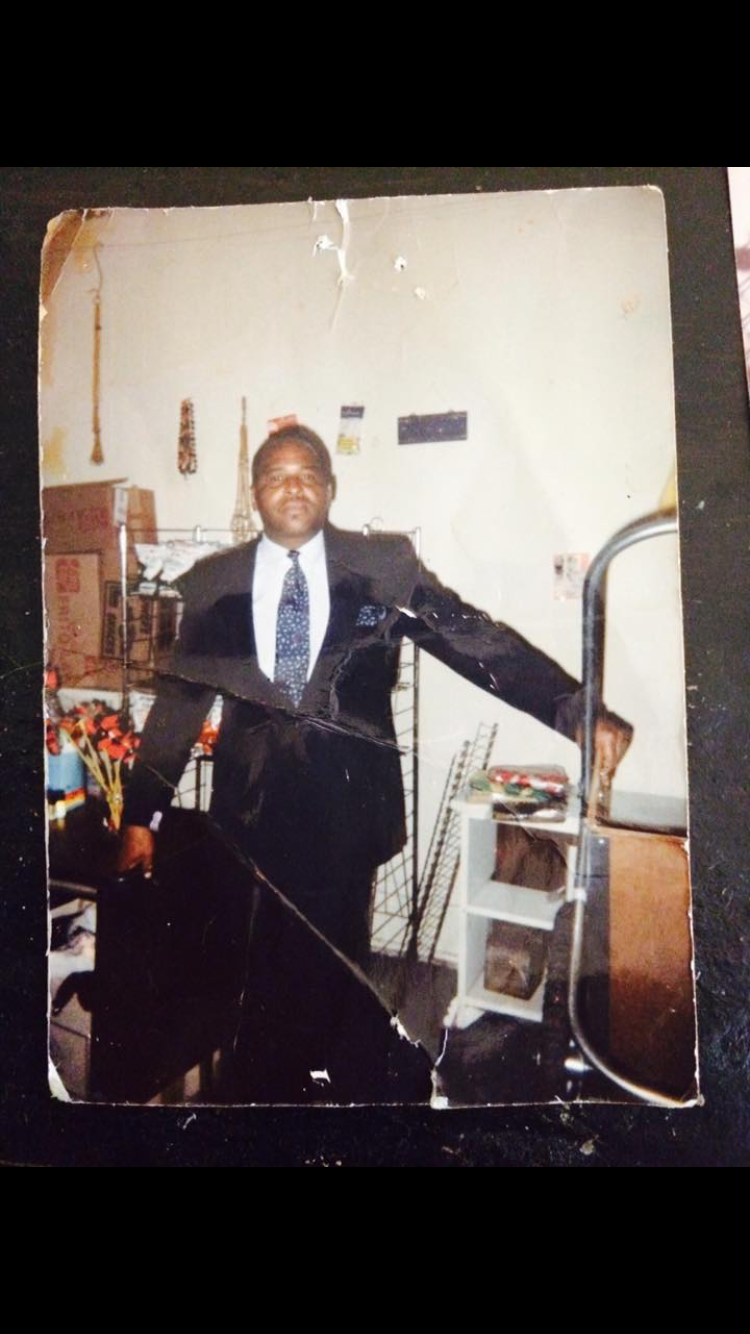
On November 30, 1999, my father died of a heart attack. His heart, the purest and most secluded part of him, had given up its fight.
At his funeral, he was wrapped in the traditional Islamic kafan: a white cloth that shrouded him from head to toe like a baby swaddled for comfort. He looked angelic: a stark contrast to the life he lived.
In death, it seemed, he was absolved of all the pain he left behind in those who loved him.
He was the first entrepreneur I ever knew. He taught my siblings and I about individuality, consistency, and enterprise. At 8 years old, I was helping run a candy store that was my father’s brainchild. The work we, my siblings and me, did in the store was the closest we would come to knowing and experiencing our father in delight.
The store sat at the front of our house adjacent to his makeshift home gym. Each morning, before we set up for the day, my father — a man built like a solid brick wall — would tease and torture his punching bag.
In his youth, he was a well-respected boxer who fought, “the best of them and sometimes with my eyes closed.” He, in my youthful eyes, was the perfect combination of brains and brawn.
His strength was palpable, but his softness was also present. He was born June 21st, a Gemini with a reach into the pliability of a Cancer. There were nights he would tell us long drawn out, very offensive, jokes.
Then there were nights when his face held all the sadness he’d ever felt. You had to watch him closely to know how to proceed because underneath his mystery there was a boiling rage.
Early in the mornings or late at night, his mind would take him back to Vietnam. In that steamy swamp he was pumped with drugs to deaden his senses. He was then set upon villages where he was ordered to kill entire families.
One memory that often held him by the throat was that of coming upon a hut that he had just laden with bullets. He was to check that all occupants inside had been extinguished. Inside that hut, once the smoke cleared from the spray of bullets, were the tiny bodies of several young girls. It was these faces that eventually brought him to his knees.
He went AWOL after that incident.
He tried to escape the horrors of war, but it had ridden his back all the way to the states. The faces of those young girls were permanently planted in his mind. The whispers of their voices beckoned him to account for what he did. It was their faces and voices that showed up one night causing him to wake me and my sister from our sleep.
He wrangled us from our beds, sleep still holding us hostage, and forced us to sleep on the back porch. He was convinced that we were those girls and, somehow, he would harm us if we got too close to him.
The porch, made by my father, was stacked with dead wood that splintered at different points while the columns just beneath us buckled at the knees. We walked steadily across the planks to a corner where a group of paint cans sat rusting. We wrapped our bodies around each other and prayed for reprieve. Reprieve from my father’s insanity and reprieve from the bitter Chicago cold that had wedged itself between us.
Of that night, I remember our white nightgowns that blew in the wind. I remember my sister’s head on my shoulder. And I remember thinking, tomorrow I will stop loving him.
It was each tomorrow that I thought it was time to stop loving him.
The tomorrow when he would mangle my mother with his fist. When he would take a plate of food and cast it at her showing his disapproval. When he would choke her just shy of her last breath.
Then the tomorrow when he tossed his nephew from a second-floor window.
Each tomorrow came with a new set of fury on a new victim, and sometimes the same one. Those tomorrows came swiftly, but the one where I stopped loving him never came. I was a child, but I often questioned my own sanity. I wondered how I could love someone who was so evil, so monstrous.
But I had come to discover that fatherhood has come with its own set of troubles for my father.
In 1975, he and my mother had my eldest sister, who, for about seven years, was an only child. Fatherhood was simple for him then.
But in 82’ my older sister made her mark on the world; then me in ’84; my brother in ’87; my younger sister in ’89 and then the baby bear in ’93. We were now a full load. Each child resembling the face of the next with even more pronounced features and emotional barometers that were impossible to gather in one sitting.
Our footsteps were thunderous on the wood floors of our home. Our shrieks and laughter were endless. Where there was joy in us, there was fear in my father. We, the girls — the five of us — had become the physical embodiment of those young girls in Vietnam: an everyday reminder of the guilt he possessed.
He began to self-soothe through drugs working to silence his fears, but rage mixed with heroin was a destructive cocktail.
There were nights that he would cry uncontrollably. The rumbling of his tears would wake us all, but we never left our rooms. He would call out the names of the dead to forgive him. When he would screech, “and you. And you. And you..” we concluded these were the young girls who had haunted him. Then there were nights when he would lace up his black work boots and leave.
On these nights, I would pray. I prayed for him to return. He was cataclysmic, but who were we without him? Who was I?
The next morning, when the shy light of the sun sprayed through the window, I hoped to find my father splayed out on the living room couch. When I would find him there, smelling of iron and city air, I would thank God for him.
By this time, I had removed the thought of diminishing my love for him. It had become clear that loving him was necessary.
On the day we buried my father, I did not cry. I’d instead said a silent prayer that called for his soul to be at peace. If not in life, I wished in death he be allowed to put down his burdens and become free.