
My Ex Told Police I Poisoned My Kids
Spoiler alert: I didn’t
The knock startled me.
It was nearly midnight, and I was asleep on the sofa. I had dozed off watching Orange is the New Black on Netflix.
My friends knew better than to drop by unannounced, especially at this time of night. I didn’t like surprise visitors, so I decided to ignore whoever was on my front porch. My trailer looked identical to several of the others on my street, so it was probably just a neighbor’s friend who was lost.
My uninvited guest wasn’t interested in leaving, though. The polite knock turned into a nonstop pounding, and I was done listening to the noise. I yanked open the door expecting to see a drunk college student.
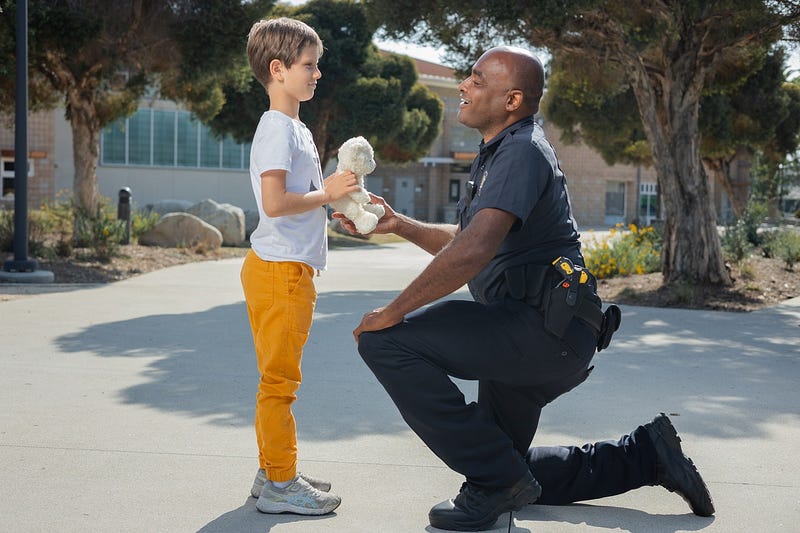
I found a police officer instead.
“Where are your kids?” the officer asked.
Confused, I asked, “They’re in their rooms sleeping. Are you DFS?”
I didn’t see a caseworker, but a neighbor had mentioned that sometimes DFS sends police officers. Maybe DFS was looking for my neighbor again.
“No ma’am. But I need to see your children now,” the officer demanded.
“Okay, just a minute,” I replied, partially closing the front door so I could put my pets in another room. I was worried my cats would run outside when I opened the screen door.
“Leave the front door open,” the officer said sternly through the glass.
His request was weird, and I didn’t know what was happening. As I walked toward my kids’ bedrooms, I turned on my video camera. I was going through a custody battle, and my lawyer had advised me to record anything that seemed important.
“Guys, get up! The police want to say hello!” I yelled.
My youngest stumbled out of his bedroom with a soft gray blanket wrapped around his shoulders. “What time is it? Why are they here so late?” he asked.
“I have no idea,” I replied, then went to wake up my other kids. Everyone gathered in the living room, exhausted, while the officer watched through my patio door. I opened it and let him inside.
“Why are you here?” I asked.
The officer informed me that he had received a call from an ex claiming I poisoned the children. I asked who called, but I knew exactly who the caller was before the officer gave me his name. I had children with different fathers, but one of them would never make false accusations like this.
My kids sat there, terrified, as the officer continued describing the reason for his visit. He said he needed to make sure my family was still alive since he was told I poisoned them with prescription meds.
“Are you talking about our sore throat medicine?” one of my kids asked.
“Where is it? I need to see the bottle,” the officer responded.
I grabbed the bottle from my fridge, then explained what the pink liquid was inside. The bottle was filled with amoxicillin, which a doctor had given the kids after testing them for strep throat that afternoon.
My ex knew this. Each time we visited the doctor, I provided their fathers with the name, address, and phone number of the medical provider, plus the diagnosis and treatment plan. In fact, I had just sent him a text after the kids’ appointment that day.
He didn’t react well to my text — that’s the polite version of the story. The real version is much worse.
I kept my text brief and factual; no extra information. During interactions with my ex, I typically used the BIFF — brief, informative, friendly, and firm — style of communication recommended by my therapist.
After the kids’ appointment, I wrote “Took the kids to see Dr. Smith at 789 Main Street. Doctor tested for strep throat and prescribed amoxicillin for 7 days.”
My ex flew into a rage and insisted I was lying because the kids were fine when he saw them earlier that week. I repeated that the doctor said they had strep throat and prescribed amoxicillin.
My ex stated that I did not have his consent to administer the medication and then called the doctor’s office to yell at the staff. I didn’t know he was harassing the staff until I received several frustrated calls from the kids’ medical team.
“Your ex keeps calling and screaming at us,” one medical assistant complained, then warned me they’d have to drop my family from the practice if he continued. I apologized, then explained that I couldn’t control my ex’s actions.
“Well, we’re going to take action if he continues,” the healthcare worker replied, implying that the office was going to call DFS. She stated that my ex had spent the morning arguing with the nurse and receptionist about the kids’ strep throat tests. He didn’t believe they were positive for strep, nor did he believe they needed the antibiotics that the doctor prescribed.
I was frustrated by my ex’s actions, but I wasn’t surprised. This was the same guy who refused to believe our child’s doctor-diagnosed tomato allergy was real.
My ex’s distrust of the medical system combined with his hatred toward me made life interesting. And by interesting, I mean stressful.
That’s how a police officer ended up at my home that night.
The unexpected wellness check ended after the officer asked if I knew why my ex would make a false report claiming the kids’ lives were in danger. He seemed annoyed that he had wasted his time investigating a family who was completely fine.
“I’m not sure. You’re welcome to read the conversation I had with him earlier,” I said, handing the officer my phone.
He scrolled through my texts, shocked, then said, “These texts are crazy. I’d recommend getting a restraining order against this guy.”
“I’ve already had multiple orders of protection against him,” I replied.
“Sounds like you need another one,” the officer advised.
I had mixed feelings about his response. It was nice to have my fears validated, but dealing with my ex’s outbursts was exhausting. I didn’t want another restraining order, and I doubted that getting one would help anyway.
I told the officer I’d consider filing one, and he seemed satisfied with that response. I just wanted the visit to end so I could comfort my kids and get back to bed.
I was also nervous that the officer secretly thought I was crazy and was planning to arrest me for my ex’s false claims. Fortunately, the police report indicated otherwise.
Living conditions are okay; nothing suspicious.
I reread that sentence over and over after I picked up the police report. The rest of the report was a rundown of the officer’s interaction with my ex. Reviewing that section that was stressful, so I skimmed past the lies.
People can say whatever they want about me. It doesn’t mean their accusations are true.
“Don’t waste your time with explanations: people only hear what they want to hear.” — Paulo Coelho
Paulo Coelho was right. I knew this, and yet sometimes I still panicked when my ex accused me of something I didn’t do.
People say the innocent remain calm when faced with false accusations, but that’s not always true. People can say what they want about you, but that doesn’t mean anybody will believe them. Sometimes rumors have consequences.
That’s why I became sick to my stomach when I saw the emails my ex sent the school.
I was reading books with first graders when I felt a tap on my shoulder.
“Hey, come see me later,” a staff member whispered. I nodded in response and continued reading.
There was nothing unusual about her request since I volunteered at the school several times a week. I was working on my teaching degree, so volunteering helped me prepare for my future career.
When I finished reading, I walked down the hall until I found the teacher who had visited me earlier. She seemed worried.
“Hey, what’s up?” I asked.
“Your ex is scaring us,” she whispered. “Normally I try to stay out of things like this, but he keeps sending us these weird messages. We don’t think they’re true, but we need help responding.”
This is when I learned my ex was contacting teachers, support staff, and even the principal about me. A short message about our child’s upcoming medical appointment went ignored for weeks, but apparently my ex had time to message multiple educators.
In his messages, he claimed I was ordered to undergo a psychiatric evaluation due to my mental instability. He left out the part where we were both ordered to complete one as part of the court proceedings for our custody case.
My ex made numerous other accusations as well, but thankfully, the school knew they were unfounded. That didn’t stop him from continuing to call, text, and email the educators frequently, though.
I spent more than 10 years working on my teaching degree, credit by credit, and I’m finally close to finishing. I’m not excited about having my own classroom anymore, though.
I think I’ll stick with being a writer for now.
Trauma can change your life’s course. Sometimes the changes are good, sometimes they’re bad.
Friends still remember the incident where my ex pretended I poisoned the children. Unfortunately, so do my kids.
I hate that my kids have this memory. I would have shielded them from the police visit, but it wasn’t possible. The officer insisted on speaking with the children.
It’s not his fault — he was just doing his job. The officer was polite enough, but there’s no good way to say, “Hey, your ex thinks you poisoned the kids.”
It’s been years, and I still feel sick whenever an officer parks near my home.
When my kids get sick, I panic. Not because I can’t take care of them, but because I’m scared of another surprise visit from the police. I’ve had several since the poison incident.
I used to think it was wrong when people withheld information from the other parent. Now I understand why they do it.
Information becomes ammunition in the wrong hands.
I keep messages brief now, at least when I’m communicating with people who dislike me. Oversharing makes it easier for people to twist your words into stories that fit their own agendas.
I share some experiences from my past, but I’ve become more reserved. I write under a nickname and no longer use my last name on anything but personal finance articles and medical content. Only my online writer buddies — who have never met any of my exes — follow me on Medium.
Speaking about my past is still risky, of course. But so is texting my ex after a medical appointment.
After all, words are subjective and so is the truth. Maybe I made up this entire story.
Depends on who you ask.
Thanks for reading! This personal essay is part of The Memoirist’s July writing contest.
I’m a reader as well as a writer, and I loved Scot Butwell’s story about the importance of preparing kids for transitions. I do that with my kids’ video games, but I never thought too deeply about it until I read his piece.
Here’s Scot’s story: