
My Dog Ate My Mental Health
The need for an excuse in mental illness.
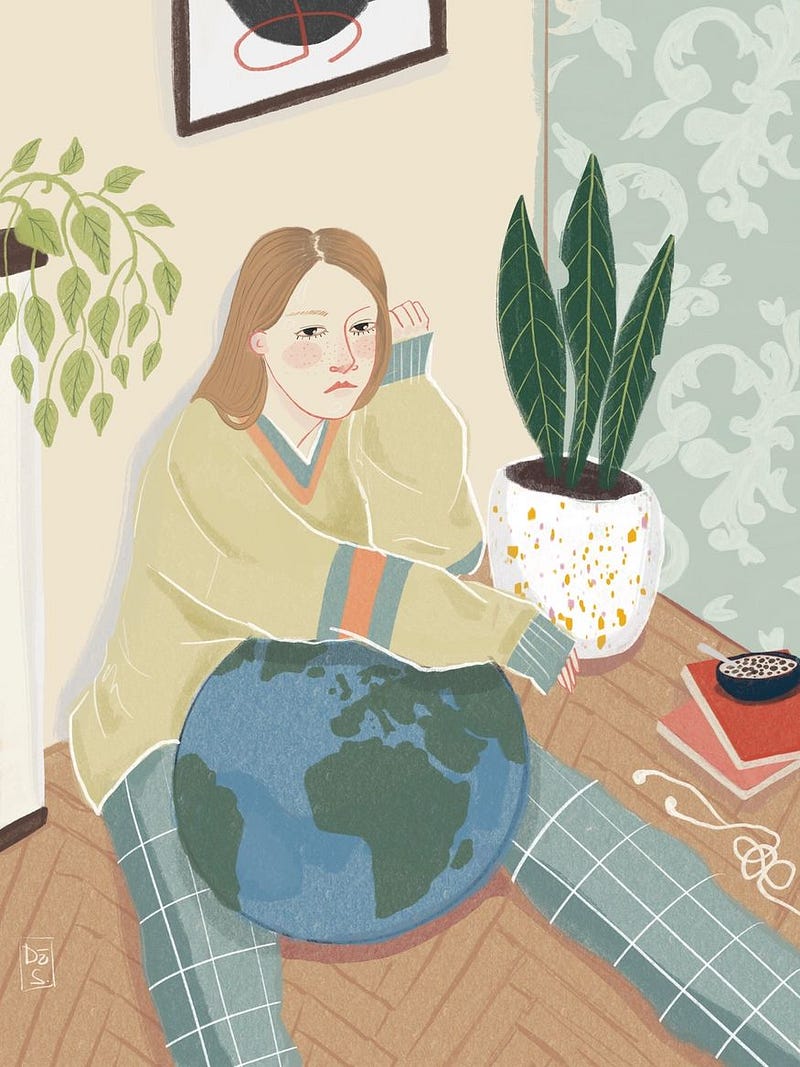
I recently discussed how we acknowledge mental illness, we don’t accept it, and a part of that is this drive we have to explain mental illness. We look for a reason, a cause, and effect. You are depressed because someone passed away, someone hurt you when you were little. You are anorexic because you were once overweight, or because your figure is often commented on. You’re anxious because you’re extremely shy. We look for this obvious excuse for the way we’re feeling, and without it, our feelings and struggles are minimised.
We accept mental illness when it comes neatly packaged. When it has a clear reason for it, the diagnosis and symptoms that suit our schedule and limits. We’re okay with Effy in Skins being depressed, and will even glamorise it. But think back to every depiction of mental illness in a show or film, and look at how they always had that reason for it. The character who was called fat and then became bulimic (or Marley in Glee who couldn’t fit in her costume once). This teaches us that there is a reason for mental illness. And without it, our struggle doesn’t qualify for this term. Why can’t we have a character with a mental illness and not let it define them, not let it be easily explained?
I suffered in silence with my depression for three years, when I opened up as I was scared of where I was going, I was basically met with the following response.
You’re not depressed. You’re not bullied, you have friends, you do well in school. Why would you be depressed?
I didn’t know how to tell them that I was depressed. That the damage to my body meant I was depressed. That the struggle to get up every day meant I was depressed. That the intense self-hatred that consumed me and pushed everyone away meant I was depressed. But I was eighteen, and so I stopped talking about it.
This plagued me for years, as I never felt like I could admit my mental illness to people as I didn’t deserve to have it. Read that again. I did not deserve to have the mental illness that was destroying me from the inside out. I finally opened up to a friend and told her about it, and I even apologised for talking about it, saying that I don’t have a reason to be depressed. She looked baffled, and said that I don’t need this reason.
I was a Psychology major by this point. I had spent years studying how complex mental illness is, the possible factors that contribute to it but the lack of a reason. I knew this, I never doubted it in terms of learning it. I had friends struggle, and I always supported them. Yet I was still punishing myself for the lack of a reason for my depression, almost wishing something awful would happen so that I could have this excuse. I lay my hopes on a diagnosis, a firm confirmation so that I could hold it up as evidence.
But the only thing missing was my own acceptance of my mental illness. I needed to stop feeling guilty, and accept that I was miserable in my life for no clear reason. Later in therapy, I would find a lot of moments and patterns from my childhood that contributed to my personality disorder. But that still doesn’t need to be an excuse. Because I don’t need a reason to be mentally ill, I just need help to work through it.
I think it comes from a good place. We live in a world that we like to construct out of empirical evidence and facts. It helps us to understand, to believe in a world filled with contrasting information. But mental illness doesn’t have the facts we yearn for. We can’t tell you why from a set of twins, one could grow up completely ordinary and the other could develop Bipolar Disorder or Depression. Two women could give birth, but only one will end up with postpartum depression. We can try to explain it. We can look at life events, resilience factors, coping mechanisms, and the building blocks of it all: DNA. But we will never have a reason. As there is always an exception to the rule.
That doesn’t mean that we should diminish the experience. One individual has a history of depression and the other has never had a family member diagnosed with any mental illness. That doesn’t mean that the latter is less depressed, or is less worthy of her mental illness. You are not worthy of mental illness, you are unfortunately inflicted with one. Your clean slate doesn’t make the cracks that form when it falls any less important or worthy of respect and treatment. Anything that happened before your mental illness is regardless, you still have that mental illness. Equality within mental illness is something we need to achieve, I suppose.
I challenge all writers to create characters who struggle with their mental health or mental illness, and not give it an easy, crystal clear excuse. Let them be real, let their struggle be enough to warrant our care. Let us see our blameless issues reflected within others.
You don’t need an excuse to be mentally ill or struggling with your mental health. You do not need to feel guilty for it. Your struggle is relative to you, just like someone else’s is. It is not impacted by your positive or negative life events, because it is still happening. You’re in pain, you’re not doing well, and that is the only thing that should be focused on.
You don’t need a reason to be mentally ill, just like you don’t need a reason to have positive mental health. The way you feel is reason enough. To have a seemingly ‘perfect’ life and feel hollow and sad in it means that you feel that way. Living with BPD, I feel a lot of things that don’t ‘make sense’. Insane jealousy, uncontrollable sadness, or loneliness in the ‘happiest’ times or with friends. I’ve stared at my emaciated figure in a mirror and seen rolls of fat that I could’ve sworn were real. I know that I can’t trust how I feel and that it isn’t always a reflection of reality. But I still feel that way. And so I still deserve compassion for it.
Join my email list for more insights and articles!
Originally published at https://symptomsofliving.com.


