
DIET | HEALTH | MIDDLE PAUSE
My Dislike of Vegetables & Love of Sugar Affected My Health
Three times food played a role in my well being
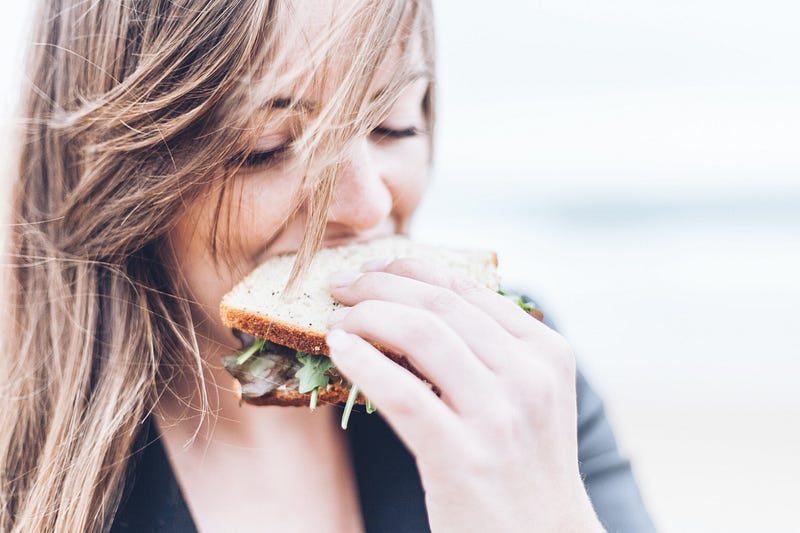
For most of my life, I’d not paid attention to just how much my dislike of vegetables and love of sugar impacted my health.
I have always been a picky eater. My mother never made me clean my plate as she made the other children do. She gave me lots of sweet treats to let me know how special I was.
Sugar and chocolate represented love.
Dental care was not a big priority in my childhood. When we couldn’t pull a tooth by tying a string to a doorknob, we visited the dentist. Those visits involved pain and tooth extractions.
But what really caught my attention was when the three cousins who lived with my family got better dental treatment than my sister and me. Twice a year the dentist cleaned their teeth and filled their cavities.
When I asked my mother why, she claimed she was doing my sister and me a favour by not having us go through such torture.
And then in my grade six school photo, I saw the cavities between my two front teeth and never wanted to smile again. I walked around stone-faced, and when I spoke, I held my hand over my mouth. I continually asked my mother to take me to the dentist and have my teeth fixed.
My parents finally took me to the dentist and he filled my cavities with a white filling. He also informed my parents it wouldn’t last long and would require frequent replacing. My parents couldn’t afford such an expense. When the filling fell out, my parents had the dentist pull my four front teeth and replace them with a partial denture. At age 13, I had false teeth. Something I’ve regretted since.
It made no sense that my cousins received so much better dental care. So I hounded my mother until I learned the truth. My cousin's parents had signed away their parental rights. “Welfare,” my mother said. “Welfare makes us take them. Welfare pays.”
Her disclosure confused me even more. Why would kids without parents get better treatment than kids with parents? My cousins had white perfect teeth. It had me wonder if my mother really had my best interest in mind.
Still, the loss of my teeth didn’t change my eating habits. I gravitated to the sweet stuff and pushed aside the vegetables.
In my mid-30s I experienced shakiness and nervousness.
If I was late for a meal and felt hungry, I had a hard time concentrating. Was lightheaded. Sometimes breaking out in a sweat. After I ate something, I felt better.
I didn’t know what was happening to me, so the next time I went to my family doctor, I mentioned it to her. She said it sounded like my blood sugar (glucose) level was too low. That I may have hypoglycemia.
I was aware of blood sugar because my mother had become a diabetic in her 50s, around the time of menopause. I asked the doctor if it meant I might be diabetic. She said low blood sugar can happen without diabetes.
Diabetes is a metabolic disorder affecting the way our bodies use digested food for energy. It involves problems with the hormone insulin.
The doctor sent me for a glucose tolerance test to find out how my body was managing glucose.
The night and the morning before the test, I couldn’t eat or drink anything. I also needed to remain at the hospital for the three-hour test.
The first blood test measured my fasting blood sugar. Then I was given an orange-flavoured glucose solution to drink and sent to wait for another blood test one hour later. At two hours another blood draw, and again at three hours.
Between the blood tests, they allowed me to rest on a comfy recliner. Even though I hadn’t exerted much energy my low blood sugar symptoms happened by the time they finished the last test.
I then saw my family doctor for the test results and it’d been as she’d suspected.
I had hypoglycemia.
She gave me a basic rundown on eating regularly and always carrying something sweet like Life Savers with me to quickly bring my blood sugar levels up until I could eat. She also referred me to a registered dietitian to receive more advice on meal planning.
Every week for a couple of months I would check in with the dietitian who predicted this was the early stages leading to my becoming diabetic. (Thirty years later. I’m still borderline/close to becoming diabetic. The low blood sugar problems subsided in my late 40s and improved even more after a hysterectomy and regulating my hormones).
The dietitian recommended half my plate of food be vegetables. And that’s when I had to reveal I didn't like or eat vegetables since childhood.
“Fruit is okay,” she said, “in moderation, and always at the end of a snack or meal.” As a child, I was taught the opposite. My mother had always eaten half of a grapefruit before her morning cereal. But eating fruit first releases too much sugar, too fast into the bloodstream. Fruits need to be eaten at the end of a meal.
The other half of the plate was to be divided between protein and whole-grain foods.
I learned about eating healthy carbohydrates and low-hypoglycemic foods such as legumes, and whole grains. It was my first introduction to eating lentils and chickpeas. Of switching to brown rice instead of white.
I included seeds and nuts in my diet, and no longer skipped meals.
Living with hypoglycemia required me to eat 3 meals a day with a snack in-between each meal to prevent low blood sugar.
I never left home without snacks and glucose or sucrose tablets with me.
Following the diabetic diet and walking every day for exercise helped with the weight I had previously gained. Eliminating sweets from my diet enabled me to lose 50 pounds and feel more confident about managing my blood sugar.
I stayed away from highly processed foods. Replaced the Kool-Aid I’d been drinking since childhood, with water.
After my blood sugar issues resolved, I went back to the preferred diet from my childhood. A diet of white flour, processed foods, lots of sweets, no vegetables, and very little fruit.
At age 49, I was diagnosed with Diverticular disease.
Once again the importance of eating vegetables came into play.
Diverticular disease is the formation of abnormal pouches in the bowel/colon wall. Weak spots that cause small pouches to protrude. Symptoms may include constipation, diarrhea, abdominal pain, or bloating.
Lack of fiber in the diet is linked to the formation of diverticula, although the specific cause is unclear.
Inflammation or infection or tearing of these pouches can occur. I have been fortunate in the 15 years with this disease to never have experienced those complications which cause severe abdominal pain and can be a medical emergency requiring a hospital stay for treatment.
Since childhood, I’ve experienced problems with constipation. Hemorrhoids in my late teens. Stools too large to pass without the aid of an enema. Sometimes even an enema at home didn’t work, and I’d end up in the emergency department at the hospital for another enema. It was so embarrassing and made me feel helpless and afraid.
I manage my diverticular disease with lots of fibre. I drink a smoothie of ¾ all bran blended with almond milk. A whole wheat tortilla with hummus and an orange, as my first meal of the day.
My husband and I then go for a walk.
For my evening meal, I include whole grains and seed bread. Treat myself with ice cream for dessert. Often have an evening snack of popcorn. Once a week, potato chips and extra ice cream.
I use RestoraLAX® (Polyethylene Glycol 3350). A laxative that draws water to the stool to help soften and increase the frequency of bowel movements.
Plus I eat a fibre gummy or prunes daily. All to maintain bowel movements with as little strain as possible.
Diverticulosis is quite common, especially as people age. More than 30% of U.S. adults between the ages of 50 and 59 and more than 70% of those older than age 80 have diverticulosis. Most people with diverticulosis will never develop symptoms or problems.
National Institute of Diabetes and Digestive and Kidney Diseases (NIDDK)
As we age we hopefully learn to be more responsible for our choices. I can blame the start of my bad eating habits on my mother, but the continuation of eating too much sugar and not enough vegetables falls to me.
It seems to be human nature to not want to make changes until we have to. But education and awareness can help give us the choice of whether to change or not.
Thanks to Marilyn Flower Pump-Priming Prompt: Tell us about your relationship with food and eating.
Barbara Carter Artist and writer with a focus on healing from childhood trauma, alcohol addiction, and living her best authentic life.
Likes to take walks, read, watch TV dramas, and practice Qi-gong, and work on her memoir series BARBARA By The BAY.