My Design Thinking On Writing
Discover how you can apply this phenomenal method to your writing as well
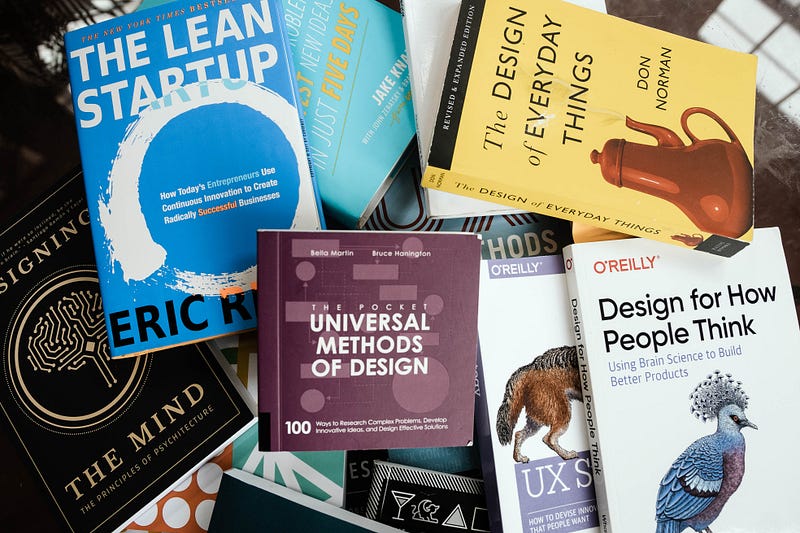
After reading an article written by Dr. Mehmet Yildiz on Design Thinking, a whole world of perspectives opened up to me.
Today, I want to suggest to you what this new paradigm could represent for your writing, through the effects it has had on my own.
“Writers can use Design Thinking principles for quality, simplicity, and agility purposes”, as Dr. Mehmetyildiz suggests.
A premise
Design is not my strength, whatever you mean for design.
I’m somewhat familiar with maps and schemes, due to some school years spent on the matter.
But what I could do for my design thinking before I knew it better, was at the level of organizing an article through the introduction, central two-three paragraphs, conclusion, and very little adjusting it to the consumers.
Besides that, random showing up on social media (it is still at this level).
If I had to describe my entire writing activity with a word, I would use “rustic”.
It’s not a bad word. I like rustic things, very much. But you can see by yourself all the intrinsic limits of such an approach when it comes to starting a possible writing activity. (Well, I didn’t think about it when I began writing on Medium, actually).
Changes in a writing model
Actualizing and applying the concept of design means an epic revolution in a model of thinking for writers who want to implement their mind-work-set. I’m referring both to me and you.
So, let’s say you recognize to handle a rather rudimental tool in your hands, knowing you need something more efficient and modern to develop further and pass onto the “next level”.
What can you do? What is design thinking going to change for your writing?
The furniture
What Design Thinking is offering to you is:
- an innovative problem-solving technique
- close interaction with the actual users of the solution
In simple words, it means you offer solutions with your writing to hypothetical readers, by establishing a significative relation with them.
As an example in the non-fiction area, you could delineate the content problem, and subsequently, ask questions.
Then you can create a structure, a framework, a solution, and perfect key aspects.
To support your ideas you can use references from the body of knowledge.
Finally, you share your findings and conclusions considering the expectations of your readers.
The readers as “personas”
Design Thinking is an approach where the center of attention is the consumer.
In our case, the consumers are the readers and can be analyzed by using personas.
All the personas have different characteristics, and your aim is to know exactly what they are. If you get to know their needs you can offer proper solutions.
Design Thinking includes questioning, brainstorming, prototyping, iterative experiments, sketching, and continuous tests.
By applying these techniques, writers can develop user-centric content and increase the quality of messages for customer satisfaction in a timely manner.

A personal reflection
Meeting a new perspective is something exciting.
It opens up infinite worlds and new ways of expression for oneself.
My thought on the topic is that apart from the writer and the reader as a consumer, the experience on a platform like Medium has to consider the same platform as a part of the consumer definition.
In other words, the system to which you have to refer to when writing and designing your thinking is not only your audience of readers but also the algorithm of the medium you are using.
The definition of my design thinking has completely changed the exact moment I considered this element of the platform as an intrinsic part of the consumer.
On Medium it’s necessary to understand and to focus on the game played by who is giving you the opportunity to communicate with the readers, as well as on the qualities of the readers.
My audience
My followers are not all my readers.
If 400 people would read at least a part of my writing, I’d have reached other substantial takeaways.
As for now, I can say that I’ve experimented a lot, with different genres and styles, not having on my mind a precise kind of reader.
The consumer side of my writing, up until now, has been rather casual.
What I’ve learned through the concept of Design Thinking, though, has allowed me to go over the fear of deciding to be more specific.
I’ve understood more about my readers because I started asking, brainstorming, and reaching out with comments on their posts.
This is the beginning of a new page in my writing activity.
Medium
As long as my experience on the platform has gone, a specific pattern has shown up. It is the increasing number of followers subsequent to a more intense engagement with the platform.
The more time you pass on Medium writing and commenting, reading, and highlighting other authors’ articles, the more chances you have to increase an audience.
The quality of the audience depends on the quality of the work and effort you’re putting in.
Interconnecting is the principal characteristic of the third component of this Design Thinking.
It’s rather simple if you think it.
Like in any other relationship, the deeper you establish a connection, the stronger it will grow with time.
Conclusion
Dr. Mehmet wrote a few articles on the subject, not only on Medium. I invite you to read them all because they could really blow your mind.
Thanks to this method I feel I’ve given a more precise structure to my work. I’ve gained a new alphabet to design a possible writing career. A huge discovery, indeed.
Thank you to all people who are sharing their knowledge for the benefit of others.