
My country fights online too
When war gets in there’s no place for indifference.
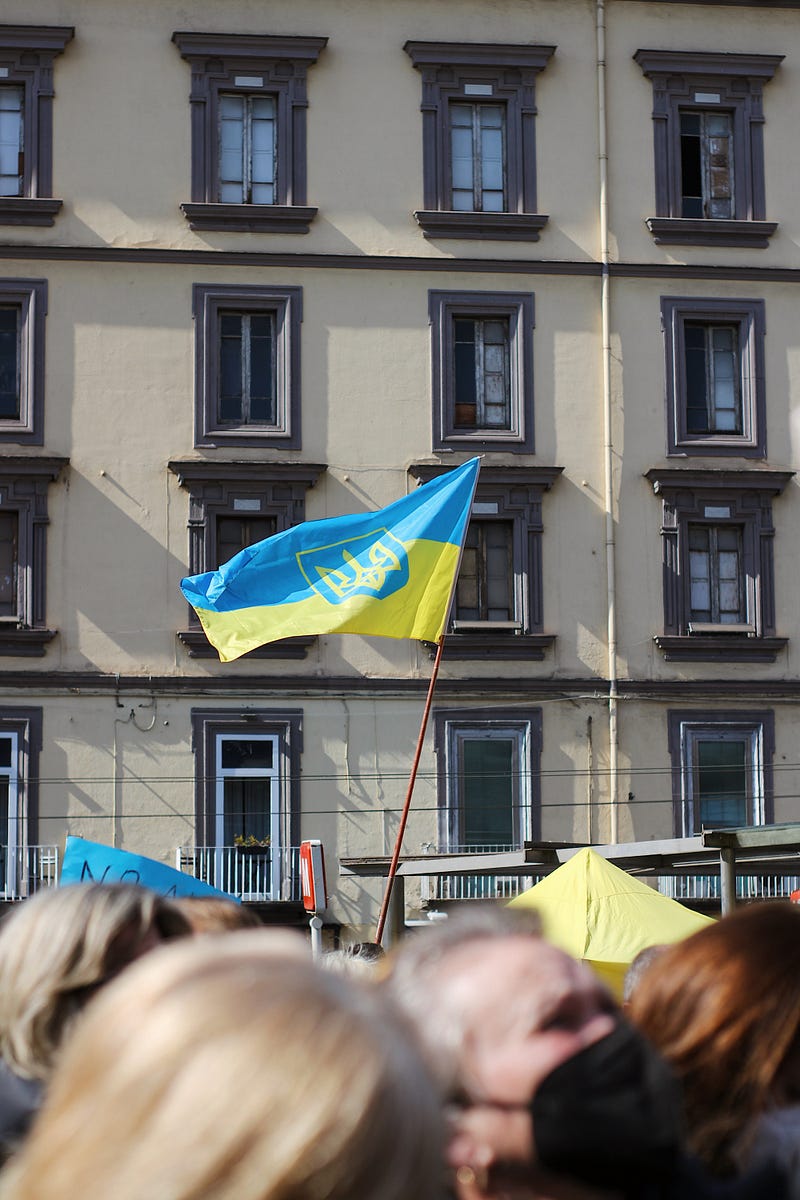
Please, take time to read this article and familiarize yourself with the links posted
Since February 24th there has been much pain in Ukraine all around. Even in my native language, it is hard to describe all the atrocities from the side of russian aggressors. Shooting civilian buildings, train stations, hospitals, schools, kindergartens, unarmed people and many more. This war will go into history as a horrible example of trespassing of many conventional rules of armed aggression. This war will also go into history as one, where online warfare made its significant contribution.
Last minutes of peace
Even before the start of military conflict, it was largely highlighted in social networks like TikTok or Instagram. Photos and videos of moving armies, citation of leaders on both sides, patriotic chants — all of that was prophetic for an upcoming doom. I strongly believe now that this preparation was important for what was coming. Many volunteers raised awareness through it, found new connections and sources of donations. The most popular of them was “Comeback Alive” — NGO that raised almost $1m in a day and $7m in crypto within a week.
Social networks activity has also changed perceptions inside countries. Despite the fact that russian invasion threat was existing for almost 8 years now, most Ukrainians were not able to believe in it. We’ve maintained social, economic and even political attachment to the northern neighbour almost until the last hours of the war. Our leaders of opinion were still bounded to their russian counterparts, making projects with them and claiming that this conflict lives only in political space, rather than physical. Yet, we’ve had a distinctive trend in our social networks to switch into Ukrainian content, support of army and volunteers. Unquestionably each day of such influence was making us more connected as a nation and I hope that it will continue after the horrors of war.
First minutes of the fight
Russia stroke amidst deep night in Ukraine at 4 am. When we’ve got a waking call at 6 am, everything was immediately clear even without questions. I remember the sudden realisation that I don’t want to open the news and social networks apps right now as from this moment there won’t be any silence in them for the upcoming future. I wasn’t wrong.
Social networks became a place of sharing pain, victories, hopes and information. Even our president’s official pages are getting content multiple times a day. The attitude of Mr Zelenskiy was already noted by many outside of the country. His brief Instagram video about his presence in Kyiv among one the hardest bombing of the capital so far has the potential to be historical.
We have other sources of inspiration except for our president. Many front line soldiers are making time to leave short comments about the situation in the cities they defend, ask for ammunition or food supply, raising our morale with some cheerful moments. This already made a huge impact on unity inside of the country as every citizen feels his/her own presence in this war through a connection in social networks.
The steps of war
There’s been some usage of online for offensive measures too. Since those first hours of the war, Ukraine has started to battle for the hearts and minds of European and Russian citizens, sharing disastrous and criminal acts of Russian soldiers, asking for diplomatic and economic help.
We’ve also fought our battle against Russian propaganda and political entities. Attacks like denial of service are not acceptable in the free world, but when you’re fighting to be a part of the free world — rules inevitably change. Ukrainian cyber army now contains 175k+ organized specialists and activists that are trying to help military forces.
There was support from outsiders too. World-known hacking organizations like Anonymous and NB65 officially declared war on Russia and its presence on the internet. Many successful strikes were delivered since.
This post was written in a consecutive manner and here we’ve reached a place of the current state of affairs in Ukraine. We are at war and though initiative seems to be on our side, there’s nothing we can tell with certainty right now. Every day we get news of cities being bombed, civilians being killed and terrorist acts being prepared or executed. All of the links in this paragraph are for events of a single day, of the 6th of March, 2022.
I’m blessed to be able to write this post to the completeness and hope that it will have some effect on people outside of the borders of my country. You can help, you can raise awareness, you can move the needle a bit further.
Aftermath, hopefully
I’d like to finish this post with words of hope. There’s an unprecedented spike in unity in our country. According to polls, 88% of Ukrainians believe in our victory, 98% believe in our military forces and 96% support our president. If we are to prevail, the whole world would see the birth of the nation. The nation perfectly aware of the importance of borders integrity, peaceful existence, unified work and compassion as something very deeply integrated into humans' souls. I’ve never believed in my country as hard as I do now, amid this destruction and terror. Many of my fellow citizens share my opinion. Let us hope together that it will be possible to implement those hopes in life and our battles would be successful no matter where they are happening: on the ground, in the air, online or in the hearts and minds of people.


