
My Child’s Life, My Child’s Death
My son is 11 years old now…
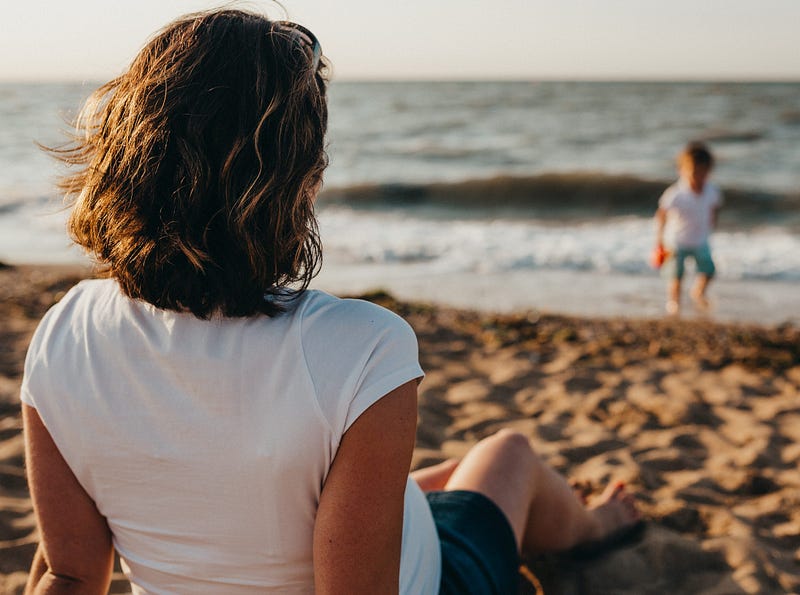
My son was born 11 years ago…He came to me 2 weeks before expected. However, everything went quite well during delivery. In fact, the whole thing only lasted 12 hours. Being this my first child, I was told that was unusual.
On that first day, I tried to breastfeed him. I was struggling to position him correctly. A nurse told me, “pity you don’t know how to do it, you do seem to have a lot of milk. What a waste.”
The person I am today would have told her to go fuck herself. Instead, the person I was then took that comment to heart. My son was only a few hours old, and I was already failing as a mother.
On the following days, I tried to adjust myself to this motherhood thing. Intellectually, I knew it was normal not to have everything together. Emotionally, I couldn’t stop feeling like a mess.
I could tell I was doing everything wrong. And I kept waiting for the consequences.
Thoughts of my son’s death wouldn’t let me be. I pictured myself approaching his crib only to find a lifeless body. And it would be my fault. It would be something I had done or had forgotten to do. Therefore, I tried not to attach myself too much to him: maybe that way, it would be less painful to deal with his death.
Still, something inside of me told me this child needed me, so I would do my best to hug him for hours at a time. I would force myself to tell him sweet nothings and smile at him. I loved this child, but these feelings terrified me. In my head, the more I let them grow, the more I would suffer when he finally died.
Now I know this was mostly the postpartum depression speaking.
I felt so lonely, just my child and I against death, the most powerful of entities.
I felt so small.
But my child didn’t die.
Somehow, despite the horrible lies my mind kept telling me, despite my overprotecting tendencies, he grew strong. He had his good share of colds (many times back to back, for fuck sakes!), the flu, lots of bumps in the head, ant-bites…but he made it!
I was stunned.
Could it be, I thought, that my child will actually live to tell the tale?
However, there was something off. He was already two years old, and he wasn’t talking. In fact, the two words he used to babble, “ma” and “mira” (Spanish for “look”), went away. He would mostly hum.
This does not mean he didn’t communicate.
He would grab me by the hand and take me to whatever it was he wanted. He would point at things or push them away.
Later on, a doctor would confirm it: he was autistic.
And I did what I always do whenever I find a new challenge: I obsessed about it.
I read everything I could about autism, I asked questions, I went to conferences…
The end result was both my husband and I found out we are autistic too.
Go figure.
In this learning process, I discovered a few scary facts: autistic people have trouble finding jobs, getting into relationships, and receiving appropriate healthcare. Also, they are prone to more accidents, and the mortality risk among individuals with autism is twice as high as the general population.
To spice things up, I found this:
“Autism itself does not affect life expectancy, however research has shown that the mortality risk among individuals with autism is twice as high as the general population, in large part due to drowning and other accidents.”
I tried to tell myself this was all probably a whole lot of exaggeration. Surely an autistic person’s life couldn’t be so difficult. But then my husband and I did a quick recap of our own lives:
- Our issues to get jobs we could perform: My husband works on his own, delivering construction material. He was never able to stand the whole “having a boss” thing, which meant he struggled to make a living. And me, getting a job as a teacher, which allows me to share my knowledge about topics I’m obsessed about, all the other sides of teaching a burden that makes me drag my feet.
- The number of accidents we had when we were kids, a whole lot of large scars to remind us of them.
- The lack of close friends.
- The constant frustrations when going to a doctor and not having him/her really listen to what is going us with us (although to be fair, it seems everybody has this complaint. Perhaps doctors need to practice the art of active listening?)
Will our son experience the same things?
And that’s not all. Our son’s autism is different from the one my husband has, from the kind I have.
He does love to speak at large, sharing his knowledge with people, holding them by the hand until he has finished his piece. And he too has a problem with authority.
In addition, he likes to wander around in dangerous places. And he has trouble expressing the exact nature of the symptoms his body experiences when he is sick.
A few years ago, I got the dreaded call from my son’s school:
“Ma’am, can you come to pick up your son? He doesn’t feel right.”
And so I went, wondering what could have happened.
Turns out, he had puked his breakfast all over the play yard, and his tummy hurt.
Now, I’m very good at handling my son’s colds. I swear I have a Master’s Degree in that shit.
But, a tummy ache and puking?
Hmmm, that was out of my area of knowledge.
Still, I tried not to panic. “A quick visit to the doctor, and that will be it,” I thought.
However, once there, the doctor touched my son’s belly in different places, his face growing serious by the moment.
“Ma’am, we are going to need to do an ultrasound.”
“Alright,” I said, trying not to panic.
The results were inconclusive, but it was very likely my son had appendicitis. He wanted him to stay for the night, just in case things got serious. It was likely my son would need surgery.
I was confused. One of my sisters had appendicitis when she was a child, and, as I recall, she was screaming out in pain.
But then I remembered some autistic people have a significantly higher pain threshold so, many times, symptoms go unreported until it is too late.
I know most people don’t consider appendicitis a dangerous diagnosis, especially when it is caught early. Still, the idea of having my child undergo surgery was terrifying.
I spent a long night at the hospital, sitting next to my child’s bed. In the end, everything was alright, just a false alarm.
It surprised me how easily my mind had gone again to the dark side: worrying about what it would be like to have the doctor come and tell me my son had died.
I wish I could tell you I have gotten rid of those thoughts. Although it is true they are mostly gone, they still come from time to time. However, they grow weaker by the day.
The reason?
My son, his strength, his determination, and stubbornness. He has plans of his own, and my fears are not going to stop him.
In the end, I have learned I can only do what all parents have to do: love my child like crazy, and get the fuck out of the way so he can be himself.
I wish I could do more. I wish I could get a guarantee that everything will forever be ok.
Such things don’t exist.
All we have is love and hope.
All we need is love and hope.


