
Stranger Things
My Child’s Future Rested on the Results of the Next MRI
In life, it’s all about your perspective
A couple of times a year, the dreaded email arrived.
Not the email asking for parent volunteers for field trips or math circle. Something worse.
“NO! Lice is goin’ around again,” said Brigit, who was in 4th grade. “I don’t want it.”
“Me neither. What would I do about my hair? I’m not cutting my hair.” Alana, a 7th grader, wore a baseball cap over her long, wavy, thick hair that, even after brushing, displayed tangles and snarls. If anyone were going to get lice, it would be her.
So far so good
I checked her hair each day, and so far, all had been well.
Saturday morning arrived, and it was time for a hair check. Alana sat on a bar stool next to our granite counter. I brushed her hair, and my heart beat faster when I pulled something out. I paused as I looked at the thing in my hand.
“What is it, Mom? Is it lice? Do I have lice? I can’t cut my hair! What are we gonna do?” said Alana, her eyes darting around the room and her breath quickening.
“Let me put this in a Ziplock. It might just be dandruff. I don’t know. Just hold on.”
Alana asked to look at it, so I handed it to her.
“I need to get a magnifying glass,” I said.
Did she faint or something worse?
When I got about five feet away, Alana said, “I’m gonna faint.”
I sprinted to her but too late. She slumped over the bar stool beside her and crashed to the floor. My heart raced. My mind screamed, “NO! NO! NO!” As I cradled her, I watched her arms and legs shake. She moaned.
I flashed back to the many times this had happened when she was young, and my heart and mind raced: Will the shaking stop? This hasn’t happened for so long? Why now? Do I need to call 911? What will happen IF she has lice?
Brigit came running. She watched Alana slumped in a mass on the floor with her arms and legs shaking.
After about a minute, Alana opened her eyes, looked at the legs of the chairs surrounding her, and said, “Why am I down here?”
I finally breathed with Alana’s question. My heart rate slowed. Then I noticed Brigit hovering nearby, her eyes wide open and her face white.
“Mom, what happened? Was that a seizure? That’s awful,” said Brigit.
“Awful? Oh, honey, that was only a minute. When Alana was a toddler, she seized for an hour. This was nothing.”
As I thought about it, I realized Brigit was too young to remember Alana’s seizure issues or the horrific news and possible diagnosis in the hospital when Alana was one year old.
But there was no way I would ever forget those years.
13 years earlier…
“This is a common problem found in 1% of pregnancies,” my doctor stated. So many things can go wrong with a pregnancy that no one talks or knows about. I don’t know if that is better or worse.
I was diagnosed with a velamentous cord insertion when I was five months pregnant with Alana. The doctor noticed my quizzical face and explained the new term.
What is the problem?
“Basically, the umbilical cord is attached improperly, which leaves part of the blood vessels from the mom to the baby exposed,” said my doctor. My heart beat faster at the explanation. “Ultrasounds are performed to ensure the baby is growing appropriately, and then the mom is induced early to avoid problems with the cord during birth.”
Pregnancy is often joyful, but stress, worries, and fears are never far behind. When I heard the diagnosis of the velamentous cord insertion, my anxiety ratcheted up. My doctor was not concerned.
“We follow the baby closely to ensure she is growing appropriately.”
After hearing that, I was more anxious because if she checked me each month, then SOMETHING could go wrong. Possible situations could arise that WOULD be bad. I asked the doctor.
“Sometimes the baby’s growth can be affected,” she said. “Sometimes the blood flow can be disrupted.”
Just breathe
I did not ask what they would do if they found out my baby was not growing or the blood flow was disrupted. I couldn’t control it. I couldn’t change it. I tried to remember that and breathe. Luckily, at each visit, the doctor said the baby seemed okay.
When I was about 37 weeks, the doctor stated that it was time to induce, and Alana came into this world on the lighter side at 5 pounds, 3 ounces, and 16 inches long. Everything else seemed okay until it wasn’t.
What just happened?
When Alana was nine months old, I sat in a rocking chair with her head resting on my shoulder. I looked at the butterfly poster on the wall and listened to the classical music playing quietly. I snuck a peek at her face and stood up in slow motion. I gently laid her down. I noticed she started to cry, turned purple, and then her face contorted. Her crying stopped, but her mouth stayed open.
I picked her up, and then, with a shuddery intact of air, she just collapsed on me like a limp rag. I thought, “What just happened?” As an overtired, stressed mom of two kids under three years of age, I doubted myself and what I saw, but my mom’s intuition knew something was not right at that moment.
Now is the time to panic
A week later, it happened again. Alana was sitting on the floor, playing with toys scattered around her. As she reached for a toy, her heavy baby head crashed to the ground like a magnet meeting its partner. She started to cry, and then I noticed the sound stopped.
I sprinted over and picked her up. Her face looked like Edvard Munch “The Scream” painting, a silent mouth frozen open. Then suddenly, she slumped over on my shoulder and with a shuddering intact of air, a breath emerged from her mouth. My heart raced and my eyes darted around the room looking for the phone. What’s going on? What’s going on? I need answers!
A panicky call to 911 followed by a visit to the ER revealed the answer.
Involuntary breath-holding spells
“She had an Involuntary Breath-Holding spell,” stated the ER doctor.
“About 4% of kids have these episodes due to underdeveloped cranial nerves.”
My eyebrows furrowed at the doctor, and I held Patrick’s hand. The doctor continued.
“Basically, fear, anger or other extreme emotions trigger the respiratory system to stop working,” he said. “But once she passes out due to lack of oxygen, the respiratory system automatically starts again. There is no long-term damage, but it is scary to watch.”
Understatement of the century
I nodded my head at his understatement of the century. I HATE to be high maintenance, but I like my oxygen and, additionally, find it unsettling to watch my child pass out because her respiratory system has said, “Oops! Let’s turn off now. No more air for you.” That scenario was my worst nightmare. I held Alana tightly and tried to keep the tears inside.
The doctor gave us discharge instructions explaining the issue, and he tried to reassure us that it would all be okay. But it wasn’t okay. Alana continued to experience breath-holding episodes whenever she was scared or angry. Horrific every time, and it never got easier. Each time after it happened, I “shoulded” myself to death: “I should not have changed her diapers,” “I should not have let her fall,” “I should not have looked away for one microsecond.” Guilt and remorse filled me after every episode.
At that moment, the extent of her brain issues remained unknown, and I could not have imagined how horrific her spells would become and the impact they would have on everyone in the family.
Three months later
My sister, Jayne, and our friends, Marnie and David, sat with us as we watched the Green Bay Packers and Dallas Cowboys play football on Christmas Eve. Shannon, Alana’s older sister who was four years old, sat in the kitchen at her pink plastic PlaySkool table, coloring in her My Little Pony coloring book. Occasionally, she stopped coloring to sip her apple juice or eat her plain elbow pasta with butter.
I sprawled on our dark green area rug in our family room, trying to keep Alana within arm’s reach while chatting and enjoying our guests. Alana played with her trains and track. Occasionally, I crawled on my hands and knees to grab a train and push it around the track, trying to keep her entertained and safe on the floor. Vigilance was our constant around the house.
“Do you want some crackers and cheese?” I said to my sister, pointing at the tray near me.
“Ah, yes, but that means I need another beer,” she said.
“Coming right up,” said Patrick. “Anyone else?” He raised his eyebrows at me and at Marnie and David.
We three shook our heads. Patrick chugged his beer and set the empty bottle by the sink.
Sign language for babies
“Mama?” Alana raised her little hand to her mouth and signed, “eat.” She spoke only a few words but had a solid set of signs to communicate basic needs, like eat, drink, and airplane.
“Eat? Do you want something to eat? How about a cracker? Cracker,” I repeated in my Speech Pathologist mode as I held the cracker up to my mouth.
Alana crawled over and pulled herself up. I grabbed one hand and put a cracker in her other hand. She nibbled while she leaned against the ottoman in front of the oversized chair where Marnie and David sat. Alana’s easy grin and vivid blue eyes endeared her to anyone she met.
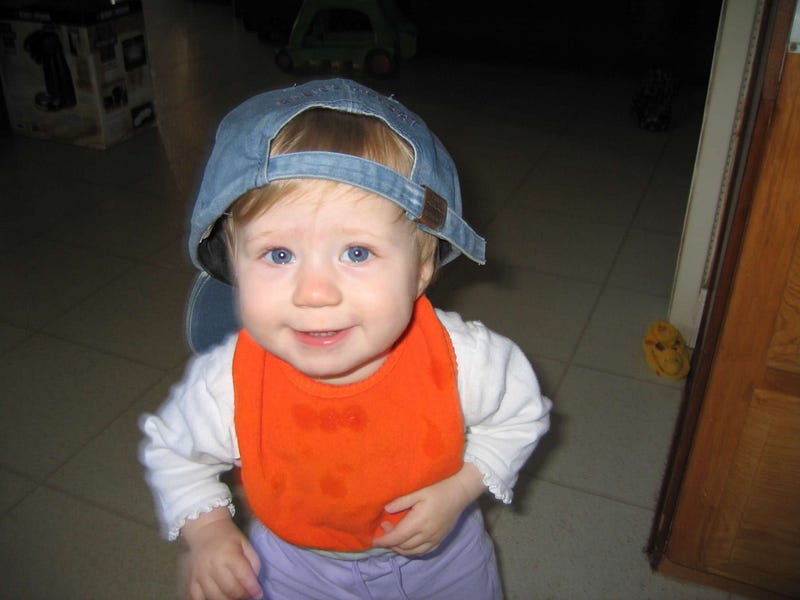
This is bad!
“Hi Alana,” sang Marnie. “Is the cracker good? Yum, yum.” Marnie rubbed her stomach and smiled.
Alana giggled and tried to toddle closer but started to fall. I reached for her but missed as her head hit the carpet.
Involuntarily, I held my breath as I scooted over and looked at her, hoping she would smile and get up.
“Shit!” I said as I saw her face freeze into a silent scream. Her skin turned purple, and then she passed out.
Patrick rushed over, and everyone crowded around. But then something strange began.
As her breath returned, instead of laying limp on the floor, her limbs started shaking. Her eyes stared at the ceiling, her soul locked behind the shell of the shaking.
Call the paramedics!
“What’s going on?” I screamed. “Oh, my god. She’s having a seizure!” I turned her on her left side. Every muscle in her body was fully contracted, rock hard.
“Paramedics,” said Patrick into the phone. “She is 1-years old and is having a seizure.”’
“Oh, my god, oh my god, Alana, come back to us,” I said as I watched her limbs shake. No glimpses of recognition flashed on her face. My heart raced and my breathing came in irregular shakes and gasps. I cried and touched her tiny body as she lay shaking and unresponsive on our worn carpet.
“Where are the paramedics? When will they be here? Alana!? Oh, my god,” I panicked, thinking they would never come and why was this happening and please, please be okay, Alana.
Though it felt like hours, but was only minutes, the paramedics arrived, tended to her, and placed her in the ambulance.
I looked back at our house as I got ready to enter the ambulance. I saw Shannon standing with my sister outside the front door. I was so fixated on Alana that I hadn’t hugged or said goodbye to her. I exhaled loudly and felt my shoulders crumble. I waved at her. Her big blue eyes opened wide, and her mouth turned down. Big, scared tears rolled down her face. Even though Shannon was brilliant, no three-year-old could process what was happening. None of us understood.
Tears, worries, and questions filled my brain as I held Alana’s little hand and Patrick stroked her fine, blonde curls in the ambulance on the way to Children’s Hospital. She was still seizing but at least she was with the professionals. Once at the hospital, the doctors sedated her and then performed an MRI.
MRI results overheard
When an MRI is performed on a television program, the doctor says, “Let’s talk about the results in my office.” The family sits down, and the doctor gently speaks the horrific words. In our case, Patrick and I sat in the hallway in metal folding chairs and watched the ER doctor walk out of the room, stop next to another doctor, and say, “Patient is a 1-year-old female with areas of brain damage bilaterally.”
All the oxygen left the room. My stomach lurched, and I gasped loudly. As someone trained to work with kids with Special Needs, I knew the consequences of the words “brain damage.” I started crying, and the doctor looked at us, like, “Oh shit. I didn’t realize the parents were sitting right there. My bad.”
I hate this room!
He led us to a quiet room. A box of Kleenex sat in the middle of a table. The room gave off the terrible scent of nightmarish news. How many other people had heard bad news here? I hated this room! I hated this ER doctor!
Tears rolled down Patrick’s face. I had never seen him cry before, which brought a fresh round of powerful tears. I grabbed his hand.
I don’t remember anything the doctor told us except that Alana was being admitted to the hospital and additional tests would be run. A few minutes later, he led us back to Alana, who was still unconscious.
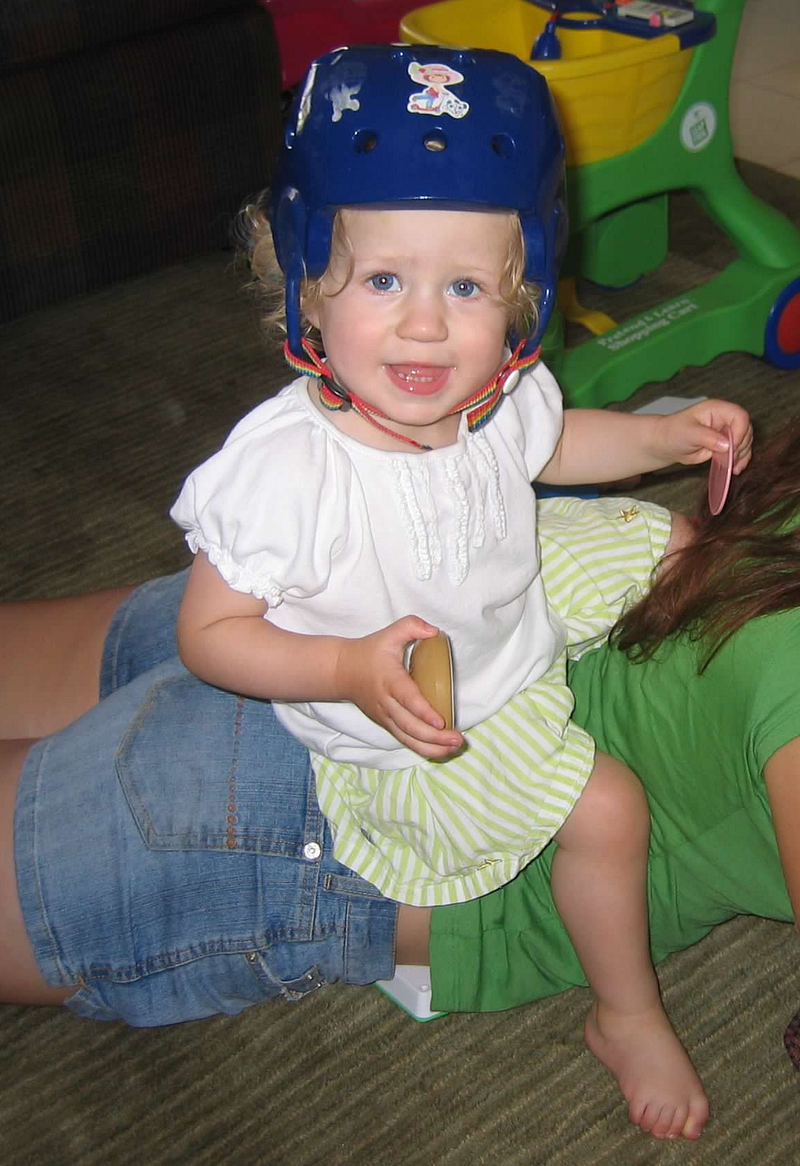
Worst Christmas ever
Patrick and I followed the nurse who pushed Alana’s gurney to her hospital room. Patrick and I took turns holding our little one-year-old baby, not really sleeping at all that Christmas Eve night. She never fully awoke, and I wondered if this was how she would be for the rest of her life. I dripped tears on her little body.
Christmas morning arrived and the on-call pediatrician walked into the hospital room, with his clean white coat, sparkling stethoscope, and hands full of charts. He said he wanted to talk about the MRI.
“Looking at the results, the neurologist feels Alana has a degenerative neurological disease,” he said calmly.
I inhaled quickly and audibly and burst into tears. The bright lights shone down from the ceiling, highlighting his horrific words.
I held Alana tighter and thought, “No, no, no, no!” My husband grabbed my hands and cried with me.
The doctor said they would run additional tests looking for degenerative diseases, but the most telling test would be another MRI in six months. If her brain improves, then the damage was from the seizure, but if the damage is worse, then that would confirm a degenerative disease. If the damage stayed the same, then perhaps it happened during pregnancy.
I looked at Alana and thought, Is this all we get? She will never develop beyond this point but will be a one-year-old who will now regress? She will lose everything?
I couldn’t talk. I couldn’t process the news. I just wanted everything to be okay. It was too much.
The next hurdle would be the six-month MRI. But before then, our non-stop job involved keeping her alive.
Anxiety and fear served all day long
A thick layer of anxiety hovered over every activity, and every minute, Alana was awake. Due to her delayed motor skills, someone, either Patrick, myself, or the new nanny we hired, kept a hand on Alana to prevent her from falling and suffering a breath-holding spell or, worse, a seizure. The new worry about seizures blanketed our life and my ability to let down my guard for even one second to go to the bathroom.
Despite our best efforts, Alana fell or got upset, or something happened, and she had a breath-holding spell and a seizure. We took the ambulance so often to Children’s Hospital that we thought we should get a frequent rider card.
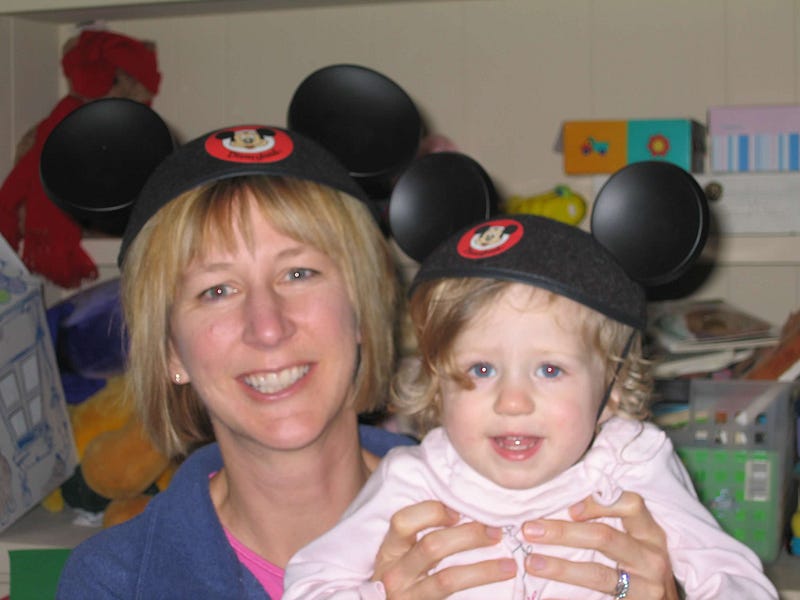
Her future depends on this MRI
Finally, the six-month MRI arrived. I couldn’t eat breakfast. My underarms felt hot and damp. This test would reveal if Alana had a future or had a degenerative disease that would destroy her brain, resulting in her no longer being able to walk, talk, or eat until she died.
Patrick and I kissed her, released our grip on her hands, and then watched her fade down the hallway, her small body swallowed in the large gurney.
The smell of bleach filled the air. Random beeps from monitors floated down the hallway. Footsteps raced toward us and then away. We cried, paced, and did everything we could to distract ourselves, but the weight of the results made everything impossible.
Finally, the hour was up, the MRI was completed, and the gurney delivered her tiny body to us. Her eyelids fluttered. She moaned. I reached for her. She reached for me. I brushed her hair back from her forehead and pushed a tiny curl behind her ear.
It must be good news. She’s fine. She’s fine. She’s fine. I willed the results I wanted to come. If I wished hard enough, it would come true, right?
Finally, the doctor appeared with the results.
“The brain damage is still there but has not progressed,” she said. “That means it is probably static brain damage perhaps occurring during pregnancy.”
Static brain damage!
We hugged each other. We kissed Alana. I wanted to kiss the doctor but controlled myself. Alana’s brain was not going to waste away! Some unknown disease would not be eating her brain. She would have a chance!
I never thought I would be SO relieved to hear a doctor tell me my daughter displayed static brain damage, but life is all about your perspective.
Is it lice?
A moan from Alana brought me back to our house and Alana slumped on the floor.
Brigit’s eyes remained fixed on Alana.
I slowly checked Alana’s body, looking for I don’t know what, but I needed to do something. Alana looked up and asked, “Do I have lice?” I smiled and exhaled the breath I was holding.
“I don’t know yet, but I’m sorry I couldn’t get to you before you fainted. Remember, you’re supposed to sit down if you feel like you will faint.”
“I was sitting down, mom.”
Oh, yes. I saw the problem. As a concrete thinker, she was right. She was sitting on a bar stool. Luckily, from that point on, we told her to sit on the ground if she felt faint.
I helped Alana to the couch.
A few minutes later, Brigit sat next to us. Her brows furrowed.
Brigit studied Alana and then said, “What if that happens when we are home alone? What do I do?”
Sometimes my stomach hurt with the weight of my kids’ worries.
“Oh, honey, you can call 911, any time if you are alone and something seems wrong,” I said. I reassured Brigit to have the paramedics come, even if Alana was okay when they arrived.
After settling Alana, I walked upstairs and found the magnifying glass. I studied the potentially horrific thing in the Ziplock.
“Good news, Alana. It is dandruff!”
Everyone cheered and pumped their fists in the air.
It’s all about your perspective.
Amy Strommer lives in San Diego where she dreams about writing humor between naps, having a clean house, and reading the 17 books stacked on her nightstand. Find her on Twitter @AmyStrommer and AmyStrommer.com.


