
Headline Hacks
My Bulletproof, 5-Step Process to Creating Alluring Headlines
A look at my latest data will help you get more readers

It’s a terrible habit.
When I head out for a wedding or a special dinner, I wash my hair and blow-dry. Carefully apply my make up. Curl my lashes. I make my husband wait patiently while I parade around our bedroom in different outfits. Changing cardigans, coats, stockings, and scarves.
Ten minutes later than we’re meant to leave, I frantically dig into dark cupboards for a pair of heels.
Damn, where is that silver pair with the glitter sole?
Urgh, it’s too late, let’s just grab these beige ones and go. It looks OK, maybe not the best choice, but never mind. Traffic is banking up. We’re late!
I know, I know, first world problems. Stick with me.
This is also the same problem I used to have with headlines.
I’d slave over an article for hours. Researching. Spewing out my first draft. Editing. Bleeding over my keyboard. Until finally I’m ready to publish. Phew!
I’m so exhausted by this article that I quickly whip up a headline and hit “Submit.” I want it off my draft list ASAP.
It’s a shame. And I’ve finally realized it:
I’ve got to make more effort with headlines.
So, lately, I’ve given my headlines more TLC. Here’s the five-step process I use:
- Write the article.
- Brainstorm a list of at least five headlines.
- Run them through a headline analyzer.
- Use intuition.
- Recycle headlines.
1. Write the Article
Some writers write their headlines first. For instance, Tom Kuegler tells us headlines pop up in his head while he’s chomping on fried Philippine bananas and browsing Facebook updates.
I can see how this would inspire Tom and help him focus his thoughts and structure his writing.
For me, when I have a topic in mind, I usually write the article before the headline. I may quickly write a temporary headline that captures the gist of what I want the article to be about, but it rarely gets used.
That’s because, although I may have an idea of what I want to write, I don’t always have a structure initially. I go with the flow, and the structure forms itself.
By not writing my headline first, I can let my creativity flow.
Of course, the danger in this is going off on a tangent. But second and third drafts help me tighten, polish, and slice.
Write the article.
2. Brainstorm a List of at Least Five Headlines
After I’ve finished my article, I come up with at least five headlines. It can be tempting to come up with one you think is incredible. But please, please never stop there. There’s more gold where that came from if you mine deep enough and long enough.
I spend a couple of minutes creating headlines. Treat it like your first draft. Write uninhibited, never judging anything that flows from your fingers.
Then, when you get stuck, write a few more:
- Use proven formulas.
- Play with power words.
- Think about what your reader wants, needs, feels, and believes.
Let’s briefly drill into these a little more.
Use proven formulas
We don’t have to start from scratch. Analyze the headlines of great Medium writers, and you’ll find formulas you can tweak.
Tom Kuegler used this headline: How To Become Ridiculously Self-Aware In 20 Minutes.
Why it works:
- Teaches something
- Uses an unusual, unexpected word, “ridiculously”
- We’re busy—he promises we’ll learn in the time it takes to line up for coffee
Headline template:
How To
Shaunta Grimes used this headline: Five Steps to Changing Your Life (they boil down to one thing).
Why it works:
- A practical process we can follow
- Common struggle
- A promise of one thing to work on, digestible, doesn’t overwhelm
Headline template:
Shannon Ashley used this headline: It’s Time To Quit My Job.
Why it works:
- Relatable
- It’s a big deal
- Creates anticipation for an entertaining story
Headline template:
It’s Time to
Want a few more click-worthy headline templates? You’ll find them in 24 Headline Templates That Lead to Magnetic Titles.
Play with powerful words
Words are powerful. They give your headlines feeling. Flavor. Negative or positive sentiment. Instant click. Here are a few words to infuse flavor and feeling into your headlines:
Curiosity-related words
- Astonishing
- Eye-opening
- Insider
Greed-related words
- Bargain
- Craving
- Cheap
Surprise-related words
- Lost for words
- Shocking
- Speechless
Pain-related words
- Obstacles
- Pain points
- Stumbling blocks
Insight-related words
- Have you heard
- Insider
- Little-known
Check out the ultimate list of 320 powerful words you can use in your headline (including real headline examples).
Think more about your reader
You can use proven formulas. But what’s even more powerful and innovative is to create headlines from thinking about the mass desires of your reader.
We don’t need to create these; they already exist in the hearts of millions of people. Desires rarely change over generations, such as the desire to look good, feel loved, or impress others.
“People don’t change: only the direction of their desires do. They cannot be made to want anything, nor is it necessary to create want. All that is necessary is to be able to channel those wants into proper products that offer legitimate satisfaction for them.”—Gene Schwartz, Legendary Copywriter
Schwartz emphasizes two ways to create innovative headlines:
- Identify the mass desire of your reader.
- Decide how aware your reader is of your topic.
Find out about these in more detail in How Legendary Copywriter Gene Schwartz Wrote Bestelling Headlines.
Brainstorm, and if you need a little help, use proven formulas, play with power words, and think about your reader. At first, it may take you a while. But as you keep running through this process, you’ll learn what type of headlines rank well.
And you’ll find it easier and faster to come up with at least five great headlines for your next article.
3. Run Your Headlines Through a Headline Analyzer
Now you’ve got your headlines, take each one and run them through a free headline analyzer such as CoSchedule’s Headline Analyzer or Marketing Institute Headline Analyzer.
What the heck is a headline analyzer?
Good question. It’s a handy tool that scores your headlines based on how emotionally appealing they may be to your reader.
You see, people act based on emotions.
Research scholar Dr. Hakim Chishti studied the roots of languages such as Hebrew, Arabic, Persian, Aramaic, Urdu, and more. He discovered that certain tones in words produce the same emotional reactions. So using emotional language, we can stir up consistently predictable responses from our reader.
Based on this discovery, Chisti developed a tool, the Emotional Marketing Value Headline Analyzer. It checks headlines for three types of emotional words:
- Empathetic words: Connect and bring out strong positive emotional reactions.
- Spiritual words: Have a strong potential to influence and connect deeply with people.
- Intellectual words: Helpful when you’re presenting info that requires reasoning or careful evaluation.
Marketing software business CoSchedule created the CoSchedule Headline Analyzer by incorporating Christi’s tool into their own—and enhanced it to consider other aspects such as traffic, shares, word balance, and character length.
Let me show you how this works:
Here’s my brainstorm of 16 headlines for my article about 320 words for headlines:
- 320 Headline words that will speak to your reader 71 (subhead idea: including 32 real headline examples)
- 320 Words to transform your headlines from blah to brilliant 66
- 320 Words to woo your reader with your headline 67
- The ultimate list of headline words (320 to be exact) 72
- Stop agonizing over your headlines. Here are 320 powerful words to help you. 67
- 320 Words to transform your headlines from blah to brilliant 66
- These 320 words will magnetize readers to your headline 65
- Use these 320 words to capture your reader’s attention 60
- 320 Words to create irresistible headlines 64
- 320 Powerful words to create irresistible headlines 64
- 320 Words to snare your reader’s attention 59
- 20 Trigger words for headlines that ooze charm 64
- Here are 320 powerful words for headlines that ooze charm 64
- These 320 words will magnetize readers to your headline 65
- The truth about headlines (and 320 words to write alluring headlines) 60
- 320 words to write effortless headlines that woo readers 62
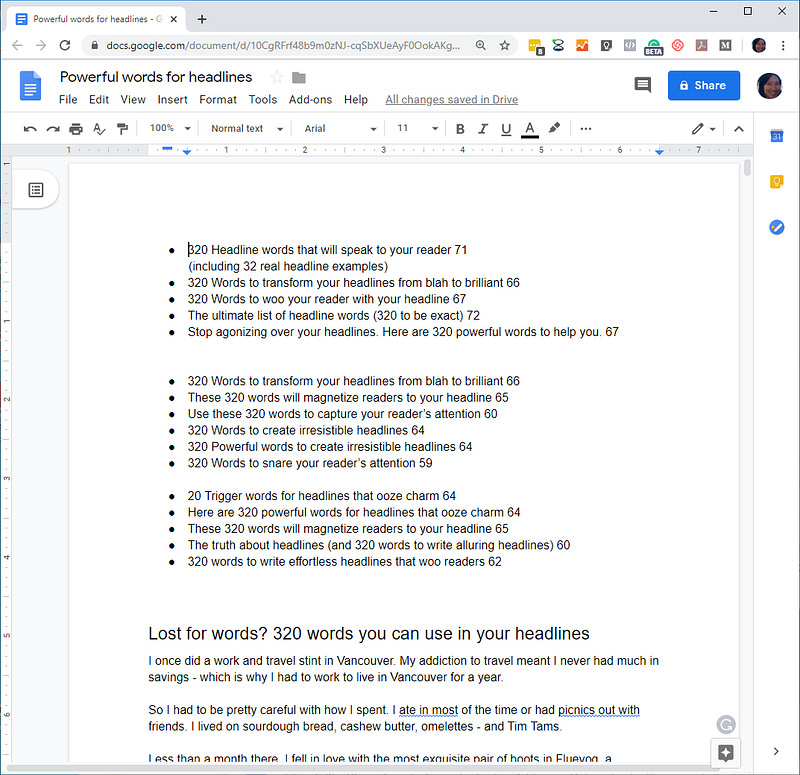
You’ll see numbers next to each headline. Those are the CoSchedule rankings from running each headline through the analyzer:
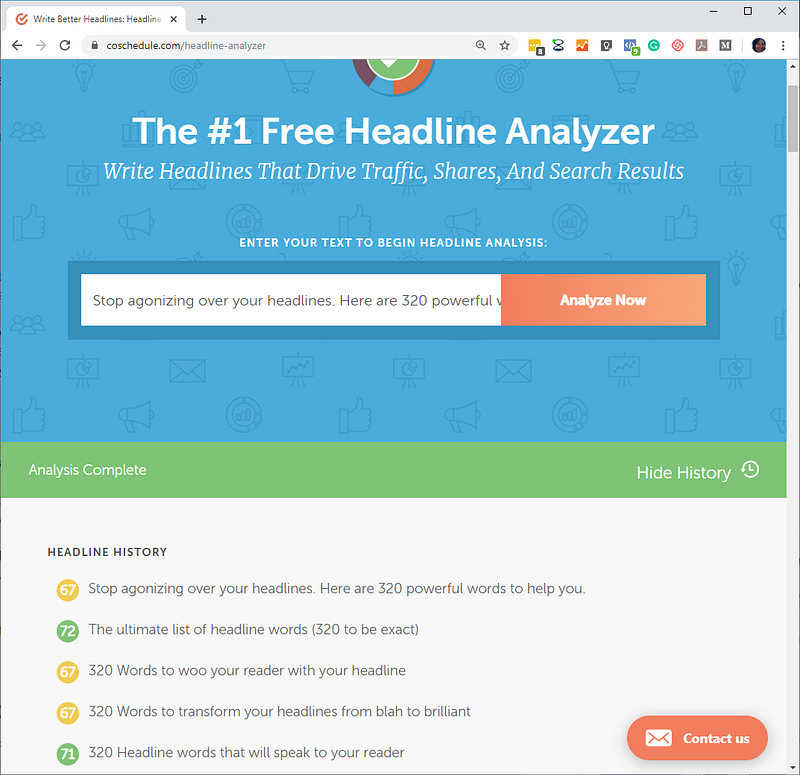
I use CoSchedule Headline Analyzer mostly. And if I’m really curious, or having a hard time making a decision, I’ll sometimes use the Advanced Headline Marketing Analyzer also (although the CoSchedule Headline Analyzer incorporates the algorithm used in the Advanced Headline Marketing Analyzer).
4. Use Intuition
Technology is great, but I believe writing is an art, and we each have great intuition we need to call on more often.
So although I use the analyzers to help me filter out headlines, I rely on intuition based on what has worked for myself and others in the past. And I take care to make sure my content backs up my headline.
If available, get a second pair of eyes to run through your top five. It’s so helpful when an editor, colleague, or friend gives feedback.
For instance, in the example used for the 320 words article, I chose “The ultimate list of headline words: 320 to be exact” to start with as it got a ranking of 72. But I was open to a few other headlines.
I’m fortunate enough to work with an editor who is active in helping me make tweaks—which includes deciding on headlines. So I sent this list to help the editor make a decision:
- 320 Headline words that will speak to your reader 71 (including 32 real headline examples)
- 320 Words to woo your reader with your headline 67
- The ultimate list of headline words (320 to be exact) 72
- Stop agonizing over your headlines. Here are 320 powerful words to help you. 67
- These 320 words will magnetize readers to your headline 65
The final headline was a combination: The Ultimate List of 320 Powerful Words to Use in Your Headlines.
So you see, rankings are great—especially when combined with intuition and another set of eyes.
So far I’ve shared four parts of my headline selection process:
- Write the article.
- Brainstorm a list of at least five headlines.
- Run them through a headline analyzer.
- Use intuition.
And the fifth way I choose headlines:
5. Recycle Headlines
This process is valuable because it gives you a wonderful list of headlines you can use in a few ways.
For instance, you could use a headline that wasn’t chosen as a subheading.
Or say, after a few weeks, you don’t get many views on your article and realize your headline just didn’t gel with your readers. Yet your content was incredible—you are convinced it will be helpful to readers if they’d only get past your headline.
You see, although your chosen headline seems the best option, there’s never any guarantee. Writing is more art than science. And views depend on so many other factors; a headline that may work for one writer may not work for another. A headline that may not work for you the first time, may work better if tweaked or swapped out.
Well, what you can do is return to this list and create a different headline based on all that analysis you did at the start.
Make changes to the article if you don’t want it to be exactly like the first one, and publish it as a new article.
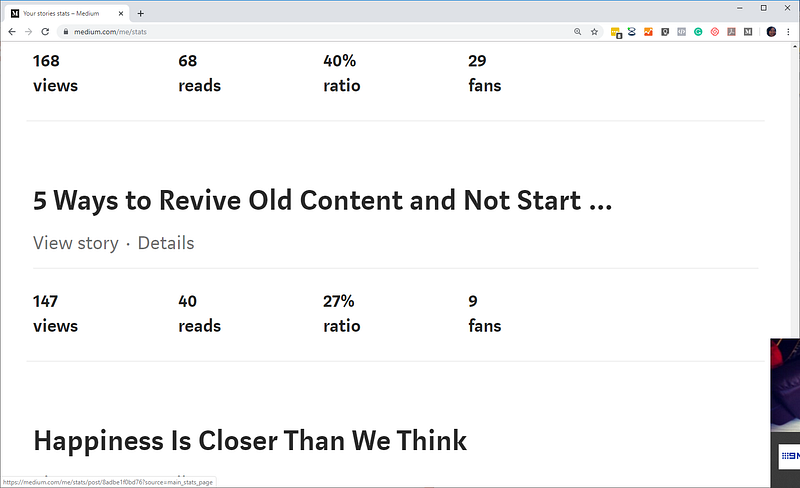
For instance, my first article “5 Ways to Revive Old Content and Not Start From Scratch” didn’t get as many views or claps as I had expected. But I was convinced the content would give writers an important way to get more mileage out of their articles. I needed to improve the headline.
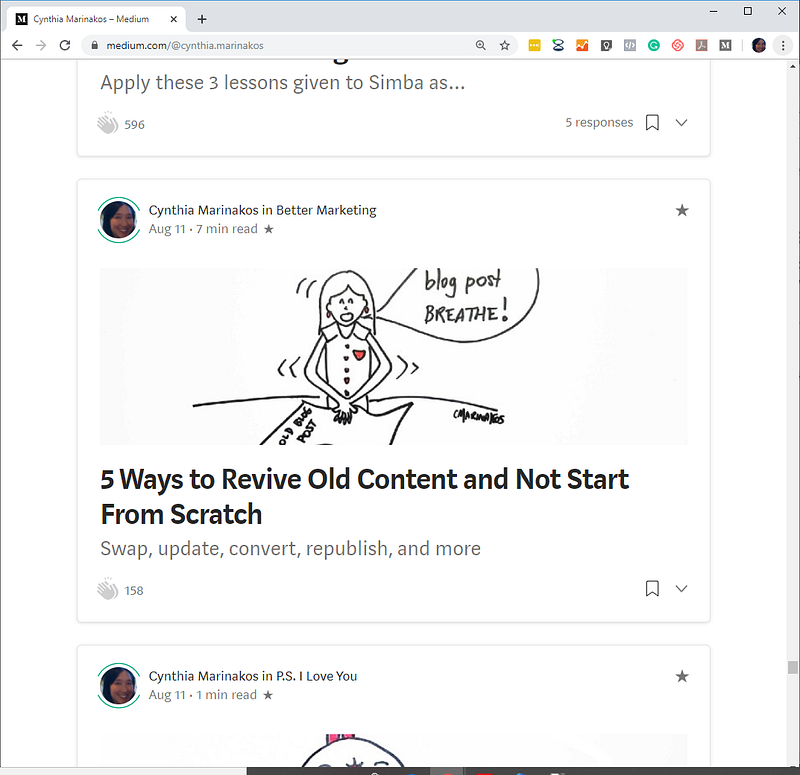
So two months later, I ditched the listicle headline and thought deeply about what writers really want. Good writers are givers. They care about readers and genuinely want to be helpful.
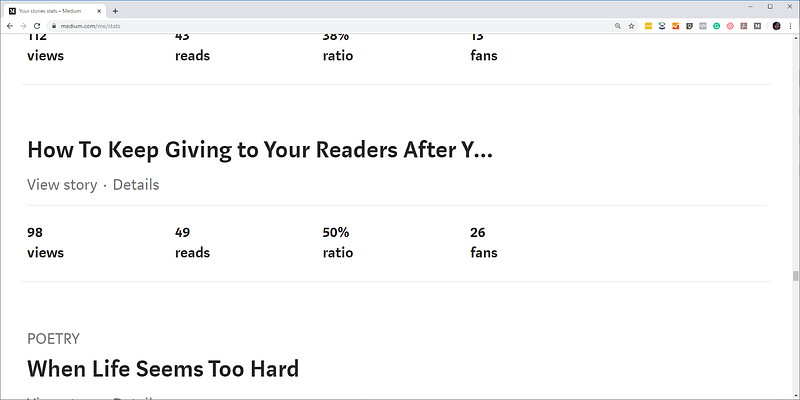
With this in mind, I revived the article with a new headline: “How To Keep Giving to Your Readers After You’ve Hit Publish.” I also tweaked the content.
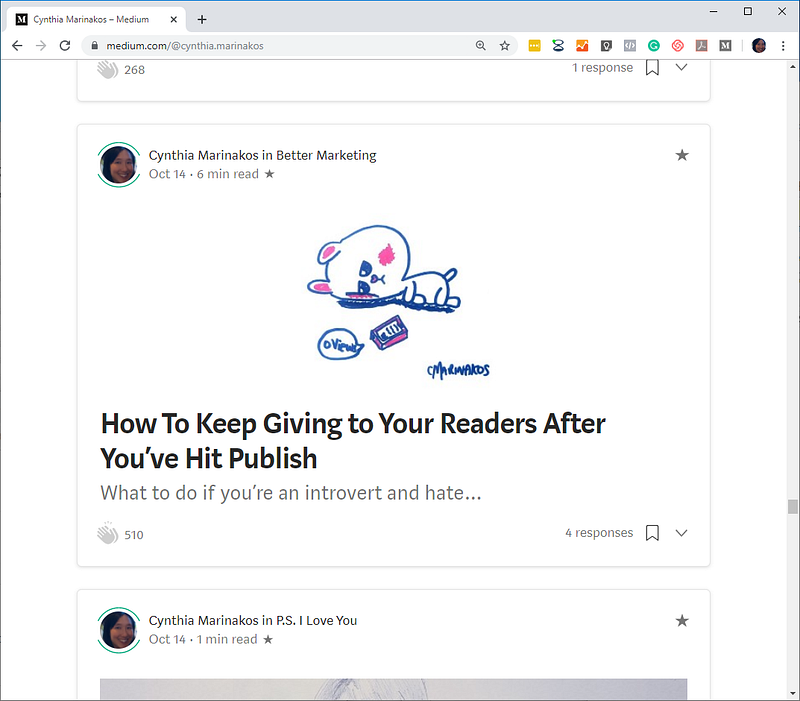
What I found was interesting—though the numbers aren’t huge, they still give me great insight:
- It got nine more reads
- More than three times more claps
- Read ratio was much higher
- Gained almost four times more fans
Recycle your headlines.
Summary
Like taking meticulous care in getting yourself ready for a special event, then spoiling your efforts by grabbing the nearest pair of shoes in a hurry, your headline deserves more effort.
My process for writing headlines:
- Write the article.
- Brainstorm a list of at least five headlines.
- Run them through a headline analyzer.
- Use intuition.
- Recycle headlines.
Like Tom, who gained inspiration by chomping away on his fried bananas, there are many ways to conjure great headlines.
This five-step process works for me for now, but I’m sure I’ll find ways to improve this process.
I hope it kickstarts your efforts. Find what works for you and keep testing.


