
Cognition | Psychology | Health
My Brain, My Eyes, and Cataract Surgery
a whole lotta learnin’ goin’ on
[updated May 2020]

It has been one year since I had cataract surgery and so much has happened in this time with the communications between my brain and my eyes that I felt the need to write about it — I hope you all find it as intriguing as I did.
I know that eyes and brains are intimately hooked up. I took a course in neuropsychology in graduate school and I’m sure I learned about brains and vision in high school and college.
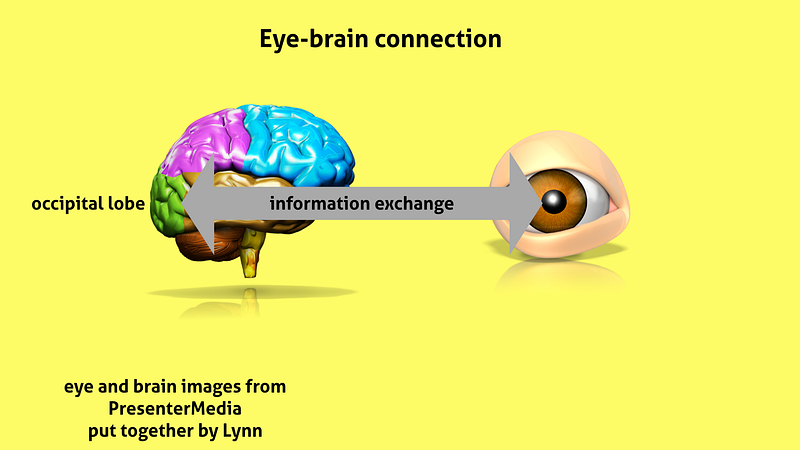
I know the basics of how my brain and my eyes work together. But, knowing all this and going through a relearning process post-cataract surgery are two different phenomena.
My brain was not ready for the onslaught of new information that it was getting.
I contemplate the workings of my brain a lot — so I found it fascinating to be aware of what was going on.
A bit of my eye background….I am astigmatic — oops change that — I WAS astigmatic. I am also very far-sighted. At one forgotten point in my life, my astigmatism got bad enough that I needed glasses most all of the time because the astigmatism issues were fixable with glasses.
At another now forgotten point in life, my driver’s license got marked with “needs corrective lenses” which didn’t surprise me because I was wearing glasses every waking minute.
I lived with it and tried contact lenses, but most of the time they didn’t work or they fell out, or they were annoying — but I liked the idea of not having glasses on so I kept trying different contacts and finally gave up on those because the annoyance factor won out.
Then I developed cataracts which happens to many as we age. Of course, the cataracts got worse — as they are prone to do — and those, along with my astigmatism made it very difficult to drive at night. I’m a good driver and I did not wish to create problems for me or anyone else so I stopped driving at night and decided it was time for cataract surgery.
[That in itself is yet another issue: why insurers balk at cataract surgery. It baffles me.]
Back to my brain and eyes….
Over years of driving back and forth across the country, driving day and night in snow, sleet, rain, and all sorts of weather and driving conditions, my brain learned how to deal with changes in light, changes in weather, and most often a quick change in any of these things. My brain and eyes were perfectly in sync.
For example, if I got to a tunnel my brain knew that it was going to take a nanosecond to adapt from light to dark and it knew how to do that, and I knew it knew how to do that and we were safe while going into tunnels. Ditto when skiing in the bright sun bouncing off the snow and then going into a ski lodge — my brain and eyes figured it out and it never was an issue.
Then came the cataract surgery — YEA — and pre-surgery, I decided that the lens that also corrected astigmatism would be best for me and my eyes!
More YEA!
My weaker eye [left] got done first, and the subsequent difference between my left and right was very discombobulating — even with my now one lens glasses on for the right eye — it was no fun to do much of anything. Two weeks later I had the right eye done and suddenly both eyes were perfect — and balanced.
I was binocular, bionic — I could see. It was a fascinating experience!
I was in constant amazement that I could see very far, further than I remembered I used to be able to do. It was one of those “I forgot how good my eyes used to be because I got so used to them not being too good” kind of moment!
Every. Time. I. Looked. Anywhere.
Then I started driving. It was weird, especially as I have been driving forever! This is when I really noticed that my brain had some work to do and I was fascinated by the interchanges between my eyes, my conscious brain, and my subconscious brain. They were putting together a new reality.
At first, I only did daytime driving because I quickly recognized that I needed time for the brain and eyes to adjust to this new norm. It was pretty quick learning as I was driving on very familiar roads and did not make any “road trips.”
Then came a time where I drove through a tunnel. A very short tunnel, one I have been through a lot — but still — a tunnel. The brain went: “Get ready for dark. Get ready for dark adaptation.” — followed instantaneously by: “Wow — nothing happened, everything is fine.”
By the third or fourth time through that tunnel that I realized there was no longer any “discussion” going on between my eyes and my brain about that situation.
It was when I started driving distances, and at night — that I realized the brain and eyes were still trying to figure something out. The first night-time drive, where I was also in traffic, with headlights coming at me and behind me — the brain was like “Wow the eyes can see everything again. I have nothing to do.” No issues at all. And my subconscious brain registered that fact.
The conscious brain, though, was still asking itself questions and waiting for answers!
Because I live in the Northwest we have rain — not a lot when I was again driving but enough with some added oddball Spring weather — like thunderstorms, drizzle, weather that puts you on alert that traffic, lighting, and road conditions might change — and the brain and eyes were coordinating easily about this — the conscious brain was still going “We got to get ready for this” but it was then an immediate “Nope, we don’t have to do anything.”
After weeks of driving under different circumstances, my conscious brain began to relax and not be in the “we have to get ready for something” mode anymore.
It had had many many years of dealing with astigmatism, eyeglasses, and the issues that came with both — and now it no longer had those issues to contend with and was finally exiting learning mode.
Over the past Spring, Summer, Fall and now Winter, my eyes, brain and I have driven in many different conditions. Fog, heavy rain, heavy traffic, highway traffic, traffic circles, road construction, places I had never been to, etc.
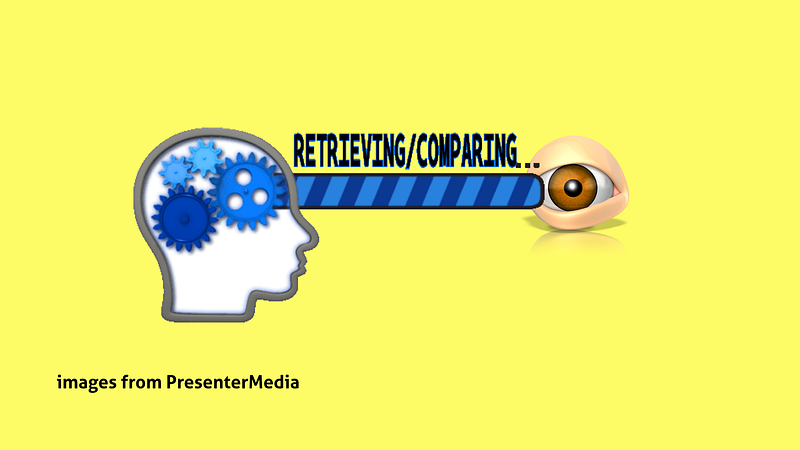
My brain had obviously been going back and retrieving what it used to know from pre-glasses and early-glasses learnings — those memories were still there in spite of years of inaction or not needing to be accessed.
Most of the time we don’t pay attention to the connection between our eyes and brain. I certainly never did. And then: WOW did I pay attention!!
It has been fun! It has certainly has been interesting! And — it has been very educational!
Your brain can be your best friend, best asset, best co-worker, etc. Take care of it so it can continue to do what it does so well!!
And now, in May, I realized another brain eye learning — balance. But not any balance, that’s always been pretty good — cataracts or not — it was my balance in one yoga position: Warrior 1!
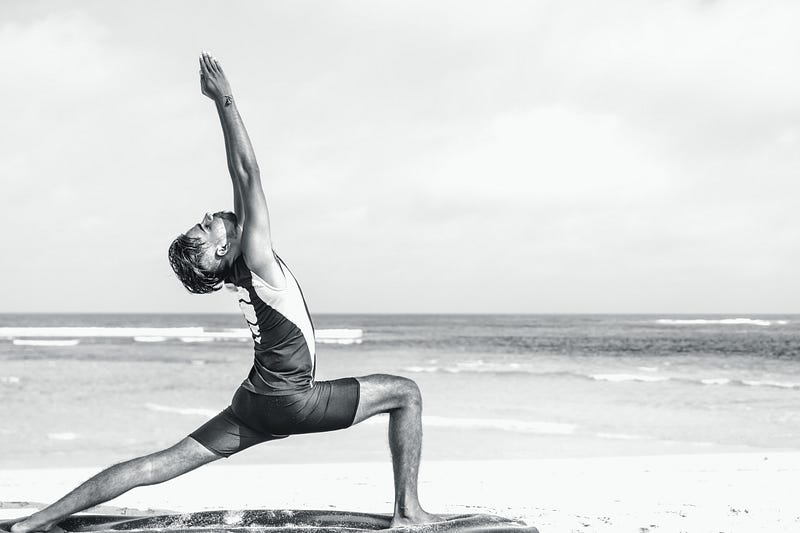
I do a lot of yoga, and have done so for decades — always with glasses off — and I knew I had to carefully get myself into the Warrior 1 position. Why that one pose offered a balance challenge I don’t know — but it did. Now it doesn’t and I had not realized it until recently…..I can move into that pose without doing the momentary pause to make sure I am okay.
I am sure there will be more brain-eye learning[s] going on and if I notice any further “learnings” I will add them.


