
My Attacker Taught Me a Crucial Lesson About Fear
The first step to a life of courage.
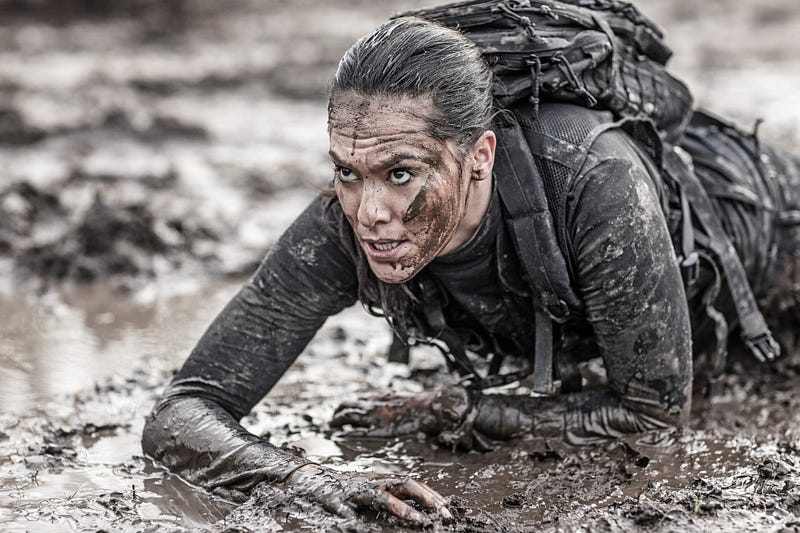
At school, I was terrified of confrontation. Even when bullies held me down and beat me with a cricket bat, I never fought back.
Yet I went on to become a police officer — one of the most confrontational jobs you could imagine. To get from there to here required painstaking work. I needed to understand bravery and how I could tap into it. I hope you can benefit from the things I learned along the way.
My first time tackling an armed assailant.
My colleague and I were called to a man smashing up his apartment. The adrenaline instantly engulfed me. I’d been in several fight situations in my career, but this one had the potential to get out of control. We already knew he was aggressive because he was smashing up his belongings. He also had access to any weapon in his house.
I hoped we could calm him down without a fight because otherwise, the situation would turn ugly.
When we arrived, a caretaker for the building met with us.
“He’s through there,” he said, pointing to two double doors leading into a back garden. I was glad he was out of the apartment, but I had no idea where he was in the garden or if he had armed himself.
As we walked cautiously into the garden, I saw him in the far corner. He was kneeling on the floor and tapping a hammer against his hand. When he saw us, he started growling like a caged lion.
Now was not the time for niceties. Most police in the UK, including me, don’t have firearms. So I drew my baton and shouted, “Drop the hammer, or things will get real ugly.”
He rose to his feet, refusing to back down from my aggression. At that point, my colleague hit him with a squirt of CS incapacitate spray. Usually, this reduces someone to a spitting, slobbering mess.
This guy paused, wiped his face, and smiled. “That wasn’t very nice,” he said, charging us.
I managed to duck the swing of his hammer and get behind him. I was about to tackle him when my colleague unleashed another volley of CS spray. This time, the man ducked.
The spray hit me right in the eyes.
I’d had exposure to CS in training. The instructor sprayed it in a building, and we had to walk through it. It was easy, but getting a direct hit was much different. I was temporarily blinded, which is never good when an armed man is trying to kill you.
Although blinded, I still managed to grab him and throw him to the floor. I used my foot to hold him in place while my colleague rushed over and cuffed him.
It turned out that a week earlier, this same guy had been out in the street trying to stab someone. A few months later, I returned to this apartment, where the same guy was smashing it up again.
Once we got him in the police van and transported him to custody, everything changed. We talked like old friends. It’s a funny thing about policing that someone can go from wanting to kill you to chatting about the weather. It’s all one big game, and none of it’s personal.
Accept your fear.
This wasn’t the last armed attacker I had to deal with before my career ended due to PTSD. I not only liked these incidents, I thrived in them. Yet I was terrified each time.
I used to think brave people weren’t scared. The fact that I was frightened of my own shadow thus precluded me from ever joining the ranks of the courageous.
When I was 17, after years of bullying, I joined a Karate club. I also took up boxing. Yet I felt fear before every session. When I attended classes, I’d look around nervously for any tough guys who might “give it to me” in a sparring session.
I progressed through the belts, yet I wasn’t feeling any better. Now, I wasn’t just scared; I was a martial artist and boxer who was scared. It sounded even worse.
I asked my fellow students if they felt scared before a lesson, and they all scoffed and lied that they didn’t. This compounded my isolation and feeling that something was wrong with me.
Sometimes you need a mentor (affiliate link) to guide you. Everything changed for me when I discovered the work of Geoff Thompson. Mr Thompson was a bullied youth like me, who faced his fears one by one. He became a bouncer to fight his fear of confrontation.
One of the many quotes from him relating to fear states:
“There has never been a greater illusion than fear. Fear exists only whilst you believe in it — whilst you fear it. So…stop believing, stop fearing. Set up a shadow inventory, write down all your fears and set out on your warrior path. Make this your life purpose and gold will be smelt from your terror.”
— Geoff Thompson
I learned that fear could be my friend. It can motivate me in tough times and make me stronger, faster, and harder. You can never eliminate fear any more than you can stop being human. Anyone who denies they feel afraid is either psychopathic or lying.
Fear only becomes deadly when you let it take over.
Beaten in Birmingham.
I heard a story about a legendary wrestler called Bert Assirati. His upcoming opponent was traveling by train from Glasgow to London for a fight.
Assirati had a fierce reputation and was known for hurting his opponents. The traveling wrestler was aware of this, and fear was getting the better of him.
At every stop, the wrestler’s willpower grew weaker. He imagined more and more terrible things Assirati could do to him.
When the wrestler got to Birmingham, he couldn’t take the fear any longer. He got off the train and went home. But first, he sent a note to Assirati which read:
“Gone back to Glasgow. You beat me in Birmingham.”
Assirati had won without even being present. His opponent had lost the fight with himself.
Stories like this are plentiful. Mike Tyson’s opponents were often scared to leave the toilets. This happens when fear controls you, and you don’t understand the discomfort. When you think it makes you a coward instead of it being a normal human emotion.
Conclusion.
The most critical step in finding your courage is knowledge. Understand fear, how it feels, and why it happens. Accept and acknowledge it and use it as a friend. Control it to be faster, wiser, and stronger.
We live in a society where discomfort isn’t tolerated, yet this is fear’s trump card. It won’t kill you, but it does feel uncomfortable. You must be ok with that discomfort to succeed at anything in life. That’s where progress lies.
To help you understand and master your fear response, I recommend the following books:
- Fear: The Friend of Exceptional People by Geoff Thompson
- Feel the Fear and Do It Anyway by Susan Jeffers
Read them, act on them, and you’ll never be beaten in Birmingham again.


